Introduction
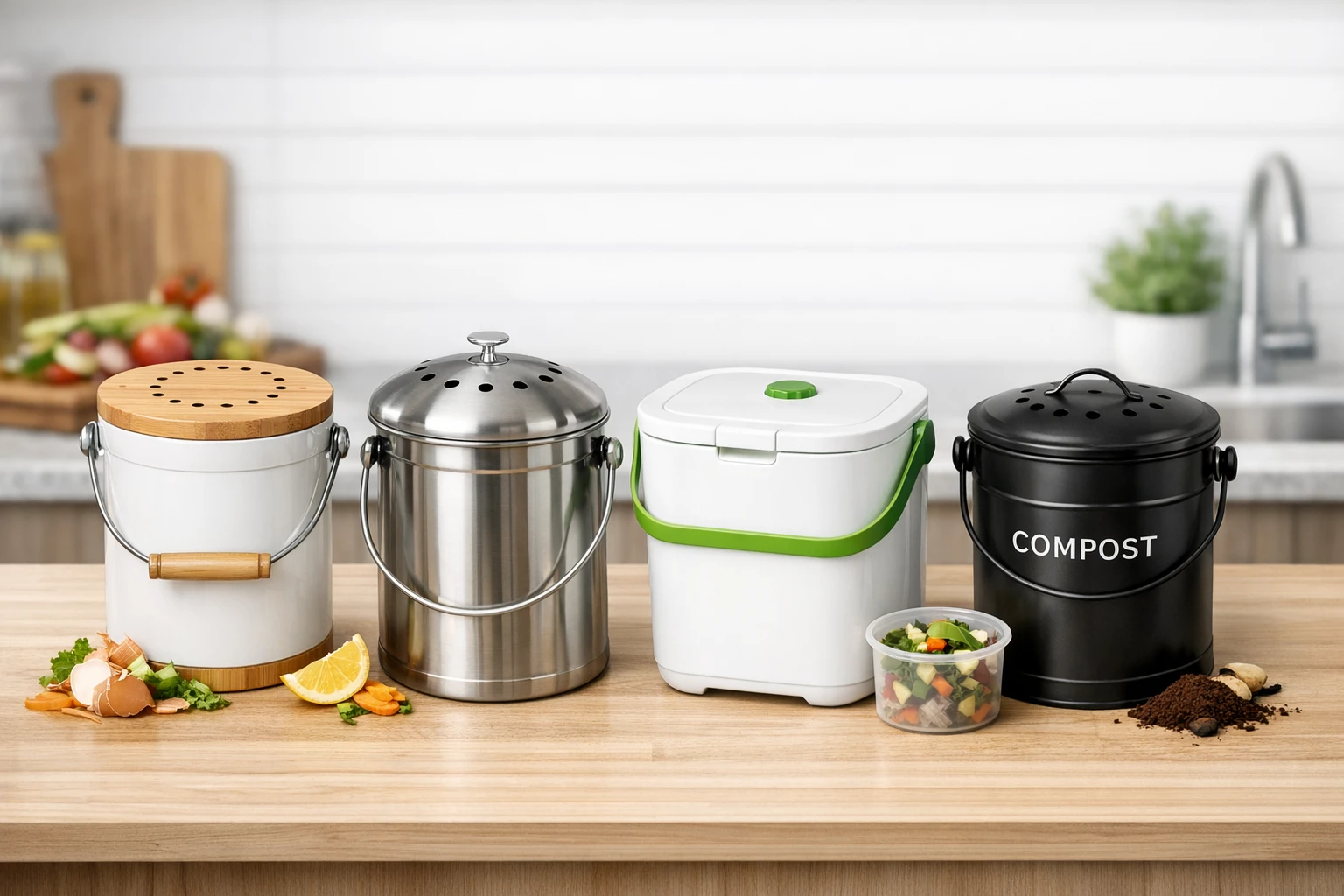
The growing interest in sustainable living has prompted many households to seek convenient indoor composting solutions. This article compares four Amazon‑listed kitchen compost bins: Ouaken 4L Electric Composter, Epica 1.3 Gallon Compost Bin, SCD Probiotics 4.4 Gallon Compost Bin, and Utopia Kitchen 1.3 Gallon Compost Bin. Understanding how each model performs in price, features, and reliability helps consumers select the most appropriate system for their kitchen and lifestyle.
Individual Product Overviews
Ouaken 4L Electric Composter
Priced at $239.99, the Ouaken unit offers a 4‑liter capacity and an electric drying, grinding, and cooling process that reduces waste by up to 90 % within hours. The machine operates below 40 dBA, making it suitable for night‑time use. A large carbon filter eliminates odors, and the interface provides three modes: Crush, Ferment, and Clean. The detachable bucket is dishwasher‑safe. A reviewer noted, "I’ve been using this 4L electric composter for a few weeks now, and I am honestly impressed. It is super easy to use, fits perfectly on my countertop, and looks very clean and modern. I love that it is completely odorless."
Epica 1.3 Gallon Compost Bin
At $29.98, the Epica bin provides a 1.3‑gallon stainless‑steel container with an airtight lid and a replaceable activated‑charcoal filter. The filter claims to control odors for over six months. The product is highlighted in Bon Appétit and Forbes for its sleek design. A user wrote, "I love my new compostable bin. ... The best part is no odor because of the charcoal filter embedded on the inside of the lid." The bin is rust‑resistant and dishwasher‑friendly.
SCD Probiotics 4.4 Gallon Compost Bin
Costing $65.65, this kit includes a 4.4‑gallon black plastic bin made from 77 % post‑consumer recycled material, a bokashi starter, and accessories such as a presser and spigot. The bokashi method ferments waste anaerobically, allowing meat, dairy, and oily scraps. The lid seals tightly to prevent odors, and the spigot enables collection of nutrient‑rich leachate. One reviewer stated, "There is no smell. I have 5 dogs and my Irish wolfhound cross is very smell oriented and would get into the compost container at every opportunity. Not with these!"
Utopia Kitchen 1.3 Gallon Compost Bin
For $23.06, Utopia Kitchen offers a stainless‑steel 1.3‑gallon bin with a charcoal filter that traps odors naturally. The design is described as sturdy, stylish, and easy to clean with warm, soapy water. A customer review reads, "This bin works great! Lid is a little tight around the edges but help keeps the smell in. ... Very lightweight and sturdy!" The product has amassed 19,813 reviews with a 4.5‑star rating.
Head‑to‑Head Comparison
Price and Value
- Ouakan: $239.99 – highest price, justified by electric processing and automation.
- SCD Probiotics: $65.65 – mid‑range price, includes bokashi starter and accessories.
- Epica: $29.98 – low price, offers stainless steel durability and charcoal filter.
- Utopia Kitchen: $23.06 – lowest price, basic odor control with stainless steel.
Features and Specifications
| Feature | Ouaken 4L Electric Composter | Epica 1.3 Gallon Compost Bin | SCD Probiotics 4.4 Gallon Compost Bin | Utopia Kitchen 1.3 Gallon Compost Bin |
|---|---|---|---|---|
| Capacity | 4 L | 1.3 gal | 4.4 gal | 1.3 gal |
| Power Source | Electric (plug‑in) | None (passive) | None (bokashi fermentation) | None (passive) |
| Odor Control | Carbon filter (1000 h life) | Replaceable charcoal filter (6 mo life) | Tight‑sealing lid, bokashi starter | Charcoal filter (single use) |
| Noise Level | <40 dBA | Silent | Silent (fermentation) | Silent |
| Material | Plastic housing | Stainless steel | 77 % recycled plastic | Stainless steel |
| Modes | Crush, Ferment, Clean | None | Fermentation only | None |
| Included Accessories | Detachable bucket | None | Bokashi starter, presser, scoop, spigot | Extra charcoal filter |
Customer Ratings and Feedback
- Ouakan: 4.3 ★/5 from 650 reviews – praised for odorlessness and low noise; some users note the carbon filter replacement requirement.
- Epica: 4.6 ★/5 from 20,467 reviews – highlighted for sleek design and effective charcoal filter; a few reviewers desire a larger capacity.
- SCD Probiotics: 4.2 ★/5 from 1,466 reviews – valued for ability to process meat and dairy; occasional complaints about the need to purchase additional bokashi bran.
- Utopia Kitchen: 4.5 ★/5 from 19,813 reviews – commended for durability and price; some users mention the lid is tight.
Performance and Reliability
Ouakan’s electric mechanism reliably dries waste to a dry, granular state within hours, making it ready for immediate garden use. The carbon filter alerts users when replacement is due, ensuring continued odor control. Epica’s passive design relies solely on charcoal filtration; it performs well for typical vegetable scraps but may struggle with high‑moisture waste. SCD Probiotics’ bokashi process produces a fermented pre‑compost that requires a secondary fermentation period; the system is robust for diverse waste types but adds a step before the final soil amendment. Utopia Kitchen’s stainless‑steel construction resists rust and offers consistent odor suppression, though the fixed capacity may require frequent emptying for larger families.
Best Use Cases
- High‑tech, hands‑off composting: Ouakan 4L Electric Composter.
- Budget‑friendly, stylish countertop solution for light waste: Epica 1.3 Gallon Compost Bin.
- Composting meat, dairy, and oily foods with a fermentation approach: SCD Probiotics 4.4 Gallon Compost Bin.
- Durable, low‑cost stainless‑steel bin for small households: Utopia Kitchen 1.3 Gallon Compost Bin.
Pros & Cons
Ouakan 4L Electric Composter
- Pros: Fast waste reduction, low noise, automatic cleaning mode, odor‑free operation.
- Cons: Highest price, carbon filter needs periodic replacement, limited to 4 L capacity.
Epica 1.3 Gallon Compost Bin
- Pros: Very affordable, stainless‑steel durability, effective charcoal filter, sleek aesthetic.
- Cons: Passive system cannot handle meat or dairy, capacity may be insufficient for larger families.
SCD Probiotics 4.4 Gallon Compost Bin
- Pros: Handles all food types, includes bokashi starter and accessories, eco‑friendly recycled plastic.
- Cons: Requires additional bokashi bran over time, fermentation period adds complexity, larger footprint.
Utopia Kitchen 1.3 Gallon Compost Bin
- Pros: Lowest price, stainless‑steel construction, easy cleaning, reliable charcoal odor control.
- Cons: Tight lid may be cumbersome, limited capacity, no active processing.
Recommendations
Based on the analysis, the following recommendations are offered:
- For technology‑oriented households that desire a set‑and‑forget experience, purchase the Ouakan 4L Electric Composter.
- For budget‑conscious users who compost primarily fruit and vegetable scraps, the Epica 1.3 Gallon Compost Bin provides excellent value.
- For gardeners who wish to include meat, dairy, and oily waste, the SCD Probiotics 4.4 Gallon Compost Bin offers the most versatile fermentation solution.
- For small families or renters seeking a durable, low‑maintenance option, the Utopia Kitchen 1.3 Gallon Compost Bin is the most cost‑effective choice.
FAQ
- 1. Do these bins require electricity?
- Only the Ouakan 4L Electric Composter requires a power source; the other three operate passively.
- 2. Can I compost meat and dairy?
- The SCD Probiotics bokashi system can handle meat, dairy, and oily foods, while the Ouakan and passive bins are best suited for fruit, vegetables, and coffee grounds.
- 3. How often must I replace the carbon or charcoal filters?
- Ouakan alerts users after roughly 1,000 hours of use; Epica’s filter lasts about six months; Utopia’s filter is intended for single‑use but can be replaced as needed.
- 4. Is the bokashi starter included in the SCD kit organic?
- The starter is not OMRI‑listed, which may limit use in certified organic gardening, as noted by a reviewer.
- 5. Which bin provides the fastest ready‑to‑use compost?
- The Ouakan electric composter produces dry compost within hours, making it the quickest option for immediate garden application.
- 6. Are the stainless‑steel bins rust‑proof?
- Both Epica and Utopia Kitchen use high‑grade stainless steel that resists rust, as confirmed by long‑term user reviews.
- 7. Can I use these bins in an apartment?
- All four models are designed for countertop use and are suitable for apartments; the passive bins require less space and no power outlet.
Conclusion
Each of the four kitchen compost bins examined offers a distinct blend of price, capacity, and technology. The Ouakan 4L Electric Composter stands out for its rapid, automated processing but commands a premium price. The Epica 1.3 Gallon Compost Bin delivers sleek, affordable performance for light waste streams. The SCD Probiotics 4.4 Gallon Compost Bin excels in versatility, allowing users to compost virtually any food waste through bokashi fermentation. Finally, the Utopia Kitchen 1.3 Gallon Compost Bin provides a durable, low‑cost stainless‑steel solution with reliable odor control. Prospective buyers should align their selection with waste volume, desired automation level, and budget constraints.
Products Mentioned in This Review
Frequently Asked Questions
What capacity differences exist between the Ouaken and Epica kitchen compost bins?
Ouaken holds 4 L (about 1 gal) while Epica’s bin is 1.3 gal, roughly a third of Ouaken’s volume.
How noisy is the Ouaken 4L Electric Composter compared to other countertop models?
It operates below 40 dBA, making it quieter than most electric composters and comparable to a whisper.
Do the SCD Probiotics and Utopia Kitchen bins require electricity?
No, both are passive bins that rely on natural fermentation and do not need power.
Which of the four compost bins offers the best value for its price?
The Epica 1.3 gal bin provides a low price point with basic functionality, delivering strong value for budget shoppers.
How often must I clean the interior of each compost bin?
Electric models like Ouaken need monthly cleaning, while passive bins such as SCD Probiotics and Utopia Kitchen should be emptied and rinsed every 1–2 weeks.