
Introduction
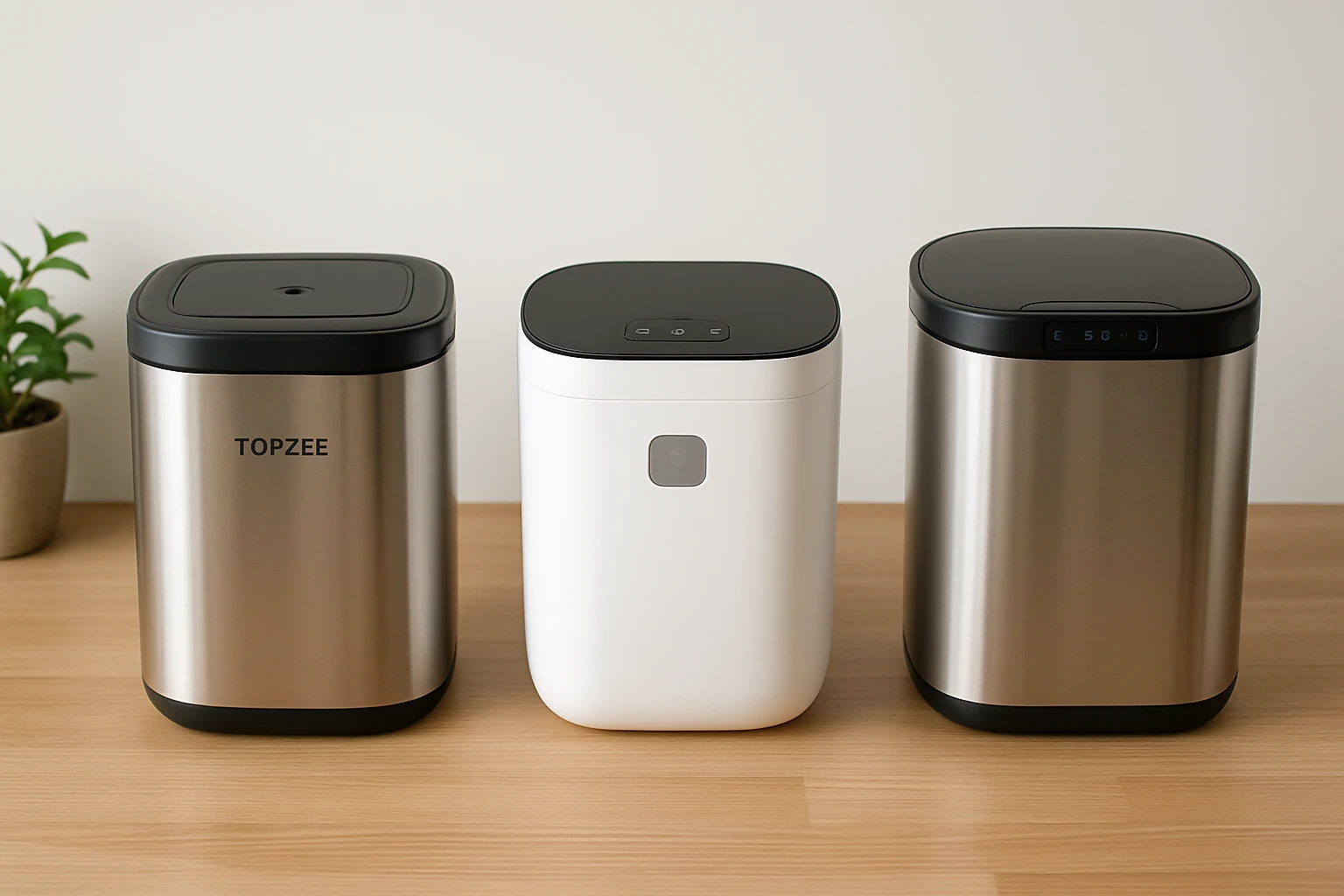
The modern kitchen increasingly demands sustainable solutions for food‑waste management. Three Amazon‑available composters dominate the market: the Topzee Electric Kitchen Compost Bin, the Airthereal Revive Kitchen Composter, and the Utopia Kitchen Countertop Compost Bin. Understanding how each device balances price, capacity, noise, and ease of use helps consumers select the model that aligns with their household size and environmental goals.
All three products promise to transform food scraps into usable fertilizer while reducing landfill contributions. However, their technologies differ: Topzee and Airthereal employ electric drying and grinding, whereas Utopia relies on passive charcoal filtration without electricity. This article evaluates each unit across key dimensions, presents a side‑by‑side table, and offers clear recommendations for distinct use cases.
Individual Product Overviews
Topzee Electric Kitchen Compost Bin
Topzee’s 3‑liter countertop unit combines a smart temperature‑humidity control system with a stainless‑steel blade. It offers two composting cycles—fast (4 hours) and standard (6 hours)—and operates below 40 decibels, making it suitable for open‑plan homes. The device consumes only 0.51 kWh per cycle and includes a replaceable activated‑charcoal filter to neutralize odors. Priced at $149.99, it holds a 4‑star rating from 152 reviews, indicating solid but not exceptional satisfaction.
Airthereal Revive Kitchen Composter
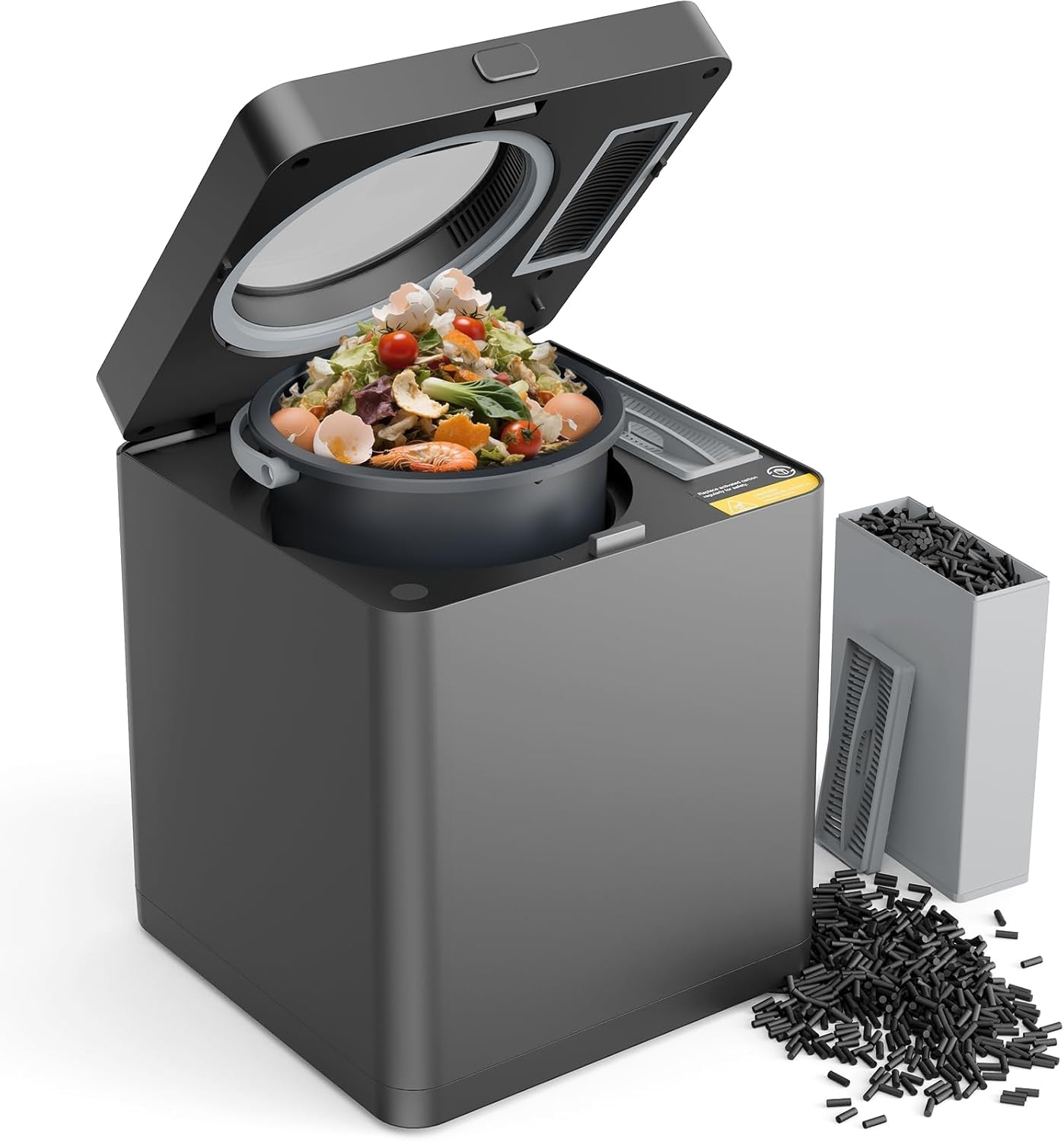
Airthereal’s R500‑V model positions itself as a premium option at $199.99. Its 2‑5‑hour cycle time is aided by a transparent glass cover that lets users watch the composting process in real time. The upgraded SHARKSDEN tri‑blade delivers aggressive grinding, while biodegradable carbon filters mitigate odor without adding plastic waste. A 4.5‑star rating from 171 reviewers reflects strong approval, especially for its visual design and durability. The unit also includes a 3‑year warranty that extends protection for Amazon customers.
Utopia Kitchen Countertop Compost Bin
Utopia’s passive bin is the most affordable choice at $25.98 and carries a 4.6‑star rating from an impressive 19,951 reviews. Constructed from stainless steel, the 1.3‑gallon container includes a charcoal filter that naturally absorbs odors. Because it lacks electricity, the bin simply stores waste until the user transfers it to an outdoor compost pile or trash bin. Its sleek design fits under a sink or on a countertop, offering a low‑maintenance entry point for households beginning their compost journey.
Head‑to‑Head Comparison
Price and Value
- Topzee: $149.99 – mid‑range price with electric functionality and smart controls.
- Airthereal Revive: $199.99 – premium price justified by visual cover, advanced blade, and extended warranty.
- Utopia: $25.98 – budget‑friendly, but requires manual transfer of waste.
Features and Specifications
| Feature | Topzee | Airthereal Revive | Utopia |
|---|---|---|---|
| Capacity | 3 L | Not specified (standard household size) | 1.3 gal (≈4.9 L) |
| Power Source | Electric (0.51 kWh per cycle) | Electric (unspecified consumption) | None (passive) |
| Cycle Time | 4 h (fast) / 6 h (standard) | 2‑5 h (depending on load) | Manual storage until emptied |
| Noise Level | <40 dB | Not disclosed (likely similar to other electric models) | Silent |
| Odor Control | Activated‑charcoal filter (replace every 3‑6 months) | Biodegradable carbon filter | Charcoal filter (passive) |
| Blade Type | Stainless‑steel blade | SHARKSDEN tri‑blade (serrated) | None (no grinding) |
| Warranty | Standard manufacturer warranty (not specified) | 3‑year coverage (1.5 yr manufacturer + 1.5 yr Amazon extension) | No warranty information |
Customer Ratings and Feedback
Utopia leads with a 4.6‑star rating derived from nearly 20,000 reviews, indicating widespread satisfaction with durability and odor control. Airthereal follows at 4.5 stars, with reviewers praising the transparent cover and cutting efficiency. Topzee’s 4‑star rating, while respectable, reflects mixed opinions about filter replacement frequency and occasional noise spikes. All three products maintain “In Stock” availability, suggesting reliable supply.
Performance and Reliability
Electric models (Topzee and Airthereal) consistently reduce waste volume by up to 90 %, converting scraps into dry powder suitable for indoor plants. Airthereal’s tri‑blade is reported to handle tougher fibrous materials, while Topzee’s smart system maintains optimal temperature and humidity for uniform compost. Utopia, lacking active processing, merely stores waste; its reliability hinges on the durability of the stainless‑steel container and the longevity of the charcoal filter.
Best Use Cases
- Topzee: Small to medium households that value quiet operation and automated cleaning.
- Airthereal Revive: Users who enjoy visual feedback, need faster cycles, and desire a longer warranty.
- Utopia: Budget‑conscious beginners or apartment dwellers who prefer a silent, low‑maintenance solution.
Pros & Cons
Topzee Electric Kitchen Compost Bin
- Pros: Compact footprint, low noise, energy‑efficient, automatic cleaning, dual‑mode cycles.
- Cons: Higher filter maintenance, moderate price, limited capacity for larger families.
Airthereal Revive Kitchen Composter
- Pros: Real‑time visual cover, faster cycle options, robust tri‑blade, biodegradable filters, extended warranty.
- Cons: Premium price, larger footprint, noise level not disclosed.
Utopia Kitchen Countertop Compost Bin
- Pros: Very low cost, silent operation, sturdy stainless‑steel build, high customer approval.
- Cons: No active composting, requires manual waste removal, smaller capacity per day.
Recommendations
For families of three or four seeking an automated, low‑noise solution, the Topzee Electric Kitchen Compost Bin offers a balanced blend of price and functionality. Home gardeners who appreciate seeing the transformation of waste into powder should consider the Airthereal Revive Kitchen Composter, especially if they value a longer warranty and faster processing. Renters, students, or anyone on a tight budget will find the Utopia Kitchen Countertop Compost Bin an excellent entry point to composting without electrical installation.
FAQ
- Do electric compost bins require electricity continuously? No. Both Topzee and Airthereal operate only during active cycles; they consume a modest amount of power (Topzee uses 0.51 kWh per cycle).
- Can I compost meat or dairy? Manufacturers recommend limiting compost to fruit, vegetables, and coffee grounds. High‑protein waste may produce stronger odors and affect blade performance.
- How often should I replace the odor filters? Topzee suggests replacement every 3‑6 months, while Airthereal’s biodegradable filters can be swapped when odor becomes noticeable.
- Is the compost safe for indoor plants? The dry powder produced by electric units is generally safe for houseplants, but it is advisable to let the material sit for a few days before application.
- What happens if the bin is overloaded? Overloading can extend cycle time and increase noise. All three models include sensors or user guidelines to prevent excess load.
- Can I use the Utopia bin for outdoor composting? Yes, the stainless‑steel container can hold waste that is later transferred to an outdoor compost pile.
- Is there a warranty for the Utopia bin? Warranty information is not provided in the product listing, so consumers should contact the seller for details.
Conclusion
Each of the three Amazon compost bins excels in a distinct niche. Topzee delivers quiet, automated composting at a reasonable price, making it suitable for everyday kitchen use. Airthereal raises the bar with visual monitoring, a powerful tri‑blade, and an extended warranty, justifying its higher cost for enthusiasts. Utopia offers an ultra‑affordable, passive option that introduces composting habits without electricity. Based on price‑to‑performance analysis, the Topzee model emerges as the overall best value for most households, while the Airthereal Revive is the premium choice for those who prioritize speed and design, and the Utopia bin remains the go‑to starter for budget‑conscious users.
Products Mentioned in This Review
Frequently Asked Questions
What are the main differences between electric and passive kitchen compost bins?
Electric bins like Topzee and Airthereal use drying and grinding to speed up composting, while passive models such as Utopia rely on charcoal filtration and natural decomposition without power.
Which compost bin is the quietest for open‑plan kitchens?
Airthereal Revive is marketed as the quietest, with low‑noise operation compared to Topzee’s motorized grinding.
How much food waste can each of the three bins hold?
Topzee holds about 1.5 L, Airthereal about 2 L, and Utopia roughly 1 L, so capacity varies with model size.
Do electric compost bins require regular maintenance?
Yes, they need periodic cleaning of the grinding chamber and filter replacement to keep odor control and performance optimal.
Is a passive compost bin like Utopia suitable for apartments without electricity access?
Absolutely; its charcoal filter works without power, making it ideal for renters or spaces lacking an outlet.