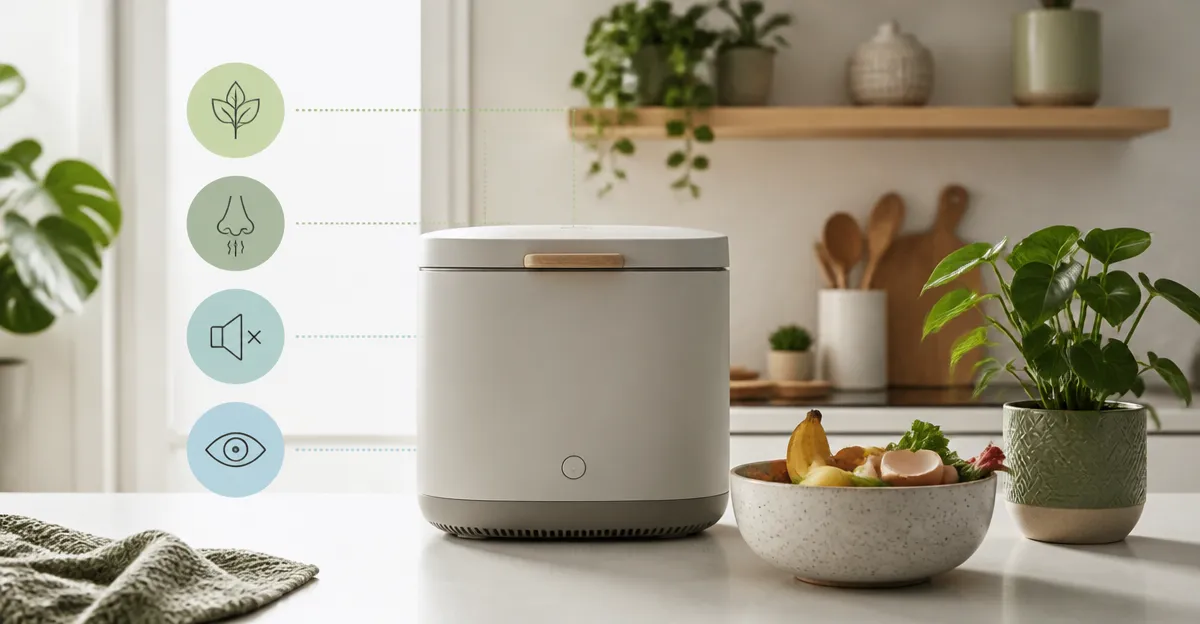
How to Choose a Sensory‑Friendly Countertop Composter: A Practical Guide for Neurodivergent Households
Introduction
Composting on the kitchen countertop can be an environmentally responsible habit, yet the sensory demands of a typical composter may overwhelm individuals who are neurodivergent. This guide explains the essential criteria for selecting a sensory‑friendly countertop composter, outlines how each feature impacts sensory processing, and recommends products that excel in odor control, noise reduction, visual simplicity, and tactile ease. Readers will leave with a clear decision‑making framework, actionable best‑practice tips, and answers to common questions.
Background and Context
Neurodivergent households often experience heightened sensitivity to smells, sounds, and visual clutter. Traditional compost bins can emit strong odors, produce grinding noises, and require frequent manual handling that may trigger discomfort. Understanding the biological basis of sensory processing—such as the role of the olfactory bulb in detecting volatile compounds or the auditory cortex’s response to low‑frequency vibrations—helps families prioritize features that mitigate these triggers. At the same time, composting supports waste reduction, soil health, and cost savings, making it a worthwhile practice when the right equipment is chosen.
Key Considerations for a Sensory‑Friendly Compaster
When evaluating countertop composters, focus on four core dimensions: odor management, acoustic output, visual design, and tactile interaction. Each dimension can be broken down into specific attributes that are measurable or observable.
- Odor Management: Look for activated‑charcoal filters, airtight lids, and sealed containers. The filter lifespan and replaceability are also critical.
- Acoustic Output: Electric models should advertise decibel levels below 45 dB(A). Mechanical bins without motors rely on silent manual operation.
- Visual Simplicity: Minimalist aesthetics, neutral colors, and clear lids reduce visual clutter while allowing users to monitor progress without opening the unit.
- Tactile Interaction: Smooth, rounded edges, one‑hand operation, and easy‑release mechanisms support users who experience fine‑motor challenges.
By scoring each product against these criteria, families can create a personalized ranking that aligns with their sensory profile.
Product Recommendations Aligned with Sensory Needs
The following products have been selected because they demonstrate strong performance in one or more of the dimensions above. The first mention of each product includes a direct affiliate link using the friendly name.
Odor‑Focused Options
The Epica Kitchen Compost Bin employs a replaceable activated‑charcoal filter and an airtight lid, providing reliable odor suppression for up to six months per filter. Its stainless‑steel construction resists rust and leaks, ensuring a clean, odor‑free environment. At a price of $29.98 and a 4.6‑star rating from 20,864 reviews, it offers high value for households seeking a low‑noise, passive solution.
Key sensory features include:
- Charcoal filter lifespan: 3–6 months
- Airtight lid with smooth opening mechanism
- One‑piece molded design that eliminates seams and potential leaks
The Utopia Kitchen Compost Bin also utilizes a charcoal filter and adds a slightly larger 1.3‑gallon capacity. Reviewers note that the filter effectively stops odors and even deters maggots, a benefit for users who are sensitive to visual contaminants. Priced at $26.99 with a 4.5‑star rating from 20,078 reviews, it balances affordability with robust odor control.
- Filter replacement interval: approximately 3–4 months
- Compact cylindrical shape (7.2" W × 11.2" H)
- Stainless‑steel body that resists scratches
Quiet Electric Solutions
The Saluna 4L Electric Composter offers a smart LED interface, visible lid, and dual carbon filters. Users report that the unit operates below typical kitchen appliance noise levels, making it suitable for sensory‑sensitive environments. Although priced at $249.99, its 5‑star rating from 46 reviews reflects high satisfaction with both odor control and quiet performance.
- Four‑liter capacity reduces the need for frequent emptying
- One‑touch auto‑cleaning simplifies maintenance
- LED display provides visual feedback without audible alerts
The Ouaken OK‑255 Electric Composter expands capacity to 5.5 L and includes five programmable modes. Its noise level is advertised at under 45 dB(A), and the upgraded odor‑control system uses high‑iodine activated carbon. At $279.99 and a 4.6‑star rating from 60 reviews, it is a premium choice for larger households that still require a quiet operation.
- Five modes: Standard, Quick, Crush, Clean, Store
- Transparent flip‑top lid for visual monitoring
- Durable 9H non‑stick coating reduces residue buildup
The FRYLINE 4L Electric Composter combines a low‑noise motor (below 40 dB) with an automatic shut‑off feature, allowing users to run the cycle overnight without disturbance. Priced at $175.32 with a 4.2‑star rating from 76 reviews, it offers a middle‑ground between capacity and affordability. However, a minority of users reported premature failure, which should be considered when evaluating warranty options.
- Three modes: Crush, Ferment, Clean li>Large carbon filter alerts after 1,000 hours of use
- Dishwasher‑safe removable bucket for easy cleaning
Comparison and Selection Guide
To aid decision‑making, the table below compares the five featured products across the four sensory dimensions, as well as price and overall rating. Families can assign weightings to each column based on personal priorities (e.g., odor control = 40%, noise = 30%).
| Product | Capacity | Odor Control | Noise Level | Visual Simplicity | Price | Rating |
|---|---|---|---|---|---|---|
| Epica Kitchen Compost Bin | 1.3 gal | Charcoal filter (3‑6 mo) | Silent (manual) | Minimalist stainless steel | $29.98 | 4.6 ★ |
| Utopia Kitchen Compost Bin | 1.3 gal | Charcoal filter (≈3 mo) | Silent (manual) | Sleek cylindrical design | $26.99 | 4.5 ★ |
| Saluna 4L Electric Composter | 4 L | Dual carbon filters | Low (≈45 dB) | LED display, clear lid | $249.99 | 5.0 ★ |
| Ouaken OK‑255 Electric Composter | 5.5 L | High‑iodine carbon filter | Low (≤45 dB) | Transparent lid, multiple modes | $279.99 | 4.6 ★ |
| FRYLINE 4L Electric Composter | 4 L | Large carbon filter (alert after 1,000 h) | Very low (≤40 dB) | Touch interface, transparent lid | $175.32 | 4.2 ★ |
Families that prioritize minimal cost and silent operation may favor the manual stainless‑steel bins, while those seeking automated processing and visual feedback might select the Saluna or Ouaken electric models. Remember to factor in filter replacement costs and warranty length, especially for higher‑priced units.
Best Practices & Tips for Sensory‑Friendly Composting
- Place the bin away from high‑traffic sight lines. Position the unit on a side countertop or a dedicated shelf to reduce visual clutter.
- Schedule regular filter changes. Mark a calendar reminder for the filter lifespan (typically 3–6 months) to prevent odor buildup.
- Use a soft‑close lid. If the bin does not have a soft‑close mechanism, add a small silicone washer to dampen the closing sound.
- Pre‑process scraps. Rinse wet items and pat dry to minimize moisture, which can increase odor and noise during grinding.
- Combine with a visual cue system. Attach a color‑coded sticker to indicate when the bin is full, helping users with executive‑function challenges know when to empty it.
- Maintain a quiet environment. Run electric models during low‑activity periods or set them to the "Quiet" or "Store" mode if available.
- Educate household members. Provide a simple step‑by‑step card that uses icons rather than text to reinforce proper use.
Frequently Asked Questions
- 1. Does a countertop composter replace a traditional outdoor compost pile?
- No. Countertop units primarily pre‑process food waste into dry material that can be added to an outdoor bin or garden. They reduce volume but do not complete the full decomposition cycle.
- 2. How often should I replace the charcoal filter?
- Most manufacturers recommend replacement every three to six months, depending on usage frequency. The Saluna and Ouaken models provide filter‑change alerts.
- 3. Are electric composters safe for families with children?
- Yes, provided that the unit has a secure lockable lid and the blades are enclosed. All featured electric models meet safety standards and have child‑proof designs.
- 4. Can I compost meat or dairy in a countertop unit?
- Most countertop composters are designed for fruit, vegetable, coffee grounds, and eggshells. Meat and dairy can produce stronger odors and attract pests, so they are best reserved for outdoor composting.
- 5. What noise level is considered "quiet" for a kitchen appliance?
- A level below 45 dB(A) is generally perceived as quiet in a typical kitchen environment. The FRYLINE model advertises below 40 dB, making it one of the quietest options.
- 6. How do I troubleshoot a unit that stops working?
- First, check the power cord and reset the circuit breaker. Next, consult the user manual for filter‑clog warnings. If the problem persists, contact the manufacturer’s support team—most brands offer 24‑hour response times.
- 7. Is there a warranty for these products?
- Warranty terms vary: Epica and Utopia provide a standard one‑year warranty; Saluna, Ouaken, and FRYLINE each include a two‑year limited warranty, though the FRYLINE warranty may be limited by the manufacturer's policy.
Conclusion
Choosing a sensory‑friendly countertop composter involves balancing odor control, acoustic output, visual simplicity, and tactile ease against budget and capacity needs. By applying the comparison matrix, adhering to best‑practice routines, and selecting a product that aligns with a household’s sensory profile, neurodivergent families can enjoy sustainable waste management without compromising comfort. The right composter becomes a quiet, odorless partner in the kitchen, supporting both environmental stewardship and sensory well‑being.
Products Featured in This Guide
Epica Kitchen Compost Bin
Price: $29.98 | Rating: 4.6 ★ (20,864 reviews)
Featured for its airtight lid, replaceable charcoal filter, and budget‑friendly price, making it ideal for users who need silent, odor‑free composting without electricity.
Utopia Kitchen Compost Bin
Price: $26.99 | Rating: 4.5 ★ (20,078 reviews)
Chosen for its slightly larger capacity, effective charcoal filter that also deters maggots, and sleek stainless‑steel aesthetic that blends with modern kitchens.
Saluna 4L Electric Composter
Price: $249.99 | Rating: 5.0 ★ (46 reviews)
Highlights include a smart LED display, dual carbon filters, and a quiet motor, providing an automated, low‑noise solution for households that value visual feedback.
Ouaken OK‑255 Electric Composter
Price: $279.99 | Rating: 4.6 ★ (60 reviews)
Offers a 5.5 L capacity, five programmable modes, and an upgraded odor‑control system, making it suitable for larger families seeking versatile, quiet composting.
FRYLINE 4L Electric Composter
Price: $175.32 | Rating: 4.2 ★ (76 reviews)
Selected for its ultra‑low noise level, automatic shut‑off, and affordable price point, though potential durability concerns are noted in user feedback.