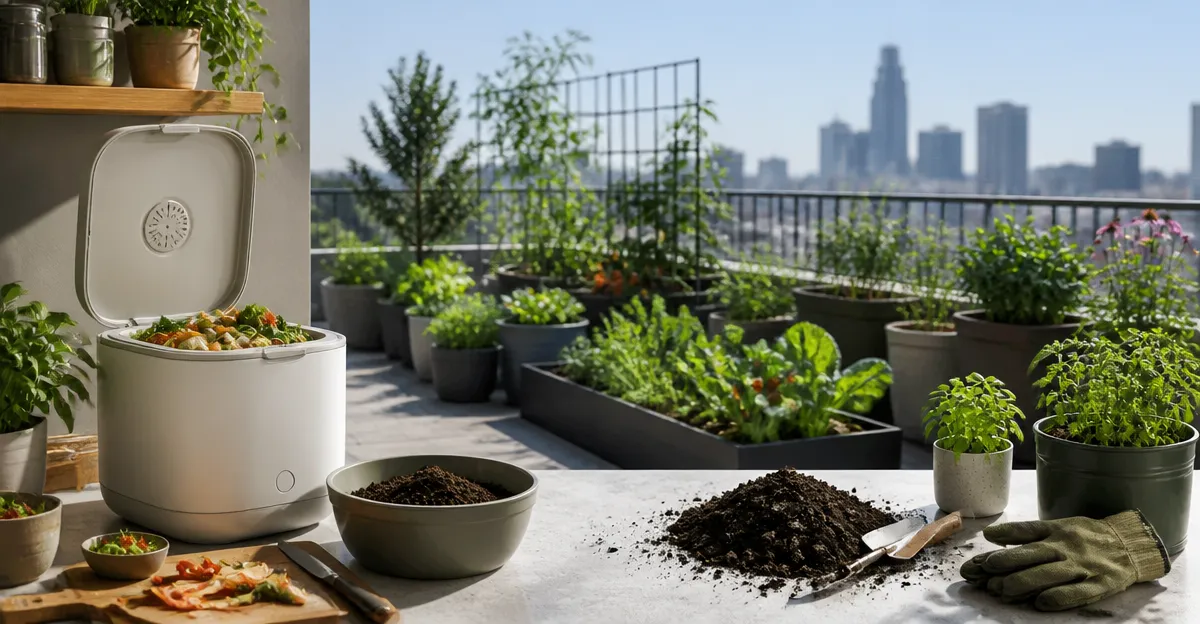
How to Start a Rooftop Garden Using Apartment Countertop Compost
This guide explains how an urban dweller can convert compost produced on a kitchen countertop into a productive rooftop garden. Readers will learn the science of composting, the selection of suitable growing media, and the integration of compact containers that thrive on limited space. The article also recommends five Amazon products that enhance soil structure, nutrient availability, and ease of use. By the end of the guide, one will possess a clear plan to grow herbs, vegetables, and ornamental plants on a rooftop while reducing waste and carbon footprint.
Background and Context
Rooftop gardening has become a viable solution for residents of high‑rise apartments who lack ground‑level yard space. The primary challenge is providing a growing medium that retains moisture, supplies nutrients, and remains lightweight enough for balcony or roof rail load limits. Compost generated from a countertop composter supplies a rich source of organic matter, but it must be blended with a base medium to achieve proper aeration and drainage. Understanding the role of peat, coconut coir, and mycorrhizal inoculants is essential for creating a balanced substrate.
Organic certification, such as OMRI listing, assures that the growing medium does not contain prohibited synthetic chemicals. Many manufacturers now source peat responsibly or replace it with peat‑free alternatives like coconut coir, which reduces environmental impact. Selecting a product that matches the climate of the rooftop—exposure to wind, sun, and temperature fluctuations—will increase plant survival rates.
Choosing the Right Growing Medium
The first step is to decide whether a peat‑based or peat‑free mix best suits the rooftop environment. Peat provides excellent water‑holding capacity but can become compacted under heavy rain. Coconut coir, on the other hand, offers comparable moisture retention with superior aeration and is a renewable resource.
For gardeners who wish to incorporate compost from a countertop composter, a blend of 30 % compost, 40 % potting mix, and 30 % coir creates a balanced medium. The potting mix supplies a quick‑release natural fertilizer, while coir prevents the blend from becoming overly dense.
Below are three recommended products that can serve as the base component of the blend.
- Miracle‑Gro Organic Outdoor Potting Mix – 16 qt. bag priced at $9.59, rated 4.6 / 5 from 4,064 reviews. Contains a quick‑release natural fertilizer that feeds plants for up to two months and is made with responsibly sourced peat.
- Back to the Roots Organic Coir – 51 qt. expanding block priced at $19.68, rated 4.6 / 5 from 3,878 reviews. Expands to over two cubic feet, is peat‑free, and is OMRI listed.
- Miracle‑Gro Organic Outdoor Potting Mix (2‑Pack) – two 16 qt. bags priced at $17.99, rated 4.6 / 5 from 4,064 reviews. Provides the same nutrient profile as the single‑bag version while offering greater volume for larger rooftop beds.
Integrating Compost from a Countertop Composter
Countertop composters typically produce a dark, crumbly material after two to four weeks of operation. Before mixing, ensure the compost is fully matured; immature compost can compete with plant roots for nitrogen. Sift the compost through a fine mesh to remove large food particles and achieve a uniform texture.
Combine the sifted compost with the chosen potting mix and coir in the ratio mentioned earlier. Stir the blend thoroughly to distribute nutrients evenly. The final mixture should feel moist but not soggy; adjust water content by adding a small amount of water and allowing the blend to sit for ten minutes.
When placing the mixture into containers on the rooftop, select lightweight, UV‑stable containers that allow drainage. Elevate containers on a wooden pallet or breathable mat to improve air circulation and protect the roof surface from moisture accumulation.
Product Comparison and Selection Guide
| Product | Key Feature | Price (USD) | Rating | Best For |
|---|---|---|---|---|
| Miracle‑Gro Organic Outdoor Potting Mix | Quick‑release natural fertilizer, 2‑month feed period, responsibly sourced peat | 9.59 | 4.6/5 (4,064 reviews) | Small to medium rooftop beds requiring immediate nutrient availability |
| Back to the Roots Organic Coir | Peat‑free, expands to 2 cubic ft, balanced pH, OMRI listed | 19.68 | 4.6/5 (3,878 reviews) | Gardeners seeking sustainable, aerated medium for high‑wind rooftops |
| Miracle‑Gro Organic Outdoor Potting Mix (2‑Pack) | Two 16 qt. bags, same nutrient profile, cost‑effective for larger projects | 17.99 | 4.6/5 (4,064 reviews) | Large rooftop garden plans requiring bulk volume |
| Back to the Roots Seed Starting Mix | Peat‑free, contains mycorrhizae, yucca extract, dolomitic limestone | 6.97 | 4.4/5 (1,188 reviews) | Seedling phase on rooftops where sterile, nutrient‑rich starter is needed |
| Burpee Organic Potting Mix | All‑natural, coconut coir, 3‑month nutrient release, zip‑lock bag | 14.95 | 4.5/5 (5,007 reviews) | Versatile mix for both containers and raised beds on rooftops |
The selection should be guided by the size of the rooftop garden, the desired sustainability profile, and the need for immediate versus gradual nutrient release. For a compact balcony garden, the single‑bag Miracle‑Gro Organic Outdoor Potting Mix paired with a small amount of Back to the Roots Organic Coir provides a balanced blend. For larger terraces, the 2‑Pack version reduces per‑unit cost while maintaining nutrient consistency.
Best Practices and Tips for Rooftop Success
- Start with a clean, level surface. Use a waterproof liner to prevent water seepage into the building structure.
- Choose containers with drainage holes and place a layer of coarse gravel at the bottom to improve drainage.
- Water early in the morning to reduce evaporation caused by rooftop wind.
- Monitor pH weekly using a simple test kit; aim for a range of 6.0‑6.5 for most vegetables and herbs.
- Incorporate a slow‑release organic fertilizer such as the one included in Miracle‑Gro Organic Outdoor Potting Mix to sustain growth between compost applications.
- Rotate crops every season to prevent soil‑borne diseases and maintain nutrient balance.
- Utilize shade cloth during peak summer months to protect tender seedlings from excessive heat.
Applying these practices in conjunction with a well‑balanced compost‑potting‑mix blend will result in vigorous plant growth, higher yields, and a visually appealing rooftop oasis.
Frequently Asked Questions
- Can I use only countertop compost without any commercial potting mix?
- While pure compost provides organic matter, it lacks the structure required for optimal drainage on a rooftop. Mixing compost with a lightweight potting mix or coir prevents waterlogging and improves aeration.
- How often should I replenish the compost in my rooftop garden?
- Adding a thin layer of fresh compost every six to eight weeks maintains nutrient levels and supports beneficial microbial activity.
- Is peat‑free coir suitable for all types of rooftop plants?
- Yes, coir is neutral in pH and works well for vegetables, herbs, and ornamental flowers. It is especially advantageous in windy rooftop conditions because it retains shape and does not compact.
- What is the maximum weight my rooftop can support?
- Consult the building’s structural specifications. As a rule of thumb, limit the saturated weight of containers to no more than 20 lb per square foot.
- Do I need to fertilize if I use an organic potting mix?
- The organic mixes listed contain built‑in slow‑release fertilizers that sustain plants for two to three months. Supplemental feeding may be necessary for heavy‑fruiting crops after this period.
- How can I protect my rooftop garden from pests?
- Use physical barriers such as fine mesh netting, practice crop rotation, and select pest‑resistant varieties. Organic soil amendments, like the nutrient‑rich mix in Burpee Organic Potting Mix, encourage beneficial microbes that deter pests.
Conclusion
Starting a rooftop garden with compost from an apartment countertop composter is a sustainable and rewarding endeavor. By understanding the science of compost integration, selecting the appropriate lightweight growing medium, and following best‑practice maintenance routines, urban gardeners can achieve healthy harvests and a greener living environment. The recommended products provide reliable nutrient sources, structural stability, and environmental responsibility, ensuring that the rooftop garden thrives throughout the growing season.
Products Featured in This Guide
Miracle-Gro Organic Outdoor Potting Mix
Price: $9.59 | Rating: 4.6/5 (4,064 reviews)
Featured because it supplies a quick‑release natural fertilizer and offers a peat‑based medium that blends well with countertop compost.
Back to the Roots Organic Coir
Price: $19.68 | Rating: 4.6/5 (3,878 reviews)
Featured for its peat‑free, expandable nature, providing aeration and moisture retention ideal for rooftop conditions.
Miracle-Gro Organic Outdoor Potting Mix (2-Pack)
Price: $17.99 | Rating: 4.6/5 (4,064 reviews)
Featured for bulk applications on larger rooftops, offering the same nutrient profile at a lower per‑bag cost.
Back to the Roots Seed Starting Mix
Price: $6.97 | Rating: 4.4/5 (1,188 reviews)
Featured because it contains mycorrhizae, yucca extract, and dolomitic limestone, providing a sterile, nutrient‑rich start for seedlings.
Burpee Organic Potting Mix
Price: $14.95 | Rating: 4.5/5 (5,007 reviews)
Featured for its all‑natural formulation with coconut coir, delivering a three‑month nutrient release suitable for both containers and raised beds.