Introduction
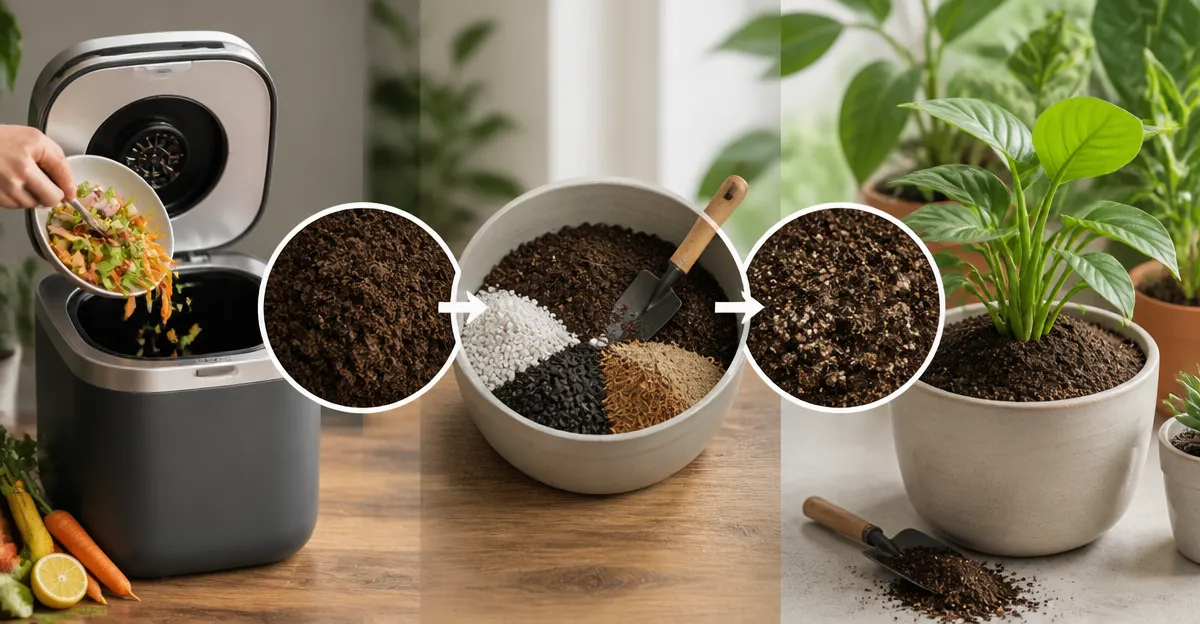
One will learn how to transform the processed compost generated by the Reencle Airthereal Food Cycler into a balanced, nutrient‑rich potting mix suitable for both indoor and outdoor container gardening. The guide explains each phase of the conversion process, from screening the raw compost to incorporating organic amendments that improve texture, water retention, and fertility. By following the step‑by‑step instructions, one can produce a custom growing medium that supports vigorous root development and reduces reliance on synthetic fertilizers. The result is a sustainable, cost‑effective solution that enhances plant health while minimizing waste.
What You’ll Need
- Processed compost from the Reencle Airthereal Food Cycler
- Screening sieve (1‑inch mesh)
- Drying surface (clean tarp or tray)
- Garden fork or hand trowel
- Measuring container (1‑quart capacity)
- Organic amendment: Old Potters Organic Compost
- Coconut coir brick: Burpee Coconut Coir Seed Starting Mix
- Container potting soil: Miracle‑Gro Potting Mix (outdoor) or Miracle‑Gro Indoor Potting Mix (indoor)
- pH test kit (optional)
- Protective gloves and mask
Step 1: Screen and Separate the Compost
The first action is to pass the processed compost through a 1‑inch mesh sieve. One should spread the raw material on the screen and gently shake it, allowing fine particles to fall through while retaining larger debris such as twigs or plastic fragments. This step eliminates contaminants that could impede root growth and ensures a uniform texture in the final mix. The screened compost will serve as the base component, providing a source of organic matter and beneficial microbes.
At this stage, the use of a high‑quality sieve is optional but recommended for consistency. One may also reserve the larger pieces for use as a mulch layer around mature plants, thereby extending the value of the material.
Step 2: Dry the Screened Compost
After screening, the fine compost should be spread in a thin layer on a clean tarp or tray placed in a well‑ventilated, sunny location. One must allow the material to dry for 24‑48 hours, stirring occasionally with a garden fork to promote even drying. Drying reduces excess moisture that can cause anaerobic conditions and unpleasant odors when the mix is later stored.
When the compost feels crumbly and no longer clumps when squeezed, it is ready for the next phase. If the ambient climate is humid, one can employ a low‑temperature fan to accelerate the process without overheating the organic matter.
Step 3: Incorporate Organic Compost for Nutrient Boost
To enrich the base compost with additional nutrients, one should blend in a measured amount of Old Potters Organic Compost. This product is 100 % organic, chemical‑free, and rated 4.5 / 5.0 stars by over six hundred reviewers. Priced at $39.99 for a 24‑quart bag, it offers a substantial volume of nutrient‑dense material. One can add one part Old Potters Compost to three parts screened compost, mixing thoroughly with a trowel to achieve a homogeneous blend.
The inclusion of Old Potters Compost improves aeration, water retention, and the overall nutrient profile, thereby supporting stronger plant growth. Its plant‑based composition makes it safe for both edible and ornamental species, aligning with organic gardening principles.
Step 4: Add Coconut Coir for Structure and Moisture Management
Next, one should expand the Burpee Coconut Coir Seed Starting Mix brick by adding the recommended amount of water. Each brick expands to approximately eight quarts of light, porous substrate, providing excellent water retention while maintaining air pockets for root respiration. Priced at $11.05 and rated 4.6 / 5.0 stars by more than six thousand reviewers, the coir is an environmentally friendly alternative to peat moss.
One should crumble the hydrated coir into small pieces and blend it with the compost mixture at a ratio of one part coir to four parts compost blend. This proportion balances moisture retention with drainage, preventing the mix from becoming overly compacted. The coir’s neutral pH also helps stabilize the overall pH of the final potting mix.
Step 5: Integrate a Commercial Potting Soil for Immediate Nutrient Availability
To provide an instant source of soluble nutrients and to further improve texture, one can incorporate Miracle‑Gro Potting Mix. This outdoor‑use formula feeds plants for up to six months, promotes growth that is twice as large as unfed plants, and fills a 12‑inch container per 16‑quart bag. At $18.13 per two‑bag pack and a rating of 4.7 / 5.0 stars from over twenty‑one thousand reviews, it offers both value and performance.
One should add one‑quarter volume of Miracle‑Gro Potting Mix to the compost‑coir blend, mixing until the texture resembles a loose, crumbly loam. For indoor applications, the Miracle‑Gro Indoor Potting Mix can be substituted. This indoor formula, priced at $10.49 for a two‑pack and also rated 4.7 / 5.0 stars, contains sphagnum peat moss, coconut coir, and perlite, offering superior drainage and reduced risk of fungus gnats.
Step 6: Adjust pH and Test the Final Mix
After all amendments are combined, one should test the pH of the mixture using a simple kit. Ideal potting mix pH ranges from 6.0 to 7.0 for most vegetables and ornamental plants. If the pH is too high, one can add a small amount of elemental sulfur; if it is too low, garden lime may be applied. Adjustments should be made incrementally, allowing the mix to equilibrate for several hours before retesting.
Maintaining the appropriate pH ensures optimal nutrient uptake and prevents deficiencies that could manifest as leaf discoloration or stunted growth.
Step 7: Store the Custom Potting Mix Properly
One should store the finished potting mix in a breathable container such as a canvas sack or a plastic bin with a loose‑fit lid. The storage area must be cool, dry, and protected from direct sunlight to preserve microbial activity. If the mix begins to dry out, a light mist of water can be applied to restore moisture without creating soggy conditions.
Proper storage extends the usability of the mix for up to six months, matching the feed‑duration claims of the Miracle‑Gro components.
Tips & Pro Tips
- When expanding coconut coir, use lukewarm water to accelerate absorption and reduce clumping.
- Blend the components in stages, allowing each amendment to integrate fully before adding the next.
- For raised‑bed applications, increase the proportion of Old Potters Organic Compost to improve soil structure.
- Apply a thin layer of mulch on top of planted containers to conserve moisture and suppress weeds.
- Consider adding a slow‑release organic fertilizer if planting heavy‑feeding crops such as tomatoes.
Troubleshooting
| Problem | Possible Cause | Solution |
|---|---|---|
| Mix feels overly dense | Excess Old Potters Compost or insufficient coir | Add more hydrated coconut coir and re‑mix thoroughly. |
| Plants develop yellow leaves | Poor drainage or nutrient imbalance | Incorporate additional Miracle‑Gro Indoor Potting Mix or perlite to improve aeration. |
| Fungus gnats appear | Excess moisture or organic matter on surface | Allow the top layer to dry slightly and avoid over‑watering. |
Conclusion
One has now learned how to convert processed compost from the Reencle Airthereal Food Cycler into a premium, nutrient‑rich potting mix by screening, drying, and enriching the material with proven commercial amendments. The guide demonstrated the role of each product—Old Potters Organic Compost for organic nutrition, Burpee Coconut Coir for structure, and Miracle‑Gro mixes for immediate feeding and disease‑suppressing qualities. By following the outlined steps, one can produce a versatile growing medium that supports vigorous plant growth in both indoor and outdoor containers, while also reducing waste and promoting sustainable gardening practices.
Products Mentioned in This Guide
Frequently Asked Questions
What is the first step in converting Reencle Airthereal Food Cycler compost into potting mix?
Screen the processed compost using a 1‑inch mesh sieve to remove large particles and achieve a uniform texture.
Why should I add coconut coir to the compost mixture?
Coconut coir improves aeration and water retention, creating a lighter, well‑draining medium for roots.
Can I use the potting mix for both indoor and outdoor containers?
Yes, the balanced blend works for indoor pots and outdoor containers, supporting healthy plant growth in either setting.
How much organic amendment should I incorporate into the mix?
Mix roughly one part Old Potters Organic Compost to two parts screened compost for optimal fertility.
What are the environmental benefits of making my own potting mix?
It reduces waste from the food cycler, cuts reliance on synthetic fertilizers, and provides a cost‑effective, sustainable growing medium.