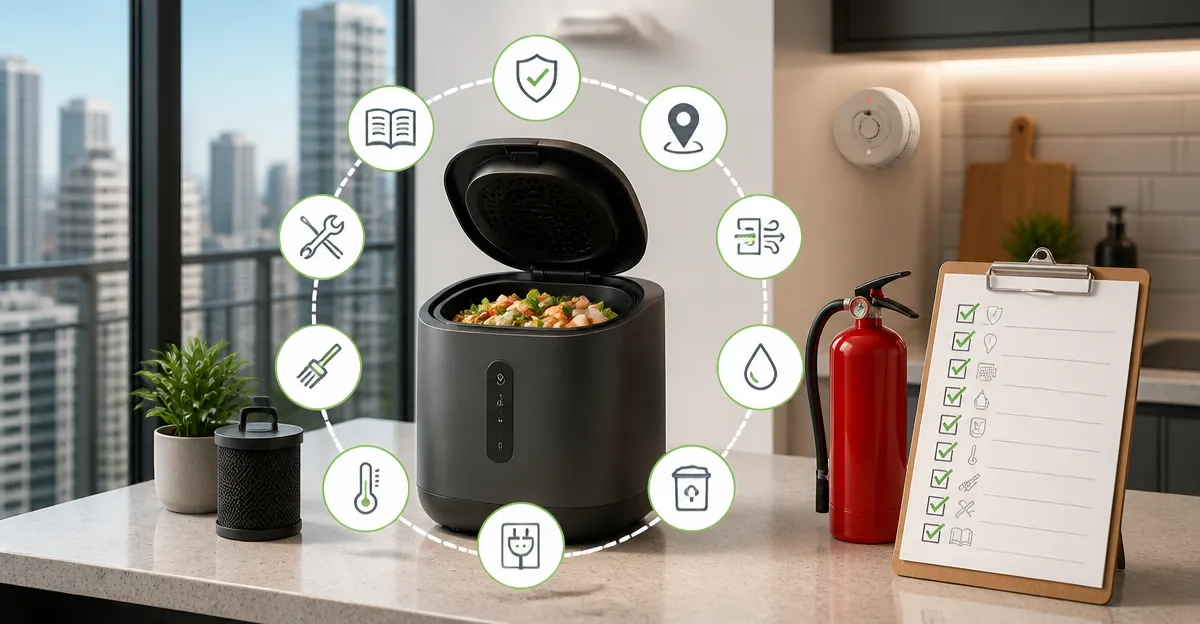
Introduction
This guide teaches readers how to develop a comprehensive fire safety checklist for countertop composters used in high‑rise apartments. By following ten clearly defined steps, one can minimise fire risk while preserving the convenience of indoor composting. The article also recommends specific tools that enhance safety and operational efficiency. Understanding these measures protects both residents and property managers from costly incidents.
What You'll Need
- A reliable countertop composter such as Ouaken 4L Black Composter or Ouaken 4L White Composter
- A fire‑resistant silicone mat
- Battery‑powered smoke detector
- Class ABC fire extinguisher
- Temperature‑monitoring device (optional)
- Cleaning supplies for regular maintenance
Step 1: Choose a Low‑Heat, Odor‑Free Model
Select a composter that operates at low temperatures and includes odor‑control features. The Ouaken 4L Black Composter uses high‑temperature drying combined with a carbon filter, reducing waste volume by up to 90% while keeping emissions below 40 dBA. Its price of $215.97 and rating of 4.2 / 5 from 903 reviews indicate solid performance and value. Choosing a model with built‑in safety controls reduces the likelihood of overheating and accidental ignition.
Step 2: Verify Electrical Safety and Grounding
Ensure the outlet supplying power to the composter is properly grounded and rated for continuous use. The Airthereal 2.5L Electric Composter includes an automatic shut‑off feature that disengages power if temperature thresholds are exceeded. Priced at $169.99 with a 4.2 / 5 rating, it demonstrates reliable electrical protection. Using a model with built‑in safeguards simplifies compliance with building codes.
Step 3: Place a Fire‑Resistant Mat Under the Unit
Lay a silicone‑based fire‑resistant mat on the countertop to protect the surface from heat spikes. The mat should extend at least two inches beyond the composter’s footprint. While this step does not require a specific product recommendation, a high‑temperature mat can be sourced from local hardware stores. This barrier prevents heat transfer to flammable countertops and reduces fire spread potential.
Step 4: Ensure Adequate Ventilation
Good airflow dissipates heat and prevents moisture buildup that can lead to mold or combustion. The Epica 1.3 Gallon Compost Bin features an airtight lid with a replaceable activated‑charcoal filter, which controls odor while allowing passive ventilation. Priced at $29.98 and rated 4.7 / 5, it is an economical complement for rooms where additional airflow is needed. Pairing a ventilated bin with an electric composter creates a balanced environment that mitigates heat accumulation.
Step 5: Keep Flammable Materials Away
Store paper towels, cleaning solvents, and cooking oils at least one foot from the composter. Even though the device operates at low heat, stray sparks or static discharge can ignite nearby combustibles. Establish a clear zone around the appliance and label it with a warning sign. This practice aligns with fire‑code recommendations for commercial kitchen equipment.
Step 6: Install a Dedicated Smoke Detector
Mount a battery‑powered smoke detector on the ceiling directly above the composter, but at least six inches away to avoid false alarms from steam. Test the detector monthly and replace batteries annually. While not a product from the list, a reputable detector such as those from Kidde or First Alert provides early warning, giving occupants valuable response time.
Step 7: Use a Model with an Easy‑Stop Button
In an emergency, the ability to halt operation instantly is crucial. The Ouaken 4L White Composter incorporates a tactile stop button that cuts power within seconds. At $218.48 and a 4.2 / 5 rating, it offers the same performance as the black version with an added visual cue for safety. Selecting a unit with this feature streamlines emergency response.
Step 8: Schedule Regular Cleaning and Auto‑Clean Cycles
Residue buildup can obstruct airflow and increase internal temperature. Both Ouaken models provide an auto‑clean mode that runs a self‑purge cycle after each composting session. Activate this function weekly to remove debris and maintain optimal performance. Consistent cleaning aligns with the manufacturer’s warranty requirements and reduces fire risk.
Step 9: Monitor Temperature and Humidity
Temperature spikes above 70 °C indicate a malfunctioning motor or clogged filter. The Saluna 5L Electric Composter includes an intelligent humidity sensor and LED display that alert users when conditions deviate from safe ranges. Priced at $224.99 with a 4.5 / 5 rating, it provides real‑time data that supports proactive safety measures. Integrating this monitoring step into the checklist ensures timely intervention.
Step 10: Document the Checklist and Review Monthly
Create a written checklist that records each safety action, the date of completion, and any observations. Store the document in a visible location near the composter. Conduct a monthly review to verify that all items remain compliant, updating the list as needed when new equipment is added. A disciplined documentation habit reinforces accountability and demonstrates due diligence to building management.
Tips & Pro Tips
- Never overload the composter; exceed the 4‑5 L capacity to avoid motor strain.
- Use the crush mode for daily waste to minimise heat generation, reserving ferment mode for larger batches.
- Replace carbon filters according to manufacturer guidance—typically every five months for Ouaken units.
- Keep a small fire extinguisher within arm’s reach, and ensure all residents know its location.
Troubleshooting
- Unit does not start: Verify that the outlet is functional and that the safety stop button is not engaged.
- Excessive odor: Check the carbon filter for saturation and replace if necessary.
- Unusual noise or vibration: Inspect the blades for foreign objects; clean the interior using the auto‑clean cycle.
Conclusion
By following the ten steps outlined above, residents of high‑rise apartments can safely enjoy the environmental benefits of countertop composting. The checklist integrates practical safety measures with product‑specific features that reduce fire hazards. Implementing regular maintenance, proper placement, and vigilant monitoring creates a resilient composting system. Residents are encouraged to adopt this protocol and share it with building management to promote a culture of safety.
Products Mentioned in This Guide
Frequently Asked Questions
What are the essential items for a fire‑safety checklist for countertop composters?
Include a fire‑resistant silicone mat, battery‑powered smoke detector, Class ABC fire extinguisher, temperature‑monitoring device (optional), and regular cleaning supplies.
How does choosing a low‑heat, odor‑free composter reduce fire risk?
Low‑heat models operate below ignition temperatures and often have built‑in odor‑control, minimizing heat buildup that can trigger fires.
Where should I place a countertop composter to maximize fire safety?
Position it on a stable, heat‑resistant surface away from flammable materials and ensure at least 12 inches of clearance on all sides.
How often should I inspect and maintain my countertop composter for fire safety?
Conduct visual inspections weekly, clean the unit after each use, and test the smoke detector monthly.
Is a temperature‑monitoring device necessary for indoor composters?
While optional, a temperature monitor alerts you to abnormal heat spikes, allowing early intervention before a fire can develop.