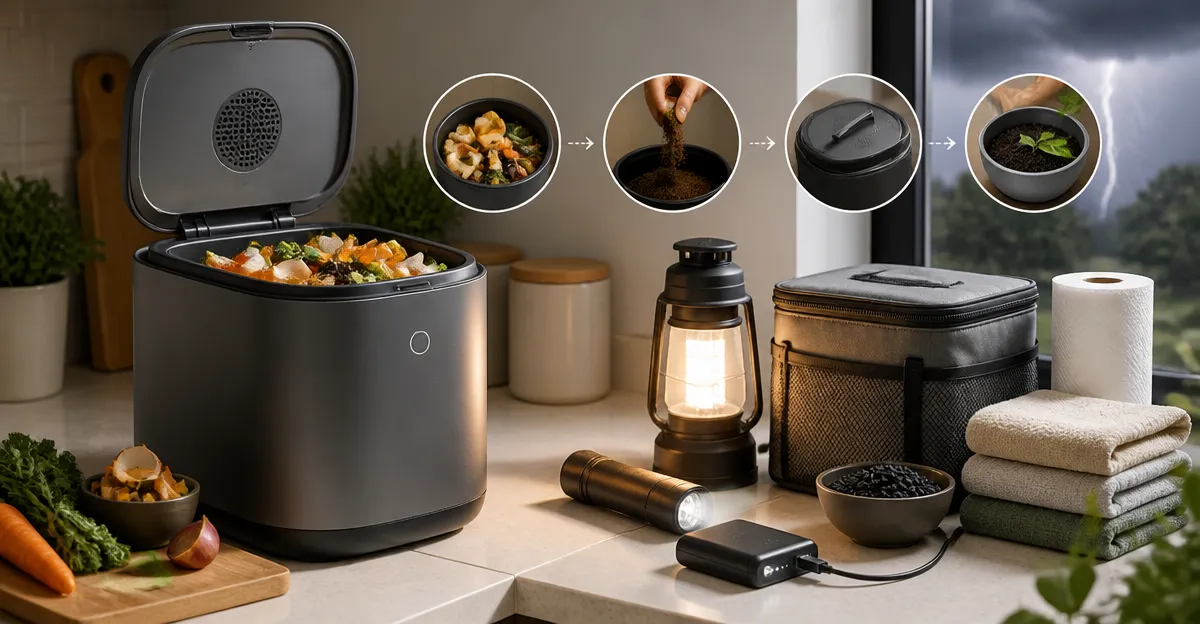
How to Make an Emergency Power Outage Plan for Your Countertop Composter (Keep Compost Fresh & Odor‑Free)
Introduction
Power outages can disrupt the delicate balance of temperature, moisture, and aeration that keeps kitchen compost healthy. This guide teaches readers how to protect their countertop compost during an outage, ensuring that organic waste remains fresh and odor‑free. By following the outlined steps, one can avoid unpleasant smells, prevent mold growth, and maintain the microbial activity essential for successful composting. The information is valuable for households that rely on indoor compost bins and want to preserve their investment in sustainable waste management.
What You'll Need
- Stainless‑steel countertop compost bin with dual‑filter or charcoal filter technology
- Portable battery‑powered charger or uninterruptible power supply (UPS) for electric models
- Silicone lid seal or rubber gasket for extra odor containment
- Reusable compost bags or newspaper for interim storage
- Cleaning supplies such as mild dish soap and a soft cloth
Each of these items can be sourced from reputable brands on Amazon, and the guide highlights the most effective options.
Step 1: Assess Your Power Outage Risks
Begin by evaluating the likelihood and typical duration of power outages in your region. Review local utility reports, historical weather patterns, and any recent infrastructure upgrades that may affect reliability. Understanding the risk level helps you decide whether a simple manual backup or a full‑featured electric composter is necessary. For households that experience frequent outages, investing in a resilient compost bin with built‑in odor control is advisable.
Step 2: Prepare a Backup Power Source for Electric Composters
If you own an electric model such as the JollyOne Electric Kitchen Composter, ensure you have a portable battery pack or UPS capable of delivering at least 30 minutes of operation. This duration allows the unit to complete a processing cycle and transition to its low‑noise Store Mode before the battery is depleted. The JollyOne offers five intelligent modes, including Auto, Manual, Store, Clean, and Compost, and operates at ≤45dB, making it suitable for apartments where noise is a concern. At $208.09 with a 5/5 rating from 7 reviews, it provides premium performance for families that need reliable indoor waste reduction.
Step 3: Secure Your Compost Bin to Prevent Spillage
During an outage, vibrations from generators or moving furniture can cause a countertop bin to tip over. Place the bin on a non‑slip mat or a silicone coaster to anchor it firmly. For bins with a soft‑grip handle, such as the RED FACTOR Premium Compost Bin, ensure the handle is positioned away from the edge of the counter to reduce leverage. This stainless‑steel bin holds 1.3 gallons and features a dome‑shaped lid that adds stability while enhancing kitchen aesthetics. Priced at $35.59 with a 4.8/5 rating from 5,795 reviews, it combines durability with an odor‑neutralizing dual‑filter system.
Step 4: Optimize Odor Control Using Filters and Seals
Odor control is critical during power loss because the composting process may slow, allowing volatile compounds to accumulate. The RED FACTOR bin includes spare active‑carbon filters that absorb smells even when the fan is inactive. Replace the filters every two months for optimal performance, and store spares in a dry place. If you prefer a charcoal‑based solution, the Utopia Kitchen Countertop Compost Bin incorporates a charcoal filter that traps odors naturally. This model costs $21.99 and carries a 4.5/5 rating from 20,025 reviews, making it an affordable alternative for households that need reliable smell mitigation without electricity.
Step 5: Manage Moisture and Temperature Manually
Power loss can cause temperature fluctuations, which may slow microbial activity and increase the risk of anaerobic conditions. Use a simple kitchen thermometer to monitor the bin temperature; aim for a range of 55‑70°F (13‑21°C). If the temperature drops below this range, add a handful of shredded newspaper or dry leaves to absorb excess moisture and provide insulation. Conversely, if the bin becomes too dry, lightly mist the contents with water using a spray bottle. Maintaining the correct moisture balance helps prevent foul odors and preserves the compost’s nutritional value.
Step 6: Transfer to a Larger Capacity Bin If Outage Extends
When an outage is expected to last more than 24 hours, consider moving the compost to a larger container that can accommodate additional waste without frequent emptying. The ELPHECO Kitchen Compost Bin offers a 1.8‑gallon capacity and can be wall‑mounted or hung on a cabinet door, freeing up countertop space. Its four rubber flaps keep compost bags securely in place, and the drawstring design allows for easy bag removal without touching the waste. Priced at $19.99 with a 4.5/5 rating from 1,648 reviews, this bin is ideal for temporary overflow during prolonged outages.
Step 7: Resume Normal Operations Once Power Returns
After electricity is restored, reactivate any electric composters and return the bin to its regular location. For the JollyOne, run a short Auto cycle to re‑aerate the contents and eliminate any lingering smells. Inspect the filters in both the RED FACTOR and Utopia bins; replace them if they appear saturated. Finally, clean the interior of each bin with warm, soapy water to remove any residue that may have accumulated during the outage. Regular maintenance ensures the compost remains healthy and ready for the next batch of kitchen scraps.
Tips & Pro Tips
- Label your compost bins with a waterproof marker indicating the last time they were emptied; this helps track waste buildup during power loss.
- Keep a small LED lantern near the compost area to provide light for inspection without draining the backup power source.
- Store a spare set of carbon or charcoal filters in a sealed plastic bag to avoid moisture damage during humid conditions.
- Consider adding a thin layer of garden soil on top of the compost to introduce beneficial microbes that accelerate decomposition when power returns.
Troubleshooting
Problem: Persistent Bad Odor
Cause: Filters may be saturated or the bin may be too moist. Solution: Replace the active‑carbon filter in the RED FACTOR bin or the charcoal filter in the Utopia bin, and adjust moisture by adding dry newspaper.
Problem: Compost Is Too Dry
Cause: Low temperature and lack of aeration. Solution: Lightly mist the compost with water and cover the bin with a cloth to retain humidity.
Problem: Electric Composter Won't Start After Outage
Cause: Battery or UPS may be depleted. Solution: Recharge the power source fully, then reset the JollyOne by holding the power button for three seconds before restarting a cycle.
Conclusion
Creating an emergency power outage plan for your countertop composter safeguards the freshness and odor‑free nature of your kitchen waste. By assessing risks, securing a backup power source, optimizing odor control, and managing moisture manually, one can maintain a healthy composting environment even during extended blackouts. The recommended products—RED FACTOR Premium Compost Bin, ELPHECO Kitchen Compost Bin, Utopia Kitchen Countertop Compost Bin, and JollyOne Electric Kitchen Composter—provide reliable tools that enhance each step of the process. Implement these strategies today to ensure your compost remains a valuable resource rather than a source of frustration.
Products Mentioned in This Guide
Frequently Asked Questions
What steps should I take to protect my countertop composter during a power outage?
Seal the lid, add a silicone gasket, move waste to a reusable bag or newspaper, and use a battery‑powered charger or UPS to keep any electric aeration running.
How does a battery‑powered charger or UPS help an electric compost bin?
It supplies continuous power to the bin’s motor or fan, maintaining aeration and temperature control despite the outage.
Can I use a silicone lid seal to prevent odors when the power is out?
Yes, a silicone seal or rubber gasket creates an airtight closure that limits odor escape while microbial activity continues.
What temporary storage options work best for compost material during an outage?
Place the waste in reusable compost bags or line the bin with newspaper to keep moisture balanced and reduce mess.
How often should I check and clean my composter after a power interruption?
Inspect it within 24 hours for moisture or mold, and clean the bin with mild dish soap and a soft cloth before resuming normal use.