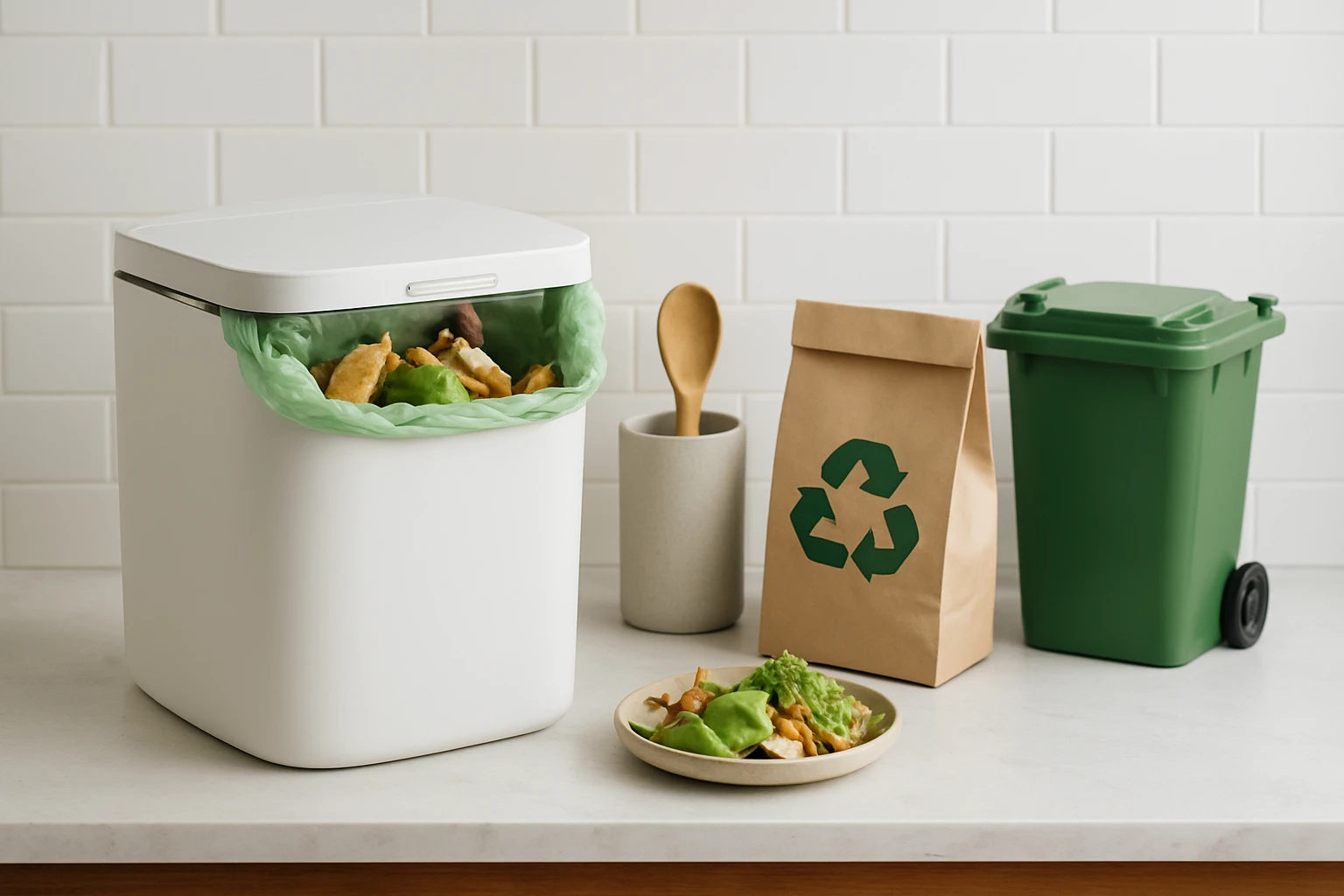
How to Integrate a Countertop Composter with Your City's Organics Program: Step-by-Step Guide
In this guide one will discover how to connect a kitchen countertop composter to a municipal organics collection system. The process reduces household waste, saves money on fertilizer, and supports community sustainability goals. Readers will receive actionable steps, product recommendations, and troubleshooting advice. By the end of the article one will be able to turn daily food scraps into valuable compost while complying with local regulations.
What You’ll Need
- A countertop composter that matches the volume of your household waste. Vego 4L Electric Kitchen Composter is a versatile option with smart app integration.
- An odor‑control bin for temporary storage before city pickup. Epica Stainless Steel Compost Bin offers a sealed lid and replaceable carbon filter.
- A budget‑friendly stainless‑steel bucket for secondary storage or overflow. Red Factor Copper Compost Bin provides odorless performance at a low price.
- Measuring tape, notebook or digital tracker, and basic cleaning supplies.
Step 1: Assess Local Organics Program Requirements
The first step is to review the city’s organics collection guidelines. Most municipalities require that compost be free of non‑organic contaminants, be stored in a sealed container, and be delivered on a specific schedule. Locate the program’s handbook online or contact the waste services department for clarification on acceptable bin sizes and drop‑off locations. Understanding these rules prevents rejected pickups and ensures that your compost contributes to the city’s diversion targets.
Step 2: Choose the Right Countertop Composter
Selecting a composter that aligns with your kitchen workflow and the city’s requirements is critical. The Vego 4L Electric Kitchen Composter offers a 4‑liter capacity, five processing modes, and a built‑in scale that adjusts cycle length based on load weight. At $299.95 it carries a 4.2‑star rating from 93 reviews, indicating reliable performance for medium‑size households. Its whisper‑quiet operation and glass lid with internal lighting make it suitable for open‑plan kitchens where odor and noise are concerns.
For users who prefer a non‑electric, low‑maintenance option, the Epica Stainless Steel Compost Bin provides a 1.3‑gallon capacity, airtight lid, and replaceable activated‑charcoal filter. Priced competitively, it eliminates the need for electricity and is ideal for renters who cannot install larger appliances. Its stainless‑steel construction resists rust and leaks, ensuring a clean countertop environment.
If budget constraints are paramount, the Red Factor Copper Compost Bin delivers odorless storage for $29.99 with a 4.7‑star rating from over 5,600 reviews. The dual‑filter technology neutralizes smells, allowing continuous addition of scraps without disturbing neighbors. While it does not process waste electrically, it serves as an excellent pre‑collector before transferring material to the Vego or city bin.
Step 3: Set Up the Composter in Your Kitchen
Place the chosen composter on a stable, heat‑resistant surface near your sink for easy rinsing of utensils. Ensure there is at least 12 inches of clearance on all sides to accommodate the Vego’s glass lid opening and to allow airflow around the Epica or Red Factor bins. Connect the Vego to a power outlet and download the companion app; the app provides real‑time weight readings and cycle status, which helps you avoid overloading the unit.
Next, install the carbon filter in the Epica bin according to the manufacturer’s instructions. The filter should be replaced every six months to maintain odor control, especially in warm climates. For the Red Factor bin, insert the dual filters and verify that the ventilation holes are unobstructed. These steps guarantee that each product performs at peak efficiency and complies with city odor‑mitigation standards.
Step 4: Align Your Compost Flow with City Collection
Determine the city’s collection frequency—weekly, bi‑weekly, or monthly—and schedule your internal composting cycles accordingly. Use the Vego’s “Express Mode” to accelerate decomposition when a pickup is imminent, reducing the volume of material you need to transport. For non‑electric bins, plan a manual transfer routine: empty the Red Factor bin into the Epica bin or a sealed tote every two to three days, then move the sealed tote to the city drop‑off point on collection day.
Maintain a simple log—either a notebook or a digital spreadsheet—recording the date, weight (if available), and any observations such as odor or moisture level. Many municipalities require reporting of total organics weight for incentive programs; the Vego app can export weight data, simplifying compliance. Consistent documentation also helps you track cost savings from reduced fertilizer purchases.
Step 5: Maintain Compost Quality
Quality compost must be balanced in carbon‑rich (dry) and nitrogen‑rich (wet) materials. Add shredded newspaper, cardboard, or dry leaves to the Vego or Epica bin to provide carbon, and avoid excessive oily or dairy waste which can cause odor and slow decomposition. The Vego’s “Fertilize Mode” produces semi‑composted material ideal for garden beds, while the “Grass Mode” accelerates breakdown for lawn applications.
Regularly clean the internal bucket of the Vego using the built‑in “Clean Mode” to prevent residue buildup. For the Epica and Red Factor bins, rinse with warm, soapy water and dry thoroughly before resealing. Proper maintenance extends the lifespan of the stainless‑steel components and ensures that the city’s organics program receives high‑quality material.
Step 6: Record and Report Contributions
After each city pickup, record the total weight of compost delivered. If you use the Vego, export the weight data from the app and attach it to your municipal report. For manual bins, weigh the sealed tote before transport using a household scale; the Vego’s built‑in scale can serve this purpose as well. Accurate reporting may qualify you for local rebates or recognition programs.
Share your experience with neighbors and community groups to encourage broader participation. Demonstrating a successful integration of a countertop composter with city services can inspire others to adopt similar practices, amplifying the environmental impact of the municipal organics program.
Tips & Pro Tips
- Start with small batches of waste to allow the Vego’s smart scale to calibrate optimal cycle times.
- Keep a small container of shredded paper beside the composter for quick carbon additions.
- Replace the Epica carbon filter before it becomes saturated; a clogged filter reduces odor control.
- Use the Red Factor’s soft‑grip handle to transport the sealed tote safely to the city drop‑off point.
- Periodically inspect the Vego’s internal filter and clean it to maintain whisper‑quiet performance.
Troubleshooting
Problem: Persistent odor despite using the Vego’s Express Mode.
Solution: Verify that the lid is sealed tightly, clean the internal carbon filter, and add additional dry carbon material.
Problem: The Epica bin leaks during transport.
Solution: Ensure the lid is fully engaged, inspect the seal for damage, and avoid overfilling beyond the 1.3‑gallon capacity.
Problem: The Red Factor filter becomes saturated quickly in hot climates.
Solution: Replace the filter more frequently (every three months) and store the bin in a cooler part of the kitchen.
Conclusion
Integrating a countertop composter with your city’s organics program transforms household food waste into a valuable resource while supporting municipal sustainability goals. By selecting the appropriate composter, aligning your composting schedule with city pickups, and maintaining proper balance of materials, one can achieve efficient, odorless operation. The recommended products—Vego 4L Electric Kitchen Composter, Epica Stainless Steel Compost Bin, and Red Factor Copper Compost Bin—provide flexible solutions for a range of budgets and preferences. Implement the steps outlined above, track your contributions, and enjoy the environmental and financial benefits of a closed‑loop kitchen ecosystem.
Products Mentioned in This Guide
Frequently Asked Questions
How do I connect a countertop composter to my city’s organics collection schedule?
Place the composter’s output in an odor‑control bin that meets the city’s pickup requirements and set the collection day to match your municipal schedule.
What size countertop composter is suitable for a typical household?
A 4‑liter electric model, like the Vego, handles daily food scraps for 2‑4 people without frequent emptying.
Do I need a separate storage container before the city picks up the compost?
Yes, use a sealed odor‑control bin with a carbon filter to keep smells down and comply with local regulations.
Are there any permits or registrations required to participate in a municipal organics program?
Most cities only require you to register your address online; no special permits are needed for residential compost bins.
What common issues arise when integrating a countertop composter and how can I troubleshoot them?
Odor and slow decomposition are typical; ensure the bin is sealed, add carbon material, and keep the composter’s temperature within the recommended range.