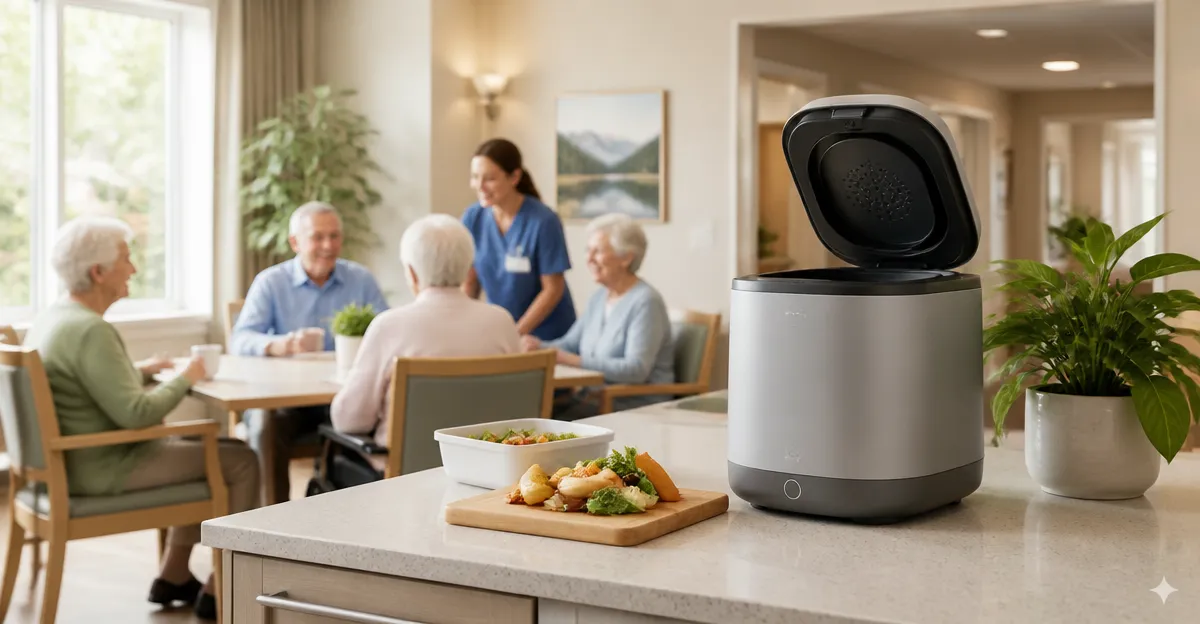
The Complete Guide to Countertop Composters for Assisted Living Facilities: How to Choose Odor‑Free, Resident‑Friendly Food Waste Solutions
Introduction
The management of food waste in assisted living facilities has become a critical component of sustainable operations. This guide explains the benefits of countertop composters, outlines the technical considerations that affect odor control, and presents a systematic method for selecting the most appropriate device for a residential care environment. Readers will learn how to evaluate product specifications, compare leading models, and implement daily practices that keep composting hygienic and resident‑friendly. By the end of this article, decision‑makers will possess the knowledge required to adopt a composting solution that aligns with health standards and environmental goals.
Background and Context
Composting on a countertop converts organic kitchen scraps into nutrient‑rich material that can be used for gardening or landscaping. In assisted living facilities, the volume of food waste is substantial, yet space for traditional compost piles is often limited. Countertop composters address this challenge by providing a compact, sealed system that can be placed in a staff kitchen or a common area. The primary technical hurdle is odor management; residents and staff expect a clean environment, and any unpleasant smell can compromise the perception of care quality. Modern units employ activated‑carbon filters, airflow lids, and high‑temperature drying cycles to mitigate odor while accelerating decomposition.
Key Concepts for Selecting a Countertop Composter
When evaluating countertop composters, facilities should consider the following criteria:
- Capacity and Size: The device must accommodate the daily waste generated by the resident population without requiring constant emptying.
- Odor‑Control Technology: Activated‑carbon filters, sealed lids, and airflow designs are essential for preventing odor escape.
- Ease of Cleaning: Removable inner buckets, dishwasher‑safe components, and automated cleaning cycles reduce labor requirements.
- Power Consumption and Noise: Electric models consume electricity and may generate noise; the impact on the facility’s energy budget and resident comfort should be assessed.
- Durability and Warranty: Stainless‑steel or galvanized steel construction ensures long‑term use in a high‑traffic environment.
These concepts form the foundation of the comparison matrix presented later in the guide.
Recommended Products for Assisted Living Facilities
Two countertop composters have demonstrated strong performance in independent reviews and are widely available on Amazon. The first product, Barnyard Designs Countertop Compost Bin, offers a passive, filter‑based approach that is ideal for facilities seeking a low‑maintenance solution. The second product, Growell Electric Countertop Composter, employs a three‑stage mechanical process that dramatically reduces waste volume and eliminates odor through high‑temperature drying.
Barnyard Designs Countertop Compost Bin
This 1.2‑gallon unit is constructed from rust‑proof galvanized steel and features three replaceable smell‑absorbing filters. The outer bin can be hand‑washed, while the inner bucket is dishwasher‑safe, simplifying routine sanitation. The fresh‑airflow lid promotes aeration, which helps maintain aerobic decomposition and reduces the likelihood of foul odors. At a price of $24.95, the bin has earned a rating of 4.4 out of 5 stars from 1,231 reviews, indicating broad customer satisfaction.
Growell Electric Countertop Composter
The Growell model provides a 4‑liter capacity and incorporates a brushless motor that drives low‑speed, high‑torque blades. Its three‑stage process—grinding, high‑temperature drying, and cooling—reduces food‑waste volume by up to 90 % within 3–6 hours. Dual activated‑carbon filters achieve a 99.7 % interception rate of odor molecules, ensuring a virtually odor‑free operation. Priced at $249.99, the unit holds a 4.7‑star rating from 18 verified purchasers and includes a three‑year manufacturer warranty.
Comparison and Selection Guide
The table below summarizes the most relevant specifications for each product, allowing facilities to match their operational needs with the appropriate technology.
| Feature | Barnyard Designs Countertop Compost Bin | Growell Electric Countertop Composter |
|---|---|---|
| Capacity | 1.2 gallons (≈5 L) | 4 L (≈1 gallon) |
| Odor Control | Three replaceable activated‑carbon filters | Dual activated‑carbon filters with 99.7 % interception |
| Power Source | Passive (no electricity required) | Electric motor (brushless) |
| Volume Reduction | Depends on natural decomposition; no guaranteed reduction rate | Up to 90 % reduction in 3–6 hours |
| Cleaning Method | Removable inner bucket (dishwasher safe); hand‑wash outer bin | Automatic cleaning mode; manual rinse optional |
| Noise Level | Silent (no moving parts) | Low‑moderate during grinding cycle |
| Price | $24.95 | $249.99 |
| Customer Rating | 4.4 / 5 (1,231 reviews) | 4.7 / 5 (18 reviews) |
Facilities with limited budgets and modest waste streams may prefer the Barnyard Designs model for its simplicity and low cost. Conversely, larger facilities that generate high volumes of waste and desire rapid reduction should consider the Growell electric unit despite its higher upfront expense.
Best Practices and Tips for Resident‑Friendly Composting
- Designate a Dedicated Area: Place the composter in a well‑ventilated kitchen corner away from dining tables to minimize accidental contact.
- Train Staff and Residents: Provide clear signage that explains which food scraps are acceptable, how to use compostable liners, and how often to empty the bin.
- Maintain Filters Regularly: Replace activated‑carbon filters according to the manufacturer’s schedule (every three months for the Barnyard Designs bin, or when the indicator signals for the Growell unit).
- Use Compostable Liners: Liners simplify removal of processed material and reduce the need for hand‑washing the inner bucket.
- Monitor Temperature and Moisture: For electric models, ensure the drying cycle reaches the recommended temperature to inhibit bacterial growth.
- Integrate with Gardening Programs: Transfer finished compost to outdoor gardens or planters, creating a closed‑loop system that engages residents in sustainability activities.
- Schedule Routine Inspections: Conduct weekly checks for leaks, filter integrity, and any signs of mold, documenting findings in the facility’s maintenance log.
By following these practices, assisted living facilities can maintain a hygienic environment while fostering a sense of environmental stewardship among residents.
Frequently Asked Questions
- 1. Do countertop composters require electricity?
- The Barnyard Designs Countertop Compost Bin operates without electricity, relying on passive airflow and replaceable filters. The Growell Electric Countertop Composter requires a power outlet for its motor and drying cycle.
- 2. How often must the odor‑control filters be changed?
- Manufacturers recommend replacing the filters every three months for the Barnyard Designs unit and following the indicator‑based reminder for the Growell model.
- 3. Can the compost produced be used on edible plants?
- Both units produce compost that is suitable for non‑food‑crop applications unless the user follows additional sanitization steps. For edible plants, it is advisable to allow the compost to mature for several weeks before use.
- 4. What types of food waste are acceptable?
- Both models accept fruit and vegetable scraps, coffee grounds, and tea bags. The Growell unit can also process tougher items such as chicken bones due to its heavy‑duty blades, whereas the Barnyard Designs bin should avoid hard bones to prevent filter clogging.
- 5. Is the composting process safe for residents with allergies?
- Since the units are sealed and equipped with carbon filters, odor and airborne particles are minimized, reducing the risk of allergic reactions. Regular cleaning further ensures a hypoallergenic environment.
- 6. How much space is required on a countertop?
- The Barnyard Designs bin measures 7 inches wide by 9.5 inches high with lid, while the Growell unit occupies a footprint of approximately 12 inches square, making both suitable for standard kitchen counters.
- 7. What is the expected lifespan of each device?
- The Barnyard Designs bin, constructed from galvanized steel, can last many years with proper maintenance. The Growell electric model includes a brushless motor rated for 2‑3 times the lifespan of typical composters, supported by a three‑year warranty.
Conclusion
Choosing an odor‑free, resident‑friendly countertop composter enables assisted living facilities to reduce waste, lower disposal costs, and enhance sustainability initiatives. By evaluating capacity, odor‑control mechanisms, cleaning convenience, and budget constraints, administrators can select a system that aligns with operational goals. The Barnyard Designs Countertop Compost Bin offers a cost‑effective, passive solution, while the Growell Electric Countertop Composter delivers rapid volume reduction and advanced odor filtration for higher‑throughput environments. Implementing the best‑practice guidelines outlined in this guide will ensure safe, efficient, and pleasant composting for both staff and residents.
Products Featured in This Guide
Barnyard Designs Countertop Compost Bin
Price: $24.95
Rating: 4.4 out of 5 stars (1,231 reviews)
Why featured: Provides an affordable, passive composting option with three replaceable odor‑absorbing filters, making it ideal for facilities seeking low‑maintenance, silent operation.
Growell Electric Countertop Composter
Price: $249.99
Rating: 4.7 out of 5 stars (18 reviews)
Why featured: Offers rapid 90 % volume reduction, dual carbon‑filter odor control, and an automatic cleaning cycle, making it suitable for larger facilities with high waste volumes.