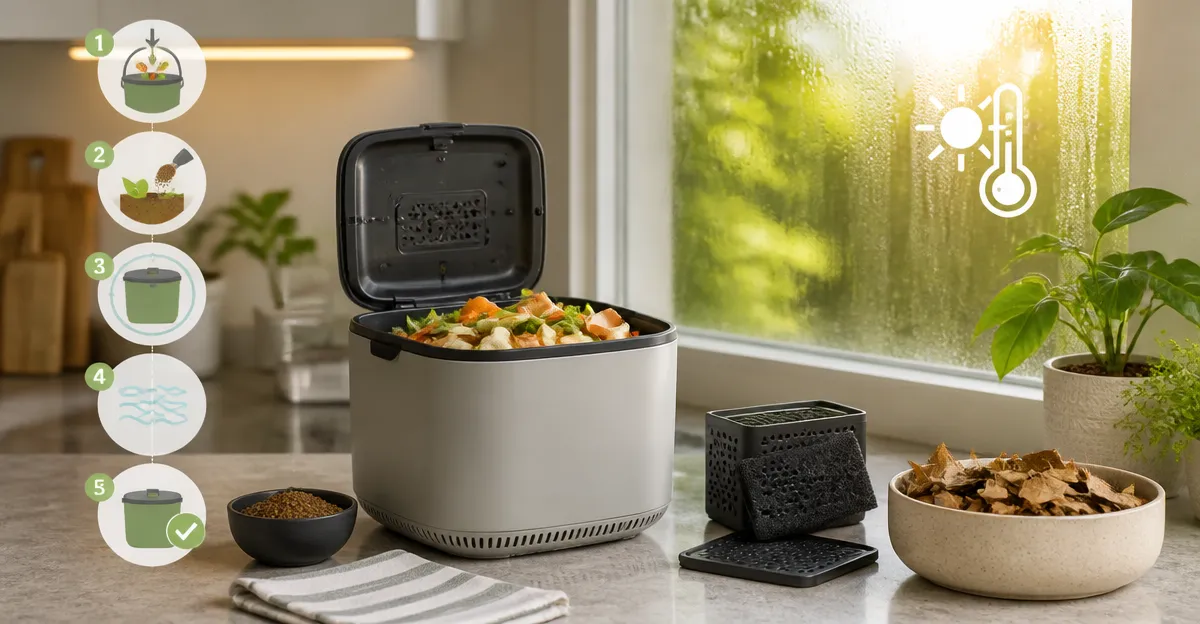
Introduction
During summer heat waves and periods of high humidity, a countertop compost bin can become a source of unpleasant odor, excess moisture, and even pest activity. This guide explains how to operate a kitchen composter safely under those conditions, how to maintain optimal temperature and moisture levels, and how to prevent common problems. Readers will learn practical steps, receive product recommendations that simplify each phase, and gain troubleshooting tips that keep the composting process efficient and hygienic.
What You’ll Need
- An electric countertop composter or a passive stainless‑steel bin (see product recommendations below).
- Activated‑charcoal filters for odor control.
- Silicone or breathable compost bags for pre‑sorting.
- A small kitchen fan or dehumidifier for extreme humidity.
- Cleaning supplies such as a soft brush and mild detergent.
Step 1: Choose the Right Compaster for Hot Conditions
Selecting a device that can regulate temperature is the first line of defense against overheating. The Ouaken 4L Electric Kitchen Composter offers a built‑in high‑temperature drying cycle that reduces waste volume by up to 90 % within hours. Its low‑noise motor operates below 40 dBA, making it suitable for open‑plan kitchens even at night. Priced at $219.99 and holding a 4.2‑star rating from 898 reviews, it combines odor‑free carbon filtration with an auto‑clean function, which minimizes manual maintenance during hot weather.
For larger households, the Saluna 5L Electric Kitchen Composter provides a 5‑liter capacity and an intelligent humidity sensor that adjusts the drying cycle automatically. At $229.99 with a 4.5‑star rating from 48 reviews, it includes a transparent lid and LED display, allowing users to monitor moisture levels and intervene before excess humidity creates odor.
If budget constraints are a factor, a passive stainless‑steel bin such as the Epica 1.3 Gallon Compost Bin offers robust odor control through a replaceable charcoal filter. It costs $29.98 and enjoys a 4.7‑star rating from more than 20,000 reviewers. Although it does not heat the waste, its airtight lid and leak‑proof construction keep external heat from accelerating decomposition, which can be advantageous when ambient temperatures are extreme.
Finally, the Utopia Kitchen 1.3 Gallon Compost Bin provides a similar stainless‑steel design with a charcoal filter for odor control, priced at $24.35 and rated 4.5 stars by over 20,000 users. Its compact size makes it ideal for apartments where space is limited and airflow is essential.
Step 2: Prepare the Compost Feedstock
During humid periods, food scraps retain more moisture, which can lead to anaerobic conditions and foul smell. It is essential to balance wet and dry materials before loading the composter. Aim for a ratio of roughly three parts dry (e.g., shredded newspaper, cardboard, or dried leaves) to one part wet (fruit peels, vegetable trimmings). Use a breathable compost bag to separate wet items from dry ones, allowing excess liquid to drain before the material reaches the bin.
For electric models, the built‑in drying cycle will remove moisture, but pre‑balancing reduces the workload on the machine and shortens cycle time. For passive bins such as the Epica or Utopia models, adding dry bulking agents prevents the interior from becoming soggy, which is a common cause of odor during heat waves.
Remember to trim large pieces into bite‑size fragments. Smaller pieces increase the surface area exposed to heat and airflow, enabling faster dehydration and reducing the risk of clumping that can obstruct blades in electric units.
Step 3: Control Temperature and Humidity Inside the Compaster
Electric composters like the Ouaken and Saluna units feature temperature sensors that automatically shut down the motor if internal heat exceeds safe limits. When operating in a hot kitchen, set the device to "Crush" mode rather than "Ferment" mode. Crush mode focuses on volume reduction with lower energy consumption, thereby generating less heat. Ferment mode is designed for accelerated microbial activity, which can raise temperature beyond 55 °C in a sweltering environment, potentially leading to odor and pest attraction.
If the kitchen lacks adequate ventilation, place a small portable fan near the composter to increase air exchange. For passive bins, position the unit away from direct sunlight and near a window that can be opened to promote airflow. A dehumidifier placed nearby can also lower ambient humidity, making the interior of the bin drier and less attractive to flies.
Monitor the LED display on the Saluna model or the transparent lid on the Ouaken model to gauge moisture levels. When the interior appears wet, initiate an extra drying cycle or pause the process until the material dries to a crumbly texture.
Step 4: Prevent Odor Formation
Odor is the most common complaint during heat waves because elevated temperatures accelerate microbial metabolism, releasing volatile compounds. The carbon filters supplied with the Ouaken, Saluna, Epica, and Utopia units adsorb these compounds effectively. Replace the filter according to the manufacturer’s recommendation—approximately every five months for the Ouaken model and every six months for the Epica and Utopia models.
In addition to carbon filtration, maintain a thin layer of dry material on top of the waste after each loading. This layer acts as a barrier that traps moisture and limits the release of gases. For electric composters, the auto‑clean function removes residual particles that could decompose and emit odor.
Do not overload the bin beyond its rated capacity. Overfilling reduces airflow and creates anaerobic pockets, which produce sour smells. The 4‑liter capacity of the Ouaken and the 5‑liter capacity of the Saluna are designed for daily household waste; exceeding these limits defeats the purpose of rapid drying.
Step 5: Guard Against Pests
High humidity attracts fruit flies and ants, especially when food waste is exposed. The airtight lids of the Epica and Utopia bins, combined with activated‑charcoal filters, create a sealed environment that deters insects. Ensure the lid seals properly after each use; any gaps allow pests to enter.
For electric units, the sealed chamber and internal grinding mechanism keep waste inaccessible to insects. However, the external bucket should be emptied regularly—preferably after each cycle—to avoid residual crumbs that can lure pests. The detachable bucket of the Ouaken model is dishwasher safe, simplifying thorough cleaning.
If an infestation occurs, remove the waste, clean the interior with a solution of water and mild vinegar, and replace the carbon filter. Adding a few drops of essential oil such as peppermint to the cleaning solution can provide an additional natural repellent.
Step 6: Routine Cleaning and Maintenance
Regular cleaning preserves the efficiency of the composter and extends its lifespan. After each drying cycle, remove the inner bucket and rinse it with warm water. For stainless‑steel passive bins, wash the interior with a soft brush and mild detergent, then dry completely before reassembly.
Electric models feature an auto‑clean mode that flushes residual particles from the blades and chamber. Activate this mode weekly during hot weather to prevent buildup that could cause motor strain. The Ouaken unit’s auto‑clean function operates with a single press, while the Saluna model includes a dedicated "Clean" button.
Inspect the carbon filter for discoloration or reduced airflow. Replace it promptly to maintain odor control. Keep the exterior of the device free of dust, as accumulated grime can impair heat dissipation and increase the risk of overheating.
Tips & Pro Tips
- Schedule composting cycles during the coolest part of the day—early morning or late evening—to reduce the impact of ambient heat on the machine.
- Use a kitchen timer to remind yourself to empty the bucket after each cycle; this prevents clumping and blade fatigue.
- For large families, consider operating two smaller units (e.g., one Ouaken and one Epica) simultaneously to distribute the load and maintain consistent drying performance.
- Keep a small bag of silica gel packets near the composter; they absorb excess moisture in the surrounding air and help maintain a drier environment.
- If the compost output appears too dry, add a few drops of water and run a short "Ferment" cycle to re‑hydrate the material before using it as fertilizer.
Troubleshooting
| Problem | Possible Cause | Solution |
|---|---|---|
| Strong odor despite filter | Overloaded bin or insufficient dry material | Remove excess waste, add a layer of shredded newspaper, and run an extra drying cycle. |
| Machine shuts off mid‑cycle | Overheating due to high ambient temperature | Pause operation, allow unit to cool, improve kitchen ventilation, and consider using "Crush" mode. |
| Fruit flies inside the lid | Improper seal or filter saturation | Check lid gasket, replace carbon filter, and clean interior with vinegar solution. |
| Blade noise louder than usual | Food particles stuck on blades | Activate auto‑clean function or manually scrub removable bucket. |
Conclusion
Operating a countertop composter during heat waves and high humidity requires careful selection of equipment, proper feedstock preparation, temperature and moisture management, and diligent cleaning. By following the six steps outlined above, readers can prevent odors, avoid overheating, and keep pests at bay while turning kitchen waste into valuable fertilizer. The recommended products—Ouaken 4L Electric Kitchen Composter, Saluna 5L Electric Kitchen Composter, Epica 1.3 Gallon Compost Bin, Utopia Kitchen 1.3 Gallon Compost Bin, and Airthereal Revive Electric Composter—provide reliable tools that simplify each stage of the process. Implement these practices, and the kitchen will remain fresh, efficient, and environmentally responsible even in the hottest months.
Products Mentioned in This Guide
Frequently Asked Questions
How can I prevent my countertop composter from overheating during a heat wave?
Choose a model with temperature control and place it away from direct sunlight, using a small fan if needed to improve airflow.
What moisture level is ideal for a kitchen composter in high humidity?
Aim for a 50‑60% moisture content; add dry carbon materials like shredded paper or cardboard to absorb excess moisture.
Do activated‑charcoal filters really eliminate odors in hot conditions?
Yes, charcoal filters absorb volatile compounds and should be replaced every 1‑2 months for optimal odor control.
Can a dehumidifier help maintain compost health in a humid kitchen?
A portable dehumidifier or a vented fan reduces ambient humidity, keeping the compost bin from becoming soggy and moldy.
How often should I clean my countertop composter during summer?
Clean the bin and replace filters weekly, and give it a thorough wash with mild detergent every 2‑3 weeks to prevent buildup.