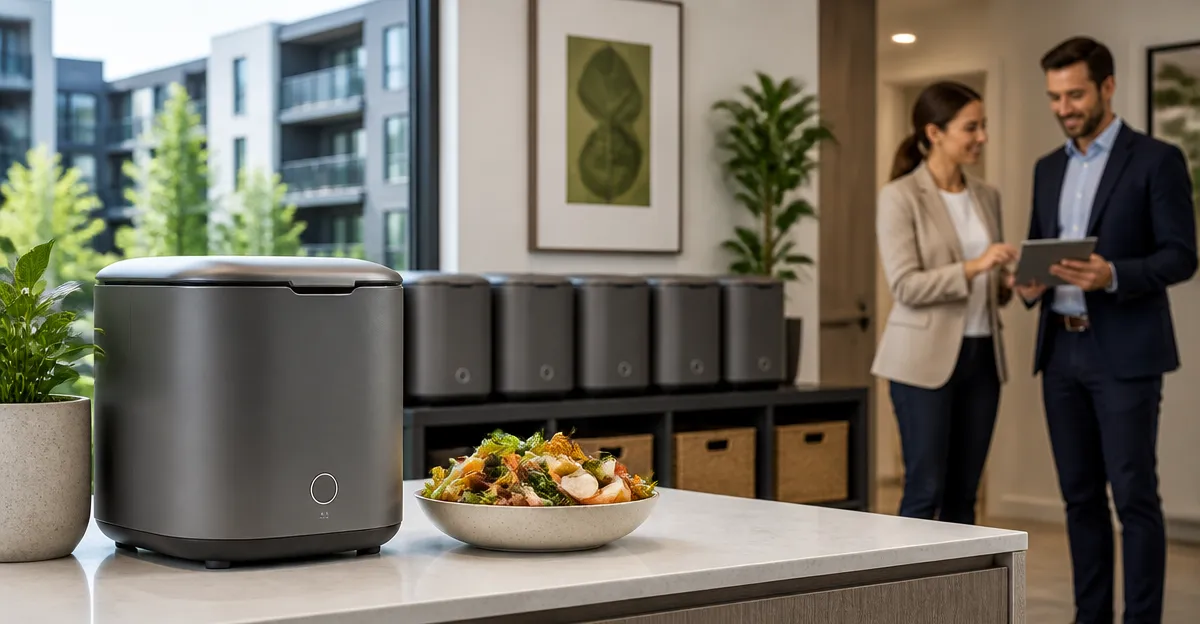
Leasing Countertop Composters: A Complete Guide for Apartment Landlords
Introduction
Apartment landlords are increasingly seeking ways to reduce waste while enhancing tenant satisfaction. This guide explains how to lease countertop composter fleets, what financial and environmental benefits can be expected, and which products provide the best value for multi‑unit properties. Readers will learn the regulatory context, selection criteria, lease structuring, maintenance protocols, and common questions that arise in practice. By the end of the document, landlords will be equipped to design a scalable, cost‑effective composting program for their properties.
Background and Context
Urban waste management policies encourage diversion of organic material from landfills because decomposition in anaerobic conditions releases methane, a potent greenhouse gas. Many municipalities offer incentives for residential composting, and tenants often request sustainability amenities as part of modern living standards. Countertop composters operate on a small scale, converting kitchen scraps into nutrient‑rich humus within weeks. For landlords, offering these devices as a lease‑included service can differentiate a property, attract environmentally conscious renters, and potentially lower municipal waste fees.
From a legal perspective, landlords must ensure that any composting equipment complies with local health codes, fire regulations, and building codes. Most jurisdictions allow indoor composting as long as the unit is sealed, odor‑controlled, and placed in a well‑ventilated area. Understanding these constraints before signing lease agreements prevents costly retrofits later.
Financially, leasing a fleet of composters spreads capital expenditures over time, aligns costs with rental income, and provides tax‑deductible depreciation. The model also enables landlords to upgrade to newer technology without large upfront outlays.
Understanding Countertop Composters
Countertop composters differ from large outdoor bins in size, processing time, and power requirements. They typically employ either aerobic fermentation with a passive vent system or an active tumbling mechanism that mixes material to accelerate breakdown. The choice of mechanism influences noise level, maintenance frequency, and suitability for apartment kitchens.
Key performance indicators include capacity (measured in gallons), processing time (weeks to produce usable compost), durability of construction materials, and user‑friendly features such as tool‑free assembly or dual chambers. Landlords should prioritize models that are BPA‑free, weather‑resistant (for balconies), and equipped with secure lids to prevent spills.
The following products illustrate the range of options available for lease fleets. The first mention of each product is linked to its Amazon page for reference.
- Goplus 80‑gal Outdoor Compost Bin – a large, weather‑resistant bin suitable for communal outdoor areas.
- Greenes Fence Cedar Composter – a premium cedar construction offering natural durability and aesthetic appeal.
- GEOBIN Expandable Compost Bin – an expandable model that can grow with tenant demand.
- F2C Dual‑Chamber Tumbler – a rotating tumbler that separates fresh input from mature compost.
Financial Benefits of Leasing Composting Fleets
Leasing spreads the purchase price over a predetermined term, typically 24 to 36 months, allowing landlords to align payments with rental income. The expense is classified as an operating cost, which can be deducted from taxable income. Additionally, many municipalities reduce waste collection fees for properties that demonstrate organic diversion, creating a direct cost saving.
Example calculation: a property with 20 units leases 20 units of the Goplus 80‑gal Outdoor Compost Bin at $52.99 each. The total purchase price is $1,059.80. A three‑year lease with a 10 % interest rate results in monthly payments of approximately $33.00 per unit, or $660 total per month. If the municipality reduces waste fees by $15 per unit per month, the net expense is $330, which can be incorporated into rent or absorbed as a value‑added service.
Landlords should also consider the residual value of the equipment at lease end. High‑quality models such as the Greenes Fence Cedar Composter retain aesthetic appeal and may be sold or reused in future projects, further enhancing return on investment.
Selecting Appropriate Models for Your Property
Model selection depends on building layout, tenant demographics, and desired service level. The following matrix compares the four featured products across critical dimensions.
| Feature | Goplus 80‑gal Outdoor Compost Bin | Greenes Fence Cedar Composter | GEOBIN Expandable Compost Bin | F2C Dual‑Chamber Tumbler |
|---|---|---|---|---|
| Capacity | 80 gal (300 L) | 174 gal (≈ 660 L) | 246 gal expandable to 237 gal | 43 gal dual chambers |
| Material | BPA‑free PP, UV‑inhibited | 3/4" North American cedar | Durable PP, expandable panels | PP with powder‑coated steel frame |
| Assembly | Tool‑free, four‑side snap | Easy mallet assembly | Closure keys, no tools | Half‑hour assembly, includes gloves |
| Ventilation | 12 vents per side | Natural wood gaps | Excellent ventilation design | Aeration holes and deep fins |
| Rating | 4.3/5 (307 reviews) | 4.6/5 (360 reviews) | 4.4/5 (5,569 reviews) | 4.4/5 (2,632 reviews) |
| Price (USD) | $52.99 | $150.60 | $35.99 | $39.69 |
For properties with limited indoor space, the F2C Dual‑Chamber Tumbler offers a compact footprint while providing continuous compost output through its two chambers. For larger communal gardens, the Greenes Fence Cedar Composter delivers aesthetic integration with natural wood, which can be a selling point for high‑end rentals.
Implementing Lease Agreements
Lease contracts should clearly define ownership, responsibility for maintenance, and liability for misuse. A typical agreement includes the following clauses:
- Equipment ownership remains with the landlord throughout the lease term.
- Tenant responsibility for routine cleaning, odor control, and proper loading of organic material.
- Landlord responsibility for warranty service, part replacement, and periodic deep cleaning.
- Insurance provision covering damage caused by improper use.
- Termination clause allowing equipment retrieval at lease end or upon tenant move‑out.
Including a modest monthly fee in the rent—often termed a “sustainability surcharge”—covers the lease payment and administrative costs. Transparent communication about the environmental impact of the program encourages tenant participation.
Managing Maintenance and Support
Regular maintenance ensures that composters operate efficiently and remain odor‑free. Landlords should schedule quarterly inspections that include:
- Checking vent openings for blockage.
- Inspecting seals and lids for wear.
- Emptying the bottom collection tray on models such as the Goplus bin.
- Rotating tumblers on a bi‑weekly basis to maintain aeration.
When a component fails, the warranty terms—often 1‑year for the Goplus 80‑gal Outdoor Compost Bin and 2‑year for the Greenes Fence Cedar Composter—should cover replacement parts. Landlords may negotiate service contracts with local waste‑management firms to handle larger fleets.
Best Practices & Tips
Successful implementation relies on tenant education and operational consistency. The following recommendations have proven effective in multi‑unit settings:
- Provide a concise composting guide that explains the green/brown ratio, acceptable materials, and troubleshooting steps.
- Place signage near each unit that lists prohibited items such as meat, dairy, and oily foods.
- Offer a starter kit that includes a small kitchen bin, gloves, and a composting handbook.
- Schedule community events, such as a quarterly “Compost Harvest Day,” to showcase the finished product and reinforce participation.
- Track waste diversion metrics and share them with tenants to demonstrate environmental impact.
Integrating the composting program with a recycling initiative creates a comprehensive sustainability package, which can be highlighted in marketing materials.
Frequently Asked Questions
- 1. Do countertop composters produce odors?
- When used correctly—by maintaining proper moisture, covering food scraps, and ensuring adequate ventilation—modern units such as the F2C Dual‑Chamber Tumbler remain odor‑free.
- 2. Can composting be done in a high‑rise building?
- Yes, provided that the unit is placed on a stable surface, has sufficient clearance for venting, and complies with fire‑code requirements for electrical components if present.
- 3. How long does it take to produce usable compost?
- Processing time varies with temperature and material mix; most units deliver mature compost within 6‑8 weeks in warm climates and 8‑12 weeks in cooler conditions.
- 4. What is the typical maintenance cost?
- Routine cleaning supplies cost less than $10 per unit per year; warranty‑covered parts generally incur no additional expense during the lease term.
- 5. Is leasing more cost‑effective than purchasing?
- Leasing reduces upfront capital outlay, provides predictable monthly expenses, and includes options for equipment upgrades, making it more attractive for cash‑flow‑sensitive landlords.
- 6. Are there tax incentives for offering composting services?
- Many jurisdictions offer deductions for environmentally beneficial improvements; landlords should consult a tax professional to verify eligibility.
Conclusion
Leasing countertop composter fleets enables apartment landlords to deliver sustainable waste‑management solutions while enhancing property appeal. By understanding regulatory requirements, selecting appropriate models, structuring clear lease agreements, and maintaining equipment diligently, landlords can achieve measurable cost savings and environmental benefits. The featured products illustrate a spectrum of capacities and materials, allowing landlords to tailor solutions to the unique needs of their properties.
Products Featured in This Guide
Goplus 80‑gal Outdoor Compost Bin
Price: $52.99 | Rating: 4.3/5 (307 reviews)
Featured because it offers a large 80‑gallon capacity, BPA‑free construction, and tool‑free assembly, making it ideal for communal outdoor composting areas in apartment complexes.
Greenes Fence Cedar Composter
Price: $150.60 | Rating: 4.6/5 (360 reviews)
Featured for its premium cedar construction, natural durability, and aesthetic appeal, which enhances the visual quality of garden‑adjacent compost stations.
GEOBIN Expandable Compost Bin
Price: $35.99 | Rating: 4.4/5 (5,569 reviews)
Featured because it provides an expandable capacity up to 237 gallons, easy assembly with closure keys, and excellent ventilation, suitable for growing tenant demand.
F2C Dual‑Chamber Tumbler
Price: $39.69 | Rating: 4.4/5 (2,632 reviews)
Featured for its dual‑chamber design that allows continuous compost production, sturdy steel frame, and included gardening gloves, making it ideal for compact indoor spaces.