How to Use a Countertop Composter to Achieve Apartment Zero‑Waste Accreditation: A Step‑by‑Step Guide
Introduction
This guide explains how residents of small living spaces can implement a countertop composting system that satisfies the criteria of apartment zero‑waste accreditation. Readers will learn foundational concepts, evaluate three recommended compost bins, and follow actionable steps to reduce organic waste by up to ninety percent.
The article balances theoretical knowledge with practical product recommendations, ensuring that the information remains valuable even for readers who choose not to purchase any of the featured items.
Background and Context
Zero‑waste accreditation evaluates the extent to which a household diverts waste from landfills through recycling, composting, and reuse. In apartments, space constraints often limit the ability to maintain a traditional outdoor compost pile. Countertop composters provide a compact, odor‑controlled solution that fits on a kitchen counter while processing food scraps into nutrient‑rich material.
Key terminology includes:
- Odorless technology: Filters or charcoal layers that absorb volatile compounds responsible for unpleasant smells.
- Dual‑filter system: A combination of activated carbon and ventilation holes that maintain aerobic conditions.
- Aeration: The process of introducing air to accelerate microbial breakdown and prevent anaerobic odor formation.
Understanding these concepts allows one to select a bin that aligns with the accreditation standards of regular waste diversion, odor control, and ease of maintenance.
Choosing the Right Countertop Composter
Three products meet the essential criteria for apartment composting. The first mention of each product is linked to its Amazon listing using a friendly name.
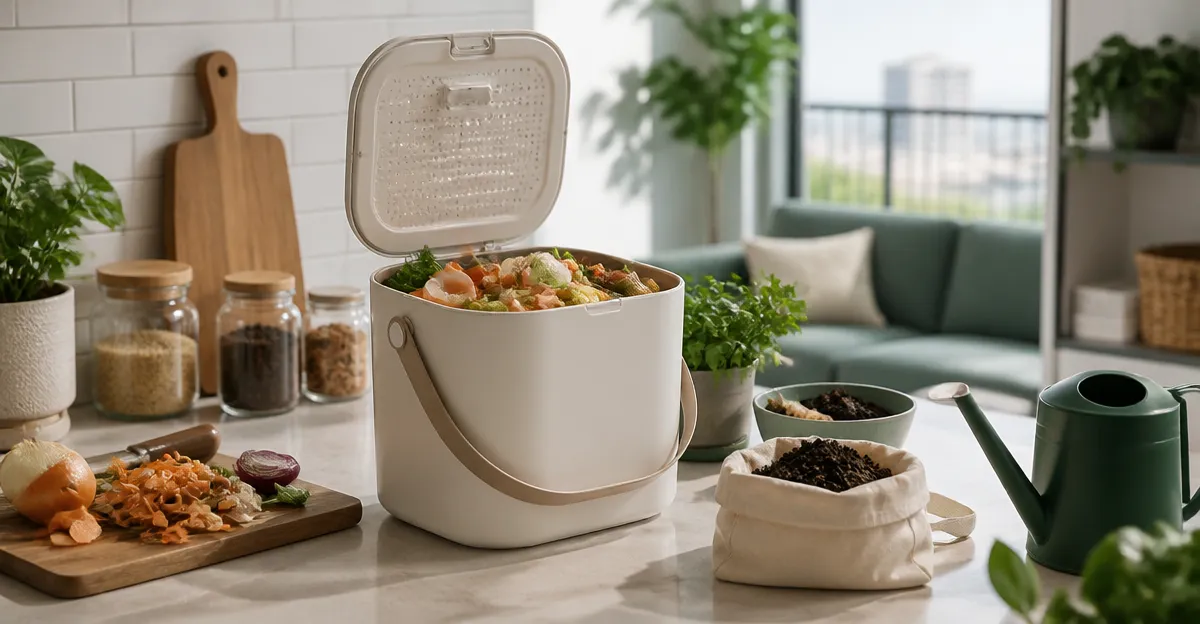
RED FACTOR Premium Compost Bin offers a stainless‑steel body, dual‑filter technology, and a 1.3‑gallon capacity. Its dome‑shaped lid adds aesthetic appeal while the active‑carbon filter neutralizes odors even in warm environments.
KIBAGA Kitchen Compost Bin features a powder‑coated carbon‑steel construction, a built‑in charcoal filter compartment, and a wooden handle for easy transport. The 1.1‑gallon volume provides sufficient space for a small household, and the product holds a 4.5‑star rating from 484 reviews.
Plexon Red Countertop Compost Bin combines a durable steel shell with a charcoal filter lid, delivering a larger 1.5‑gallon capacity. Priced at $29.60, it also enjoys a 4.5‑star rating from 279 reviewers, making it a cost‑effective choice for users who generate more organic waste.
Step‑by‑Step Implementation
Step 1: Placement and Preparation
Select a countertop location that is within arm’s reach of the food preparation area but away from direct sunlight, which can accelerate odor formation. Ensure the surface can support the weight of a full bin; for example, the RED FACTOR bin weighs approximately two pounds when empty.
Step 2: Setting Up the Filter System
Insert the supplied spare filters into the dual‑filter compartment of the RED FACTOR bin or the charcoal compartment of the KIBAGA and Plexon models. Activate the carbon by gently tapping the filter to release its surface area, thereby maximizing odor absorption.
Step 3: Adding Food Scraps
Deposit fruit peels, vegetable trimmings, coffee grounds, and tea bags into the bin. Avoid adding meat, dairy, or oily foods, as these can create anaerobic conditions and compromise the accreditation standards.
Step 4: Maintaining Aeration
Stir the contents once every two days using a clean utensil. The ventilation holes on each lid permit airflow, but occasional mixing ensures uniform decomposition and reduces the risk of foul smells.
Step 5: Emptying and Compost Transfer
When the bin reaches approximately 80 percent capacity, transfer the partially decomposed material to a community garden or a municipal organic waste collection service. This practice aligns with zero‑waste accreditation requirements for regular waste diversion.
Comparison and Selection Guide
| Feature | RED FACTOR Premium Compost Bin | KIBAGA Kitchen Compost Bin | Plexon Red Countertop Compost Bin |
|---|---|---|---|
| Material | Stainless steel (rust‑resistant) | Powder‑coated carbon steel (rust‑free) | Durable steel with red finish |
| Capacity | 1.3 gallons (10.8" × 8.7" × 7.3") | 1.1 gallons (10.2" × 7") | 1.5 gallons (5.68 L) |
| Filter Technology | Dual‑filter with activated carbon | Charcoal filter compartment (2 filters included) | Charcoal filter in lid |
| Price (USD) | Not listed | Not listed | 29.60 |
| Rating | Not listed | 4.5/5 (484 reviews) | 4.5/5 (279 reviews) |
| Design Aesthetics | Modern dome‑shaped lid, white finish | Black powder‑coated body with wooden handle | Vibrant red finish, compact silhouette |
For apartments with limited counter space, the KIBAGA model offers the smallest footprint while still providing odor control. Users who prioritize aesthetic integration may prefer the RED FACTOR bin’s sleek stainless‑steel appearance. Those who generate larger volumes of waste should consider the Plexon bin for its increased capacity and competitive price.
Best Practices & Tips
- Maintain a balanced carbon‑to‑nitrogen ratio by mixing dry leaves or shredded newspaper with wet food scraps.
- Keep the bin lid closed at all times to preserve aerobic conditions and prevent pests.
- Replace charcoal or carbon filters every three to six months, depending on usage frequency.
- Label the bin with a short “Compost Only” reminder to avoid accidental disposal of non‑compostable items.
- Periodically clean the interior with a mild soap solution; avoid abrasive cleaners that could damage the stainless‑steel or carbon‑steel surface.
Frequently Asked Questions
- Can I compost meat or dairy in a countertop bin? No. Meat and dairy create anaerobic conditions that produce strong odors and attract pests, which would jeopardize zero‑waste accreditation.
- How often should I empty the bin? Empty the bin when it reaches about eighty percent capacity, typically every one to two weeks for a single occupant.
- Do the filters need to be replaced? Yes. Replace the activated carbon or charcoal filters every three to six months to maintain odorless performance.
- Is it safe to keep the bin near a heat source? It is advisable to keep the bin away from direct heat, as elevated temperatures can accelerate odor development.
- What should I do with the finished compost? Transfer it to a local community garden, a municipal organic waste collection program, or use it for indoor houseplants if the material is fully decomposed.
- Will the bin fit under a standard kitchen cabinet? All three models are designed to sit on the countertop; their heights range from 7.3 to 8.7 inches, allowing placement beneath most cabinets.
- Are the bins dishwasher safe? None of the featured bins are dishwasher safe; cleaning should be performed manually with warm, soapy water.
Conclusion
By selecting an appropriate countertop compost bin, following the step‑by‑step implementation plan, and adhering to best‑practice guidelines, apartment dwellers can achieve zero‑waste accreditation with minimal effort. The RED FACTOR Premium Compost Bin, KIBAGA Kitchen Compost Bin, and Plexon Red Countertop Compost Bin each provide unique strengths that align with different spatial, aesthetic, and capacity requirements.
Consistent use of these systems not only reduces landfill contributions but also creates valuable organic matter that can enrich plant growth, thereby completing the sustainability loop.
Products Featured in This Guide
RED FACTOR Premium Compost Bin
Capacity: 1.3 gallons; Stainless‑steel construction; Dual‑filter odor control.
Why featured: Provides a sleek, rust‑resistant design with active‑carbon filtration, ideal for style‑conscious apartments.
KIBAGA Kitchen Compost Bin
Capacity: 1.1 gallons; Powder‑coated carbon steel; Charcoal filter compartment; Rating: 4.5/5 (484 reviews).
Why featured: Offers an affordable, rust‑free option with a wooden handle that blends functionality with modern aesthetics.
Plexon Red Countertop Compost Bin
Capacity: 1.5 gallons; Steel construction with red finish; Charcoal filter lid; Price: $29.60; Rating: 4.5/5 (279 reviews).
Why featured: Provides the largest capacity at a competitive price, making it suitable for households with higher organic waste output.