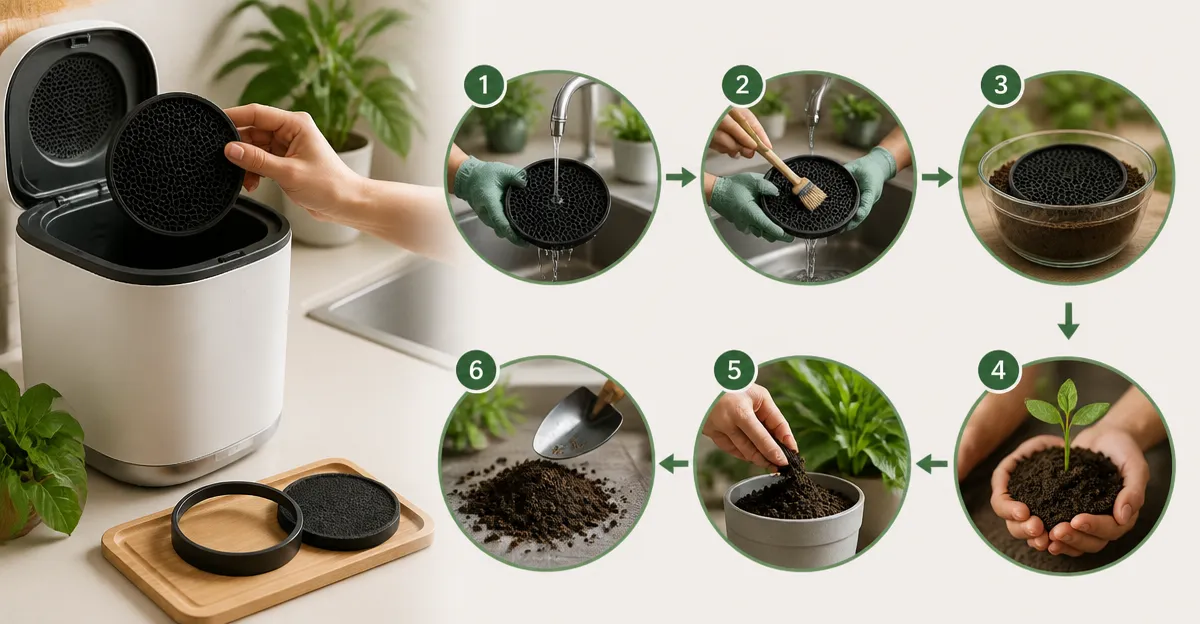
How to Recycle Used Carbon Filters from a Countertop Composter: Step‑by‑Step Eco‑Friendly Guide
Introduction
One often overlooks the fate of carbon filters after they have fulfilled their purpose in a countertop composter. Proper recycling of these filters not only reduces landfill waste but also returns valuable material to the soil. This guide will teach the reader how to safely remove, clean, and repurpose used carbon filters, while highlighting tools that simplify each stage of the process. By following the instructions, one will achieve a closed‑loop system that aligns with sustainable living principles.
The guide is structured to provide clear, actionable steps, practical tips, and troubleshooting advice. Although the recommended products enhance efficiency, the method remains viable without any purchase. The reader will emerge with confidence to manage filter waste responsibly and to extend the lifespan of their composting equipment.
What You'll Need
- Protective garden gloves (included with VIVOSUN 43 Gallon Dual‑Tumbler Composter)
- Small kitchen compost bin such as the KIBAGA 1.1 Gal Smell‑Proof Kitchen Compost Bin
- Electric countertop composter for rapid breakdown, e.g., Airthereal Revive Countertop Electric Composter
- Soft‑bristle cleaning brush
- Reusable silicone tray
- Compost‑grade soil amendment (optional)
Step 1: Gather and Secure the Used Carbon Filters
The first step involves locating the carbon filters within the countertop composter. Most models place the filter behind a removable lid or in a dedicated cartridge slot. Before handling, one should don the protective garden gloves that accompany the VIVOSUN 43 Gallon Dual‑Tumbler Composter. These gloves are waterproof, feature ABS plastic claws for easy gripping, and protect the hands from any residual moisture or sharp edges.
After securing the gloves, gently slide the filter out and place it on a clean silicone tray. The tray prevents cross‑contamination and provides a non‑slip surface for subsequent cleaning. If the composter uses multiple filters, gather them together to streamline the workflow.
Why the VIVOSUN gloves are advantageous: they are included at no additional cost, have a four‑star rating of 4.3/5 from over 9,800 reviews, and are specifically designed for gardening tasks such as digging and planting. Their durability surpasses generic disposable gloves, reducing long‑term expenses.
Step 2: Inspect and Assess Filter Condition
Inspection determines whether a filter can be regenerated or must be disposed of. Examine each filter for visible cracks, excessive carbon loss, or mold growth. A filter that retains structural integrity and shows minimal discoloration is a candidate for cleaning and reuse.
If a filter appears damaged, it should be removed from the recycling stream and disposed of according to local hazardous‑waste guidelines. For intact filters, proceed to the cleaning stage. This assessment prevents the introduction of contaminants into the composting cycle.
Using the KIBAGA 1.1 Gal Smell‑Proof Kitchen Compost Bin as a temporary holding container for inspected filters offers a sealed environment that limits odor escape. The bin’s built‑in charcoal filter compartment further neutralizes any residual smells, and its rust‑free powder‑coated carbon steel construction ensures longevity.
Step 3: Clean the Filters for Reuse
Cleaning restores the filter’s adsorption capacity and prepares it for reintegration into the composting system. Begin by gently brushing the filter surface with a soft‑bristle brush to dislodge trapped debris. Rinse the filter under lukewarm water, avoiding high pressure that could damage the carbon granules.
After rinsing, submerge the filter in a solution of one part white vinegar to three parts water for ten minutes. The mild acidity helps to neutralize odors and break down residual organic matter. Rinse again thoroughly and allow the filter to air‑dry on the silicone tray for at least 24 hours.
The cleaning process is expedited by the Airthereal Revive Countertop Electric Composter, which includes a built‑in dehumidification cycle. Placing the dried filter in the composter’s chamber for a brief 30‑minute cycle accelerates moisture removal, ensuring the filter is completely dry before reuse. The Revive model boasts a 4.4/5 rating from 40 reviews and reduces processing time compared with manual air drying.
Step 4: Replace with New or Refreshed Filters
Once the used filters are clean and dry, reinsert them into the countertop composter according to the manufacturer’s instructions. If the original filter set included multiple cartridges, replace each one simultaneously to maintain balanced airflow.
For users who prefer to upgrade, the VIVOSUN 43 Gallon Dual‑Tumbler Composter provides an excellent auxiliary composting solution for the carbon‑rich material that may be generated during filter cleaning. Its twin‑chamber design allows continuous composting while one side processes the filter residue. The 360° tumbling mechanism ensures thorough aeration, which is essential for breaking down any remaining organic particles.
The VIVOSUN composter is priced at $79.99, carries a rating of 4.3/5, and includes a pair of garden gloves, making it a cost‑effective addition to a home composting ecosystem.
Step 5: Dispose or Repurpose the Exhausted Filters
Filters that have reached the end of their usable life can still serve a purpose. Carbon granules are effective as a soil amendment for improving water retention and reducing odor in garden beds. To repurpose, crush the exhausted filter into small pieces and mix it into the top layer of compost within the VIVOSUN 43 Gallon Dual‑Tumbler Composter. The tumbling action distributes the carbon evenly, enhancing the compost’s structure.
If repurposing is not desired, the exhausted filter should be placed in a sealed bag and taken to a recycling facility that accepts activated carbon. Many municipal waste programs accept such material as hazardous waste due to its adsorption properties.
By following these steps, the user creates a circular workflow that minimizes waste, maximizes resource recovery, and supports sustainable gardening practices.
Tips & Pro Tips
- Schedule filter cleaning every four weeks to maintain optimal composting performance.
- Use a dedicated brush for each filter to avoid cross‑contamination.
- When air‑drying, place the filter in a sunny, well‑ventilated area to expedite moisture loss.
- Combine used carbon with shredded newspaper in the VIVOSUN composter to balance carbon‑to‑nitrogen ratios.
- Keep a spare set of filters on hand; the KIBAGA bin’s compact size makes storage convenient on the countertop.
Troubleshooting
Problem: Persistent odor after filter replacement.
Solution: Verify that the filter is completely dry before reinstalling. Run a short cycle on the Airthereal Revive to remove residual moisture, and ensure the countertop composter’s lid seals properly.
Problem: Filter fragments clog the composting chamber.
Solution: Crush the exhausted filter into fine granules before adding to the VIVOSUN composter. The twin‑chamber design allows you to process the material on one side while the other side continues normal composting.
Conclusion
Recycling used carbon filters from a countertop composter is a manageable task that yields environmental and horticultural benefits. By gathering the necessary tools, inspecting filter condition, cleaning, replacing, and responsibly repurposing exhausted material, one creates a sustainable loop that reduces waste and enriches soil. The recommended products—VIVOSUN 43 Gallon Dual‑Tumbler Composter, KIBAGA 1.1 Gal Smell‑Proof Kitchen Compost Bin, and Airthereal Revive Countertop Electric Composter—provide reliable assistance throughout the process, yet the method remains effective without them. One is encouraged to adopt these practices and share the knowledge with fellow eco‑conscious individuals.
Products Mentioned in This Guide
Frequently Asked Questions
Why should I recycle used carbon filters from a countertop composter?
Recycling prevents landfill waste and recovers carbon material that can improve soil health.
What safety gear is needed when handling used carbon filters?
Wear protective garden gloves and optionally a mask to avoid dust inhalation.
Can I clean carbon filters for reuse, and how?
Yes—rinse them with mild soap and water, then let them air‑dry completely before reinstalling.
What are the best ways to repurpose cleaned carbon filters?
They can be added to garden beds as a soil amendment or used in DIY odor‑control sachets.
Is special equipment required to recycle carbon filters?
No special tools are needed, though a small brush and a bucket make cleaning easier.