Kitchen Cabinet Design Guide: Venting Built-In Countertop Composters for Odor‑Free Integration
Introduction
Modern kitchens increasingly incorporate sustainable appliances such as countertop composters. This guide explains how to design cabinets that accommodate these units while eliminating odors. Readers will learn essential ventilation concepts, product options, and practical installation tips. By the end, one can create a seamless, eco‑friendly kitchen layout.
Background and Context
Composting indoors converts food scraps into valuable fertilizer, reducing landfill waste and greenhouse‑gas emissions. Traditional outdoor bins require space and can attract pests, making countertop models attractive for urban dwellers. However, the decomposition process releases moisture and volatile organic compounds that can cause unpleasant smells if not properly managed. Effective cabinet design therefore hinges on airflow, moisture control, and material selection.
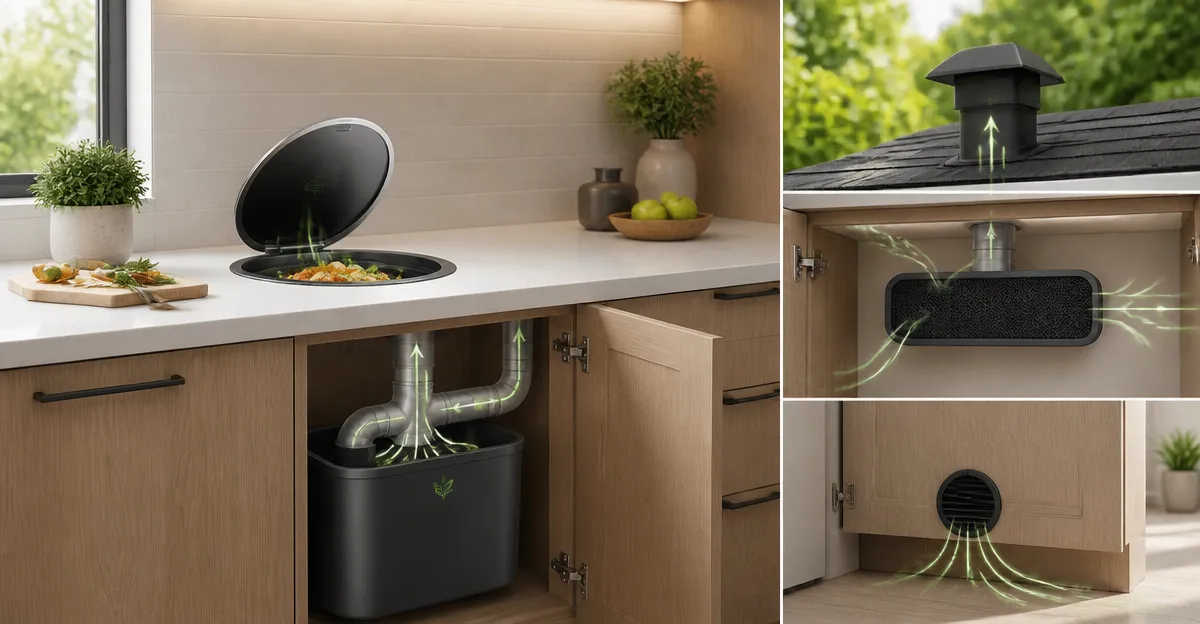
Ventilation works by moving air through a series of openings, diluting odor‑bearing gases before they reach the living space. In a kitchen cabinet, this typically involves a duct or vent that connects to an external exhaust or a passive grille. The design must also consider heat generated by the composter’s motor and blades, ensuring that surrounding cabinetry does not warp or degrade over time.
Key Concepts for Venting Countertop Composters
Three core concepts shape successful integration: airflow dynamics, moisture barriers, and acoustic insulation. Airflow dynamics involve calculating the required CFM (cubic feet per minute) to expel odor‑laden air; most electric composters operate below 40 dBA and generate modest heat, so a small vent is sufficient. Moisture barriers prevent condensation from seeping into cabinet wood, typically using silicone gaskets or waterproof liners. Acoustic insulation reduces the audible hum of the motor, preserving the kitchen’s quiet ambience.
When selecting a vent size, apply the rule of thumb that the vent area should be at least 1 square inch for every 10 watts of motor power. For a 50‑watt unit, a 5‑square‑inch vent is adequate. Position the vent near the top of the cabinet to allow warm, odor‑laden air to rise naturally. Use a louvered grille to prevent dust ingress while maintaining airflow.
Product Recommendations and Integration Points
The following products exemplify the range of electric and passive composters suitable for built‑in installations. Each recommendation includes key specifications, user ratings, and a brief note on how it fits into a vented cabinet design.
Ouaken 4L Electric Composter (White) offers a 4‑liter capacity, low‑noise operation under 40 dBA, and an auto‑clean function. Its carbon filter lasts up to five months, reducing odor without external venting, yet a dedicated vent improves efficiency for continuous use. The unit is priced at $219.99 and holds a 4.2‑star rating from 894 reviews.
Epica 1.3 Gal Compost Bin is a passive stainless‑steel bin with a replaceable charcoal filter. It does not require electricity, making it ideal for cabinets without power outlets. The bin’s airtight lid and 6‑month filter lifespan keep odors contained, though occasional manual stirring is necessary. Priced at $29.98, it enjoys a 4.7‑star rating from over 20,000 reviewers.
Ouaken 4L Electric Composter (Black) mirrors the white model’s performance but adds a satisfaction‑guarantee service. Its transparent lid enables visual monitoring, while the high‑torque blades process waste in three hours. At $229.99 and a 4.2‑star rating, it is suited for households that prioritize speed and durability.
Utopia Kitchen 1.3 Gal Compost Bin combines stainless steel durability with a charcoal filter for odor control. The sleek design fits neatly on a countertop or within a shallow cabinet niche. With a price of $24.35 and a 4.5‑star rating, it provides a budget‑friendly option for occasional composters.
Saluna 5L Electric Kitchen Composter delivers the largest capacity among the reviewed units. Its transparent window, LED display, and humidity sensor automate the composting cycle, while an upgraded carbon filter manages odors effectively. Priced at $229.99 and rated 4.5 stars from 48 reviews, it is ideal for larger families seeking hands‑free operation.
Comparison and Selection Guide
| Feature | Ouaken 4L (White) | Epica 1.3 Gal | Ouaken 4L (Black) | Utopia Kitchen 1.3 Gal | Saluna 5L |
|---|---|---|---|---|---|
| Capacity | 4 L | 1.3 Gal (~5 L) | 4 L | 1.3 Gal | 5 L |
| Power Source | Electric | Passive | Electric | Passive | Electric |
| Noise Level | <40 dBA | N/A | <40 dBA | N/A | Quiet |
| Odor Control | Carbon filter (5 mo) | Charcoal filter (6 mo) | Carbon filter (5 mo) | Charcoal filter | Enhanced carbon filter |
| Price | $219.99 | $29.98 | $229.99 | $24.35 | $229.99 |
| Rating | 4.2 / 5 (894) | 4.7 / 5 (20,824) | 4.2 / 5 (894) | 4.5 / 5 (20,058) | 4.5 / 5 (48) |
Choose an electric model when rapid volume reduction and automated cleaning are priorities. Passive bins excel in low‑budget or power‑restricted environments but require manual stirring. Larger capacities suit families that generate significant food waste, while smaller units fit compact apartments.
Best Practices & Tips for Odor‑Free Cabinet Integration
- Install a dedicated vent at the cabinet’s highest point, using a 4‑inch insulated duct that terminates outside or into a range hood.
- Seal all interior seams with silicone to prevent moisture migration into surrounding wood.
- Place a removable waterproof liner beneath the composter to catch condensation.
- Use vibration‑dampening pads under the unit to reduce noise transmission to cabinet panels.
- Schedule weekly cleaning of carbon or charcoal filters to maintain odor‑absorption efficiency.
- When using electric models, connect to a GFCI‑protected outlet to ensure safety in wet environments.
Integrating a smart sensor, such as the humidity sensor found in the Saluna 5L Electric Kitchen Composter, can further optimize vent operation by adjusting airflow based on moisture levels. Pair this with a timer‑controlled exhaust fan to run only during active compost cycles, conserving energy and minimizing noise.
Frequently Asked Questions
- Do I need an external vent for every countertop composter? Electric units with built‑in carbon filters work without external vents, but a vent greatly improves odor control for continuous use.
- Can I install a composter inside a closed cabinet? Yes, provided the cabinet includes a vent, moisture barrier, and adequate clearance (at least 2 inches) around the device for airflow.
- How often should I replace the carbon filter? Most filters last between five and six months, depending on usage frequency and the volume of organic material processed.
- Will the composting process generate heat that damages my cabinets? The motor generates modest heat (<45 °C). Insulated vents and a heat‑resistant liner prevent temperature buildup.
- Is it safe to run a composter near children or pets? All reviewed models have safety locks and low‑speed blades, making them safe for household environments when used as instructed.
- What materials should I avoid adding? Large bones, excessive fats, and dairy products can clog blades and produce stronger odors; stick to fruit, vegetable peels, coffee grounds, and eggshells.
- Can I connect the composter to a smart home system? Some models, like the Saluna, offer Bluetooth or Wi‑Fi connectivity for remote monitoring, but most electric units operate via simple push‑button controls.
Conclusion
Designing a vented cabinet for a countertop composter blends sustainable living with refined interior architecture. By understanding airflow dynamics, selecting the appropriate unit, and applying moisture‑proofing techniques, homeowners can enjoy odor‑free composting without compromising style. The products highlighted provide a spectrum of options, from budget‑friendly passive bins to high‑tech electric models, ensuring a solution for any kitchen layout.
Products Featured in This Guide
Ouaken 4L Electric Composter (White)
Price: $219.99 | Rating: 4.2/5 (894 reviews)
Featured for its 4‑liter capacity, low‑noise operation, and long‑lasting carbon filter that makes it suitable for built‑in cabinet use.
Epica 1.3 Gal Compost Bin
Price: $29.98 | Rating: 4.7/5 (20,824 reviews)
Featured for its stainless‑steel construction, replaceable charcoal filter, and passive design that requires no power outlet.
Ouaken 4L Electric Composter (Black)
Price: $229.99 | Rating: 4.2/5 (894 reviews)
Featured for its transparent lid, rapid three‑hour processing, and satisfaction‑guarantee service for peace of mind.
Utopia Kitchen 1.3 Gal Compost Bin
Price: $24.35 | Rating: 4.5/5 (20,058 reviews)
Featured for its sleek stainless‑steel finish, durable charcoal filter, and affordability for small households.
Saluna 5L Electric Kitchen Composter
Price: $229.99 | Rating: 4.5/5 (48 reviews)
Featured for its large 5‑liter capacity, intelligent humidity sensor, and visible window that aid in monitoring the composting process.