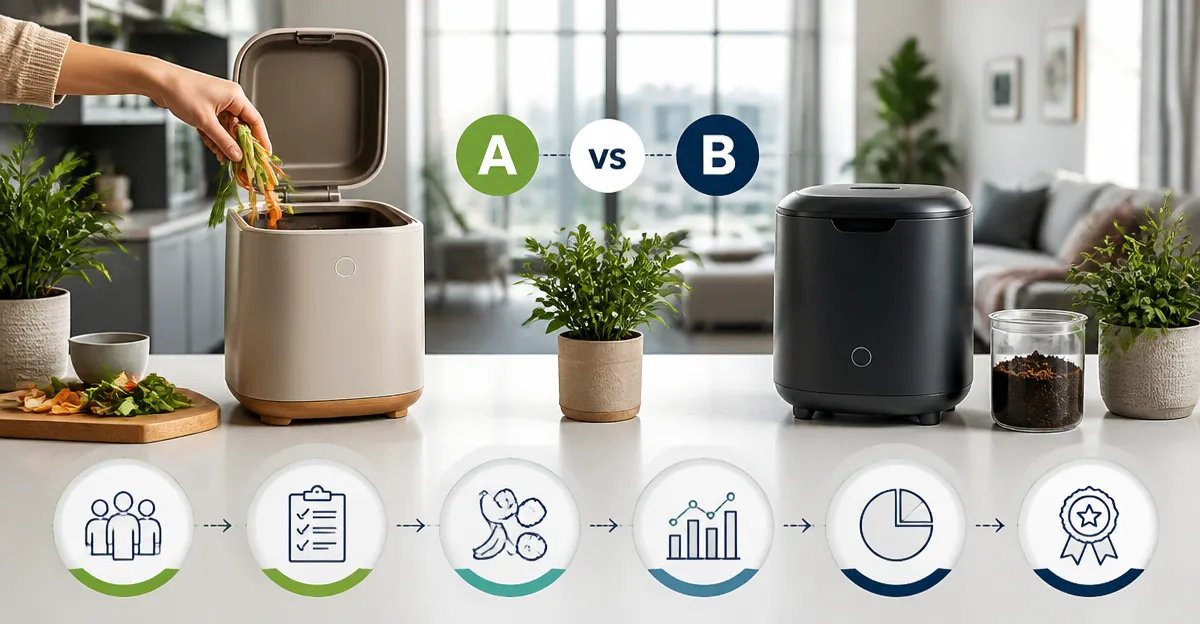
How to A/B Test Countertop Composter Models in an Apartment Pilot: Step-by-Step Guide to Finding the Best Small-Space Composter
Introduction
In this guide the reader will learn how to design and execute an A/B test that compares multiple countertop composters within a limited apartment setting. The process enables the identification of the most efficient, quiet, and odor‑free model for small‑space living. By following the steps, one can make an evidence‑based purchasing decision that aligns with sustainability goals and personal convenience.
The value of this approach lies in its systematic nature. Rather than relying on anecdotal reviews, the pilot generates quantitative data on performance metrics such as noise level, waste reduction rate, and user effort. The resulting insight reduces the risk of buyer’s remorse and maximizes the return on investment for a kitchen appliance that is expected to operate daily.
What You Will Need
- Two or more countertop composters to test (examples are listed in the Products Mentioned section).
- Measuring tools: decibel meter app, kitchen scale, timer.
- Data‑recording sheet or digital spreadsheet.
- Odor‑assessment cards or a simple scent‑rating scale (1–5).
- Power outlet with surge protector.
- Cleaning supplies: mild detergent, soft cloth, dishwasher safe bucket (if applicable).
Step 1: Select the Models to Test
Choose at least two models that represent different technology approaches. For a balanced comparison, the guide recommends the Ouaken 4L Electric Kitchen Composter (Black) and the Ouaken 4L Electric Kitchen Composter (White) as electric options, the Epica Stainless Steel Compost Bin as a passive bin, the Airthereal R500 Electric Composter for a mid‑range electric model, and the Reencle Prime 14L Electric Composter for a high‑capacity solution.
Each product offers distinct features that influence the test outcomes. The Ouaken units provide low‑noise operation below 40 dBA, automatic cleaning, and a carbon filter that promises up to five months of odor control. Their price of $215.97 (Black) and $218.47 (White) with a rating of 4.2/5 from 919 reviews indicates solid market acceptance.
The Epica bin costs $29.98, carries a 4.6/5 rating from over 20,000 reviews, and relies on an airtight lid with a replaceable charcoal filter for odor management. It serves as a baseline for manual composting without electricity.
The Airthereal R500 is priced at $169.99, rated 4.2/5 from 729 reviews, and features a 2.5 L capacity with a SHARKSDEN tri‑blade system. Its four‑hour cycle and quiet operation make it suitable for nightly runs.
The Reencle Prime commands $499.00, holds a 4.4/5 rating from 366 reviews, and includes a 14 L chamber, whisper‑quiet 28 dB motor, and a three‑layer filter system. Its larger capacity allows testing of high‑volume waste streams.
Step 2: Define Evaluation Criteria
Establish clear metrics that will be recorded for each unit. The following criteria are recommended:
- Noise Level: Measure decibels during a full cycle using a smartphone app placed one meter from the device.
- Odor Control: Use a 1‑to‑5 scent rating after each cycle, with 1 indicating no detectable odor.
- Waste Reduction Percentage: Weigh the input food waste and the output material; calculate the reduction ratio.
- Energy Consumption: Record electricity usage with a plug‑in power meter (if available) or estimate based on manufacturer specifications.
- User Effort: Note the number of button presses, time required for loading/unloading, and any cleaning steps.
- Reliability: Document any error messages, blade stoppages, or service incidents over the test period.
Step 3: Prepare the Pilot Environment
Designate a countertop area that is stable, close to a power outlet, and protected from spills. Ensure the space can accommodate the largest unit, the Reencle Prime, which measures approximately 14 L in volume and requires a footprint of about 15 cm × 15 cm.
Install a small mat beneath each device to catch any accidental leaks. For the Epica bin, place a disposable liner to simplify cleaning. Verify that the power outlet is grounded and consider using a surge protector to safeguard electronic components.
Set up a data‑recording sheet that includes columns for date, model, noise level, odor rating, waste weight in, waste weight out, energy use, and notes on user effort. Consistency in data entry will simplify later analysis.
Step 4: Conduct a Baseline Week with the Passive Bin
Begin the pilot by using the Epica Stainless Steel Compost Bin for one week. This period establishes a control measurement for odor and waste accumulation without mechanical assistance.
Collect kitchen scraps daily, line the bin with paper towels if needed, and close the airtight lid. Record the weight of material added each day and the total volume after seven days. Note any odor incidents and the effort required to transfer waste to an outdoor compost pile.
The Epica bin’s stainless‑steel construction resists rust and simplifies cleaning, while its charcoal filter provides odor mitigation comparable to the electric models. The baseline data will highlight the incremental benefits provided by automation.
Step 5: Run the Electric Models in Parallel
After the baseline week, introduce the electric units. Operate two models concurrently to control for variations in waste composition. For example, use the Ouaken 4L Electric Kitchen Composter (Black) on weekdays and the Airthereal R500 Electric Composter on weekends.
Load each device with approximately 500 g of mixed food waste per cycle. Select the appropriate mode: Crush mode for quick volume reduction, Ferment mode for higher nutrient retention. Record the mode used, cycle duration, and any auto‑clean functions activated.
Measure noise with the decibel app at the start, midpoint, and end of each cycle. Use the odor rating scale immediately after the cycle completes. Weigh the output material to calculate reduction percentages.
Repeat this process for a minimum of two weeks to capture variability in household waste patterns. Ensure that the carbon filter is not exhausted; replace it after the manufacturer‑specified five‑month interval if necessary.
Step 6: Test the High‑Capacity Model
Introduce the Reencle Prime 14L Electric Composter for a third week. Its larger chamber allows testing of higher waste volumes, such as weekend cooking sessions.
Load up to 2.2 lb (approximately 1 kg) of food scraps per cycle, using the Ferment mode to achieve rapid microbial breakdown. Observe the whisper‑quiet operation (28 dB) and note any differences in energy consumption compared with the smaller units.
Because the Reencle includes an auto‑open feature, record the convenience factor and any instances where the lid failed to open. Evaluate the three‑layer filter system by checking for odor after each cycle.
Step 7: Analyze the Collected Data
Transfer the spreadsheet data into a statistical analysis tool or a simple spreadsheet chart. Calculate average noise levels, odor scores, waste reduction percentages, and user effort scores for each model.
Create a weighted scoring matrix that reflects personal priorities. For example, assign 30 % weight to odor control, 25 % to noise, 20 % to waste reduction, 15 % to energy use, and 10 % to ease of cleaning. Multiply each metric by its weight and sum to obtain a composite score.
Identify the model with the highest composite score. Review any reliability notes; a model that performed well on metrics but experienced frequent blade jams may be less desirable in the long term.
Tips & Pro Tips
- Maintain a consistent waste composition across tests. Mix equal parts fruit peels, vegetable scraps, and coffee grounds to standardize the feedstock.
- Empty the bucket after each cycle to prevent clumping, especially for the Ouaken units where repeated processing can strain the blades.
- Use the carbon filter replacement schedule recommended by the manufacturer to avoid odor spikes during the pilot.
- When testing the Reencle Prime, keep the sensor lid covered if pets are curious; accidental activation can drain the battery.
- Document any external factors such as ambient temperature, as high humidity can affect drying efficiency.
Troubleshooting
| Problem | Possible Cause | Solution |
|---|---|---|
| Excessive noise above 45 dBA | Blade imbalance or overloaded bucket | Reduce load size, ensure blade is clean, and verify that the unit sits on a stable surface. |
| Persistent odor | Carbon filter exhausted or wet waste overload | Replace filter, add dry material such as shredded paper, and run a short cleaning cycle. |
| Blade stops mid‑cycle | Clogged material or foreign object | Turn off device, inspect and remove obstruction, then restart. |
| Device fails to start | Power surge or safety lock engaged | Reset by holding the start button for five seconds, or unplug and re‑plug the unit. |
Conclusion
The systematic A/B testing approach described in this guide enables an apartment dweller to determine the most suitable countertop composter based on objective performance data. By following the steps, recording metrics, and applying a weighted scoring system, one can select a model that balances quiet operation, odor control, waste reduction, and convenience. The evidence‑based decision reduces waste, supports sustainable living, and ensures that the chosen appliance will serve the household effectively for years to come.
Products Mentioned in This Guide
Frequently Asked Questions
What is an A/B test for countertop composters?
It’s a controlled comparison of two or more composters under identical apartment conditions to measure performance metrics like noise, odor, and waste reduction.
Which tools are essential for measuring composting performance?
A decibel meter app, kitchen scale, timer, and a simple data‑recording sheet are needed to track noise, weight of waste processed, and cycle times.
How long should the pilot test run to get reliable results?
Run each composter for at least one full waste cycle (typically 7‑14 days) and repeat the test twice to account for variability.
What criteria should I prioritize when choosing the best small‑space composter?
Focus on low noise level, minimal odor, high waste‑to‑compost conversion rate, and ease of user effort such as loading and cleaning.
Can I use the A/B test results to justify a purchase to roommates or landlords?
Yes, presenting quantitative data on noise decibels, odor ratings, and waste reduction demonstrates the model’s suitability for shared living spaces.