Introduction
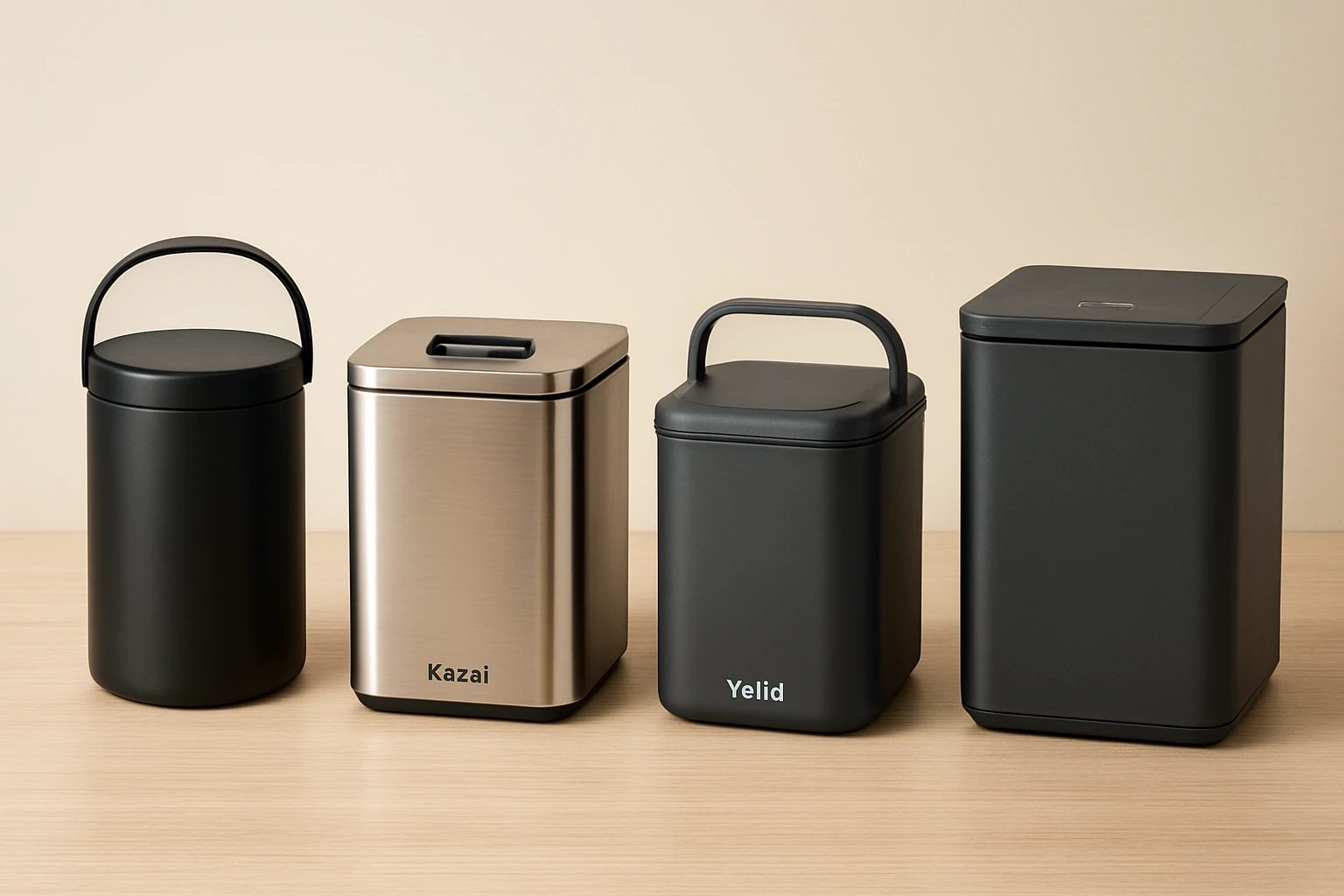
The modern kitchen increasingly emphasizes sustainability, and a countertop compost bin is one of the most practical tools for reducing food waste. This article compares four Amazon‑available models: Utopia Kitchen Compost Bin, Kazai Elin Sage Green Compost Bin, Yolid Electric Food Recycler, and Food Cycler Eco 5. Understanding their differences matters because each product targets a distinct user need, from budget‑friendly passive bins to high‑tech electric recyclers.
Consumers often struggle to choose between a simple stainless‑steel bin and an electric unit that promises rapid decomposition. By examining price, features, customer sentiment, and real‑world performance, readers can align their purchase with lifestyle, kitchen size, and environmental goals.
Individual Product Overviews
Utopia Kitchen Compost Bin
Price: $26.99 • Rating: 4.6/5 (19,927 reviews) • Capacity: 1.3 gallon stainless‑steel container with charcoal filter. The bin is marketed for durability, odor control, and easy cleaning. Positive reviews highlight “no smell and that means no fruit flies,” and users report keeping the bin for two weeks without odor. One reviewer noted that the stainless steel “will probably last forever.”
Kazai Elin Sage Green Compost Bin
Price: $37.95 • Rating: 4.6/5 (355 reviews) • Capacity: 1.2 gallon (9.9 L) with removable inner bucket that fits 2.6‑gal and 3‑gal liners. Features include an activated charcoal filter, silicone seal, dishwasher‑safe components, and anti‑slip pads. Customers praise its “zero odor” performance and “one‑handed operation.” A user wrote, “Perfect size… no odor has escaped.”
Yolid Electric Food Recycler
Price: $158.40 • Rating: 5/5 (3 reviews) • Capacity: 3 L electric unit that converts waste to dry compost in 4‑6 hours. It boasts a dual‑stage odor filtration system, LED display, automatic cleaning cycle, and whisper‑quiet operation (<40 dB). Reviewers describe it as a “game‑changer” for apartments, noting “no more fruit flies” and “quiet on the counter.”
Food Cycler Eco 5
Price: $499.99 • Rating: 4.5/5 (312 reviews) • Capacity: 5 L with patented Vortech grinding system, carbon filter, and one‑touch operation. It reduces waste volume by up to 90 % and produces a fine powder suitable for garden soil. Users celebrate its odorless performance and note that it eliminated a rodent problem in their home.
Head‑to‑Head Comparison
Price and Value
- Utopia Kitchen offers the lowest entry price at $26.99, delivering basic odor control for budget‑conscious households.
- Kazai Elin sits at $37.95, adding a removable inner bucket and dishwasher‑safe design, representing moderate value.
- Yolid’s electric recycler costs $158.40, justified by rapid processing, automatic cleaning, and quiet operation.
- Food Cycler Eco 5 commands $499.99, targeting users who desire high capacity, advanced grinding, and a premium aesthetic.
Features and Specifications
| Feature | Utopia Kitchen | Kazai Elin | Yolid | Food Cycler Eco 5 |
|---|---|---|---|---|
| Capacity | 1.3 gal stainless steel | 1.2 gal (9.9 L) with inner bucket | 3 L electric | 5 L |
| Odor Control | Charcoal filter | Activated charcoal + silicone seal | Dual‑stage carbon filtration | Refillable carbon filter |
| Power Source | None (manual) | None (manual) | Electric (plug‑in) | Electric (plug‑in) |
| Cleaning | Hand wash | Dishwasher‑safe inner bucket | Automatic cleaning cycle + dishwasher‑safe container | Manual bucket clean, no auto‑clean |
| Noise Level | Silent | Silent | <40 dB (whisper‑quiet) | Quiet, but audible grinding |
| Price | $26.99 | $37.95 | $158.40 | $499.99 |
Customer Ratings and Feedback
All four products enjoy strong ratings above 4.5 stars. Utopia Kitchen’s massive review base (19,927) provides confidence in durability; a reviewer wrote, “It locks in smells when the lid is on and the smell actually isn’t even too bad when you pop the lid off.” Kazai Elin, with 355 reviews, receives praise for “zero odor” and “super sure” construction. Yolid’s three reviews are perfect scores, emphasizing “quiet” operation and “easy cleaning.” Food Cycler Eco 5’s 312 reviews highlight “no odor,” “no more rats,” and “fine powder” output, underscoring its impact on household hygiene.
Performance and Reliability
Passive bins (Utopia and Kazai) rely on charcoal filters and airtight lids; they perform well for weeks of accumulation, as evidenced by users who emptied the bins after 2‑4 weeks with no odor. The electric models accelerate decomposition: Yolid converts waste in 4‑6 hours, while Food Cycler reduces volume by 90 % within hours, producing a dry powder ready for soil amendment. Long‑term reliability appears strong for the stainless‑steel models, while the higher‑priced electric units claim durable motors and self‑cleaning cycles.
Best Use Cases
- Utopia Kitchen: Ideal for renters or small households seeking an inexpensive, low‑maintenance solution.
- Kazai Elin: Suits families that prefer a stylish color option, need liner compatibility, and want dishwasher‑safe components.
- Yolid Electric Recycler: Perfect for apartment dwellers who desire rapid composting without odor and appreciate a quiet, automated device.
- Food Cycler Eco 5: Designed for serious home gardeners or eco‑enthusiasts who need high capacity, advanced grinding, and are willing to invest in premium technology.
Pros & Cons
Utopia Kitchen Compost Bin
- Pros: Very affordable, stainless‑steel durability, effective charcoal filter, large review base.
- Cons: Requires manual cleaning, filter replacement needed over time, limited capacity compared to electric units.
Kazai Elin Sage Green Compost Bin
- Pros: Removable inner bucket fits standard liners, dishwasher‑safe, attractive sage‑green finish, solid odor control.
- Cons: Slightly higher price, still manual operation, filter lifespan not specified.
Yolid Electric Food Recycler
- Pros: Fast 4‑6 hour processing, dual‑stage odor filtration, automatic cleaning, quiet operation.
- Cons: Higher upfront cost, limited 3 L capacity, few reviews (potentially limited long‑term data).
Food Cycler Eco 5
- Pros: Largest 5 L capacity, patented grinding system handles bones and pits, reduces waste volume by 90 %, sleek design.
- Cons: Premium price, manual cleaning required, larger footprint on countertop.
Recommendations
For users on a strict budget who simply need a place to store scraps, the Utopia Kitchen Compost Bin offers the best value. Those who want a bit more convenience, such as dishwasher‑safe parts and a stylish look, should consider the Kazai Elin Sage Green Compost Bin. Apartment residents who cannot wait weeks for compost and desire a quiet, automated solution will benefit most from the Yolid Electric Food Recycler. Finally, households with large families or avid gardeners seeking high throughput and advanced grinding should invest in the Food Cycler Eco 5.
FAQ
- Do passive bins really prevent odors? Both Utopia and Kazai use charcoal filters and airtight lids; multiple reviewers confirm “no smell” even after weeks of use.
- How often must the charcoal filter be replaced? Users of Utopia report changing the filter twice in a year; Kazai does not specify a schedule but recommends replacement when odor control declines.
- Can the electric units handle meat bones? The Food Cycler Eco 5’s Vortech system explicitly handles pits and bones, while Yolid’s specifications focus on typical kitchen scraps; users should avoid large bones with Yolid.
- Is the Yolid safe for pets? Its sealed container and low noise level make it safe around pets; however, keep cords out of reach.
- What is the energy consumption? Yolid operates below 40 dB and consumes comparable power to a small appliance; Food Cycler Eco 5 claims lower power usage than a clothes dryer.
- Do these bins require special compost bags? Utopia and Kazai accept standard 2.6 gal or 3 gal compost bags; the electric models do not require bags.
- Can I place the electric units under a cabinet? Both Yolid and Food Cycler have compact footprints and can fit under most countertops, but ensure ventilation space.
Conclusion
Each compost bin examined serves a distinct segment of the sustainable‑kitchen market. The Utopia Kitchen model excels in affordability and durability, making it the go‑to choice for budget‑aware consumers. Kazai Elin adds convenience with dishwasher‑safe parts and a stylish aesthetic for design‑conscious households. Yolid’s electric recycler delivers rapid, odor‑free composting for apartment living, while the Food Cycler Eco 5 provides unmatched capacity and grinding power for serious gardeners. By matching one’s kitchen size, budget, and composting goals to these strengths, shoppers can confidently select the bin that best supports their waste‑reduction journey.
Products Mentioned in This Review
Frequently Asked Questions
What are the main differences between passive countertop compost bins and electric food recyclers?
Passive bins rely on natural decomposition and are inexpensive, while electric recyclers use heat or grinding to speed up breakdown, costing more but reducing odor and processing time.
Which countertop compost bin is best for a small kitchen with limited counter space?
The Utopia Kitchen Compost Bin, with its compact stainless‑steel design, fits easily on tight countertops and offers a simple, low‑profile solution.
How do electric models like the Yolid Food Recycler handle odors compared to non‑electric bins?
Electric recyclers seal the waste and use heat or dehydration, which significantly reduces smells versus passive bins that may need charcoal filters or frequent emptying.
Is it worth paying extra for a high‑tech compost bin if I only generate a small amount of food waste?
For low waste volumes, a budget‑friendly passive bin usually suffices; high‑tech units are more justified when you produce larger amounts or want faster, odor‑free processing.
Do countertop compost bins actually reduce my overall environmental footprint?
Yes, by diverting food scraps from landfills they cut methane emissions, and many models produce usable compost or reduce the need for municipal waste collection.