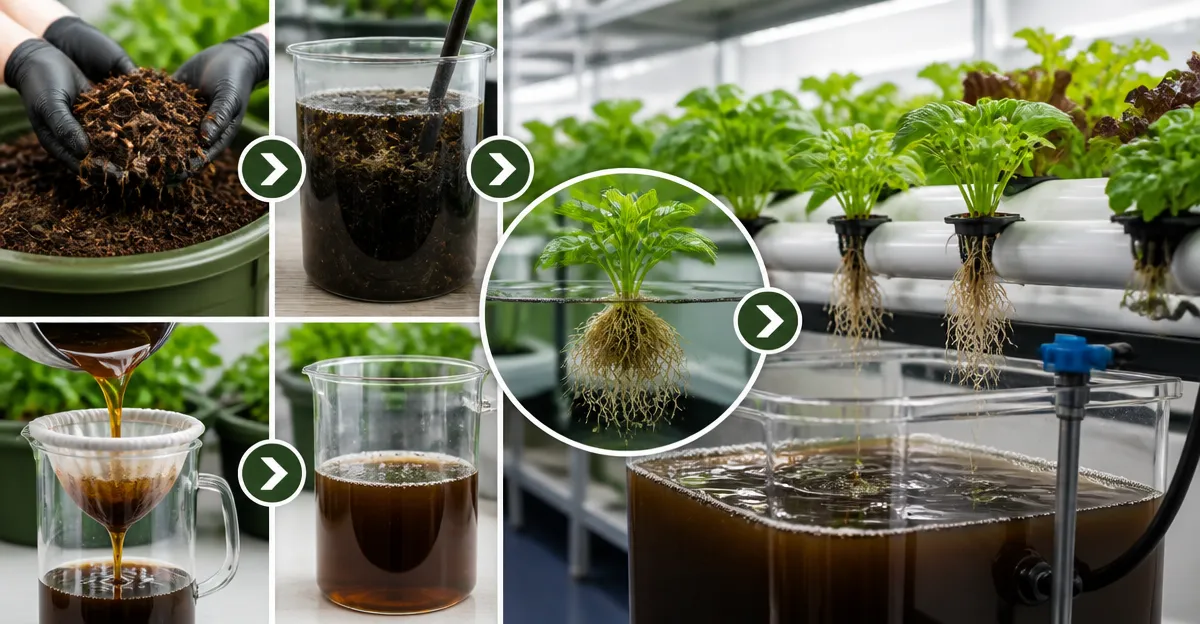
How to Use Processed Compost in Hydroponics and Vermiponics: Step-by-Step Guide to Safe, Nutrient-Rich Soilless Growing
Introduction
One will discover how processed compost can be transformed into a valuable component of hydroponic and vermiponic systems. The guide explains the scientific basis for using organic matter without soil, while preserving the advantages of soilless cultivation. Readers will gain confidence in preparing, sterilizing, and integrating compost safely, thereby improving nutrient availability and plant health. The information is valuable because it reduces waste, lowers input costs, and enhances sustainability in modern horticulture.
What You’ll Need
- Processed compost (preferably from a reputable source)
- Food‑grade hydrogen peroxide or steam sterilizer
- pH meter and EC (electrical conductivity) meter
- Hydroponic growing containers or vermiponic bins
- Perlite or coconut coir for media blending
- Botanicare Pure Blend Tea for supplemental nutrition
- Protective gloves, goggles, and a clean workspace
Step 1: Prepare the Processed Compost
The first step involves inspecting the compost for large debris, stones, or un‑decomposed material. One should sieve the compost through a 1‑inch mesh screen to achieve a uniform particle size that will not clog irrigation lines. After sieving, spread the material in a thin layer on a clean tray to allow excess moisture to evaporate, which improves handling and reduces the risk of anaerobic pockets. This preparation creates a consistent substrate that can be blended with inert media later.
Step 2: Sterilize the Compost
Sterilization is essential because raw compost may contain pathogens, weed seeds, or beneficial microbes that could outcompete the desired rhizosphere. One effective method uses a 3 % hydrogen peroxide solution applied at a ratio of 1 L per 5 kg of compost, followed by thorough mixing and a 30‑minute dwell time. Alternatively, steam sterilization at 100 °C for 20 minutes achieves comparable results without chemical residues. After sterilization, allow the compost to cool to ambient temperature before proceeding to the mixing stage.
Step 3: Blend Compost with Inert Growing Media
Pure compost cannot support hydroponic nutrient delivery because its structure retains water excessively and may impede aeration. One should combine the sterilized compost with an inert medium such as perlite or coconut coir at a ratio of 1 part compost to 2 parts inert media. This blend provides the benefits of organic nutrients while maintaining the aerated environment required for root oxygenation. Mix the components in a clean container until the texture is homogeneous, then fill the hydroponic channels or vermiponic bins to the desired depth.
Step 4: Prepare a Balanced Nutrient Solution
Even though the compost contributes organic nutrients, hydroponic systems rely on a soluble nutrient solution to meet precise macronutrient demands. One can use a commercial supplement such as Botanicare Pure Blend Tea to provide a readily available source of nitrogen, phosphorus, and potassium in a 0.5‑0.5‑1.0 ratio. This product is praised for its versatility across vegetative and bloom phases, and it is suitable for hydroponic, soil, and soilless mediums, making it an ideal complement to compost‑based media. At a price of $27.86 and a rating of 4.7 / 5.0 from 423 reviews, it offers reliable performance for growers seeking consistent results.
To formulate the solution, dissolve one tablespoon of Botanicare Pure Blend Tea per 5 L of water, then adjust the pH to the target range of 5.8–6.2 using pH‑up or pH‑down solutions. Measure the electrical conductivity (EC) and aim for a value between 1.2 and 1.8 mS/cm, depending on the crop species and growth stage. After mixing, circulate the solution through the system for at least 30 minutes to ensure even distribution throughout the media. Regularly monitor pH and EC, adjusting as necessary to maintain optimal nutrient availability.
Step 5: Monitor Plant Growth and Adjust Practices
Once the system is operational, observe plant vigor, leaf coloration, and root development on a daily basis. One should check for signs of nutrient deficiency, such as yellowing between leaf veins, which may indicate insufficient nitrogen from the compost‑nutrient blend. If deficiencies appear, increase the dosage of Botanicare Pure Blend Tea incrementally, remembering that over‑application can lead to tip burn or salt buildup. Maintaining proper airflow and preventing water stagnation are also critical to avoid root rot, especially when organic matter is present.
Tips & Pro Tips
- Always wear protective equipment during sterilization to avoid chemical burns.
- Conduct a small pilot test with a single plant before scaling up the entire system.
- Use a timer to deliver nutrient solution in short pulses, which improves oxygen exchange at the root zone.
- Consider adding a beneficial microbial inoculant after sterilization to re‑establish a healthy rhizosphere.
- Record pH and EC readings in a logbook to identify trends and make data‑driven adjustments.
Troubleshooting
Problem: Leaves develop brown edges and the growth rate slows.
Solution: Check EC; high values indicate salt accumulation. Flush the system with fresh, pH‑balanced water and reduce the nutrient concentration.
Problem: Roots appear mushy or emit a foul odor.
Solution: Verify that the compost was fully sterilized and that the media is not retaining excess water. Increase aeration by adding more perlite or adjusting pump flow.
Conclusion
This guide has demonstrated how processed compost can be safely incorporated into hydroponic and vermiponic systems, providing a sustainable source of organic nutrients. By following the outlined steps—preparation, sterilization, media blending, nutrient solution formulation, and ongoing monitoring—one can achieve robust plant growth while reducing waste. The inclusion of Botanicare Pure Blend Tea ensures that essential macro‑ and micronutrients are readily available, supporting both vegetative development and flowering. Growers are encouraged to experiment with different compost sources and media ratios to fine‑tune the system for their specific crops.
Frequently Asked Questions
Can processed compost be used directly in hydroponic nutrient solutions?
No, it must be sterilized and blended with inert media; it acts as a slow‑release nutrient source, not a liquid feed.
How do I sterilize processed compost for hydroponic or vermiponic use?
Treat with a 3% food‑grade hydrogen peroxide solution (1:10 dilution) or steam‑sterilize at 121 °C for 15 minutes.
What pH and EC levels are ideal when incorporating compost into a soilless system?
Aim for a pH of 5.5–6.5 and an EC of 1.2–2.0 mS/cm, adjusting with buffers or diluted nutrients as needed.
How should I blend processed compost with other media?
Mix compost with equal parts perlite or coconut coir to improve aeration and drainage while maintaining nutrient availability.
Is supplemental nutrition like Botanicare Pure Blend Tea necessary?
Yes, a light feed of organic tea can boost micronutrients and support plant health, especially during early growth stages.