Introduction
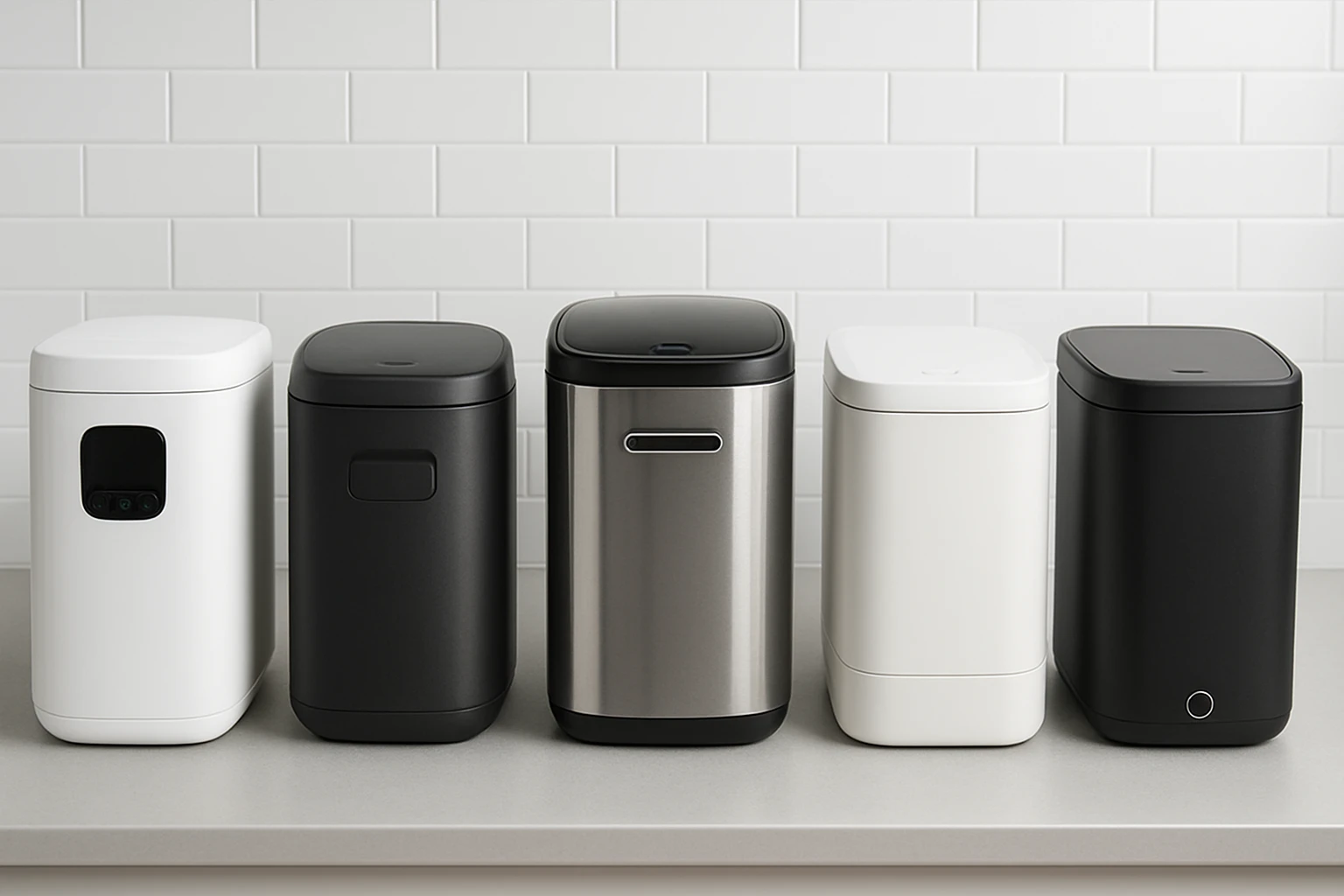
The market for indoor electric kitchen composters has expanded rapidly as consumers seek convenient ways to reduce food waste. This article compares five highly rated Amazon models, examining why each device matters for sustainable living and household efficiency. By analysing price, features, customer feedback, and real‑world performance, readers can determine which composter aligns with their cooking habits and space constraints. The comparison aims to provide a balanced, data‑driven perspective for anyone considering an indoor waste‑to‑fertilizer solution.
Individual Product Overviews
Ouaken 3L Electric Kitchen Composter
The Ouaken 3L model offers a 3‑liter capacity within a compact countertop footprint. It processes waste in 4‑6 hours, reduces volume by up to 90%, and features an intuitive LED display with one‑touch operation. Dual filters claim odor‑free performance, and a self‑cleaning mode reduces maintenance effort. Customer sentiment highlights a "clean and simple way to collect scraps" and praises the lack of smell.
COSTWAY 4L Electric Kitchen Composter
The COSTWAY unit provides a larger 4‑liter capacity and utilizes two upgraded activated carbon filters for odor control. It boasts an enhanced mixing system with large blades, a one‑click self‑cleaning mode, and a user‑friendly interface that includes auto and manual timers. Reviewers describe it as "compact, quiet, and easy to use" and note the dry fertilizer output after a few hours.
Luma 2.5L Electric Kitchen Composter
Luma’s 2.5‑liter composter emphasizes rapid processing, completing cycles in 3‑6 hours while delivering a 90% volume reduction. It features a transparent glass lid, smart sensor‑adjusted cycles, and an advanced carbon filter for odor elimination. Users appreciate the quiet operation (55 dB) and one‑touch control, though some note limited capacity for larger meals.
Ouaken 4L Electric Kitchen Composter
The Ouaken 4L model expands capacity to four liters while retaining a low‑noise design below 40 dBA. It offers three operating modes—Crush, Ferment, and Clean—allowing users to balance speed and nutrient quality. An integrated carbon filter alerts users when replacement is required after 1,000 hours. Positive reviews emphasize its odor‑free performance and suitability for nightly operation.
NutriChef 3 Quart Electric Composter
NutriChef presents a 3‑quart (approximately 2.8 L) unit designed for compact kitchens. It operates with a single button, converting waste in 6‑10 hours, and incorporates an odorless filtration system with quiet technology. The durable PP and ABS construction includes dishwasher‑safe components. Reviewers commend its simplicity and low noise, while noting the longer processing time compared with larger competitors.
Head‑to‑Head Comparison
Price and Value
Prices range from $199.99 for the Ouaken 3L to $469.99 for the Luma 2.5L. The mid‑range options—COSTWAY 4L ($214.99) and Ouaken 4L ($229.99)—offer larger capacities at modest premiums. NutriChef sits at $280.79, providing a balance between size and feature set. When evaluating value, consumers should consider capacity, cycle time, and filter replacement costs alongside the purchase price.
Features and Specifications
All five models include LED or digital displays, odor‑control filters, and self‑cleaning functions. The COSTWAY and Ouaken 4L units stand out with replaceable carbon filters and multiple operating modes, respectively. Luma distinguishes itself with a transparent lid and smart sensor technology that adjusts cycle length automatically. NutriChef focuses on simplicity with a single‑button interface and dishwasher‑safe bucket.
Customer Ratings and Feedback
Ratings range from 4.1 to 5.0 stars. The Ouaken 3L and COSTWAY models each hold perfect 5‑star scores based on ten and twelve reviews, respectively. Ouaken 4L maintains a solid 4.3 rating from over six hundred reviews, indicating broad satisfaction. Luma’s 4.2 rating reflects mixed experiences, with praise for speed but criticism of limited capacity. NutriChef’s 4.1 rating highlights appreciation for quiet operation but notes longer processing times.
Performance and Reliability
Cycle times cluster between 3 and 10 hours. The fastest devices—Luma (3‑6 h) and Ouaken 3L (4‑6 h)—deliver quick results, while NutriChef requires up to 10 h. Noise levels are explicitly low for Ouaken 4L (<40 dBA) and moderate for Luma (55 dB). Customer comments repeatedly mention odor‑free operation for Ouaken models and COSTWAY, confirming the effectiveness of their carbon filters.
Best Use Cases
Small households or apartment dwellers benefit from the compact Ouaken 3L or NutriChef, where countertop space is limited. Families generating larger daily waste may prefer the Ouaken 4L or COSTWAY 4L for higher capacity and flexible modes. Users seeking the fastest turnaround and visual monitoring may select Luma, accepting its smaller bin size. Those prioritising simplicity and minimal maintenance will find NutriChef’s one‑button design appealing.
Comparison Table
| Product | Capacity | Price | Rating | Cycle Time | Noise Level | Key Feature |
|---|---|---|---|---|---|---|
| Ouaken 3L | 3 L | $199.99 | 5.0 (10) | 4‑6 h | N/A | LED display, self‑clean |
| COSTWAY 4L | 4 L | $214.99 | 5.0 (12) | 4‑6 h (auto/manual) | N/A | Dual carbon filters, mixing system |
| Luma 2.5L | 2.5 L | $469.99 | 4.2 (41) | 3‑6 h | 55 dB | Transparent lid, smart sensor |
| Ouaken 4L | 4 L | $229.99 | 4.3 (616) | Hours (unspecified) | <40 dBA | Three modes, filter alert |
| NutriChef 3 Quart | ~2.8 L | $280.79 | 4.1 (125) | 6‑10 h | N/A | One‑button operation, dishwasher safe |
Pros & Cons
Ouaken 3L Electric Kitchen Composter
- Pros: Compact size, fast 4‑6 h cycle, LED display, self‑cleaning mode, zero‑odor performance.
- Cons: No explicit noise rating, capacity may be insufficient for larger families.
COSTWAY 4L Electric Kitchen Composter
- Pros: Dual replaceable carbon filters, enhanced mixing blades, one‑click cleaning, auto/manual timers.
- Cons: Slightly higher price than comparable 3‑L models, noise level not disclosed.
Luma 2.5L Electric Kitchen Composter
- Pros: Rapid 3‑6 h processing, transparent lid for monitoring, smart sensor adjusts cycle, quiet operation.
- Cons: Smallest capacity, carbon filter replacement cost ($29) may add expense.
Ouaken 4L Electric Kitchen Composter
- Pros: Largest capacity among reviewed models, ultra‑low noise, three distinct modes, filter‑life alert.
- Cons: Cycle time not specified, higher price than basic 3‑L units.
NutriChef 3 Quart Electric Composter
- Pros: Simple one‑button interface, dishwasher‑safe components, effective odor control, fits small countertops.
- Cons: Longer processing time (up to 10 h), moderate rating indicates occasional performance issues.
Recommendations
For apartment residents with limited counter space, the Ouaken 3L delivers fast results and a sleek footprint at the lowest price point. Families that generate more waste should consider the Ouaken 4L for its higher capacity and ultra‑quiet operation, especially if nightly composting is desired. Users who value visual monitoring and smart cycle adjustment may find the Luma 2.5L appealing despite its smaller bin. The COSTWAY 4L is ideal for those who want replaceable filters and a robust mixing system without sacrificing price. Finally, the NutriChef 3 Quart suits users who prioritize simplicity and dishwasher‑safe cleaning over speed.
FAQ
- How often must the carbon filter be replaced? Both Ouaken models alert users after approximately 1,000 hours of use, while the COSTWAY filters recommend replacement every three months. Luma’s filter lifespan is around 300 hours, according to user reports.
- Can these composters handle meat or dairy waste? All five units claim to process a wide range of kitchen scraps, including cooked leftovers. However, user reviews for Luma note that strong‑smelling items such as crab legs may challenge the filter’s capacity.
- Is the compost produced ready for garden use? The output is a dry, crumbly material suitable for enriching soil. Users of the Ouaken 4L report that the fertilizer can be applied directly to potted plants or garden beds.
- Do any models require external water? The COSTWAY unit instructs users to add clear water before initiating the self‑cleaning cycle. Other models operate without additional water inputs.
- What warranty coverage is offered? Luma includes a two‑year warranty, while other brands list standard manufacturer warranties but specific terms are not disclosed in the product listings.
- Are the bins dishwasher safe? Both the Ouaken 4L and NutriChef models feature dishwasher‑safe buckets. Luma’s bucket also has a non‑stick coating that is dishwasher safe, whereas the COSTWAY bucket is made of cast aluminum and is dishwasher safe as well.
Conclusion
After evaluating price, capacity, features, and user feedback, the Ouaken 4L emerges as the most versatile choice for households seeking high capacity and ultra‑quiet operation. The Ouaken 3L provides excellent value for small spaces, while the Luma 2.5L stands out for speed and visual monitoring. COSTWAY offers a balanced middle ground with replaceable filters and a robust mixing system. NutriChef caters to users who desire a straightforward, low‑maintenance solution. Prospective buyers should match these strengths to their specific kitchen size, waste volume, and desired level of automation.
Products Mentioned in This Review
Frequently Asked Questions
What factors should I consider when choosing an indoor electric kitchen composter?
Look at capacity, processing time, odor control, noise level, footprint, and price to match your cooking volume and kitchen space.
How long does it typically take for a kitchen composter like the Ouaken 3L to turn food scraps into compost?
Most models, including the Ouaken 3L, process waste in 4‑6 hours, depending on the type and amount of material.
Are electric kitchen composters safe to use on a countertop without producing strong odors?
Yes, many units use dual carbon filters and sealed chambers to keep odors minimal, making them suitable for indoor use.
Can I compost all types of food waste in an electric kitchen composter?
You can compost most fruit, vegetable peels, coffee grounds, and small amounts of bread, but avoid meat, dairy, and oily foods which can cause odor or clogging.
How much space does a typical 3‑liter electric composter occupy on a kitchen counter?
A 3‑liter model usually measures around 12‑14 inches wide and 10‑12 inches deep, fitting comfortably on most countertops.