Introduction
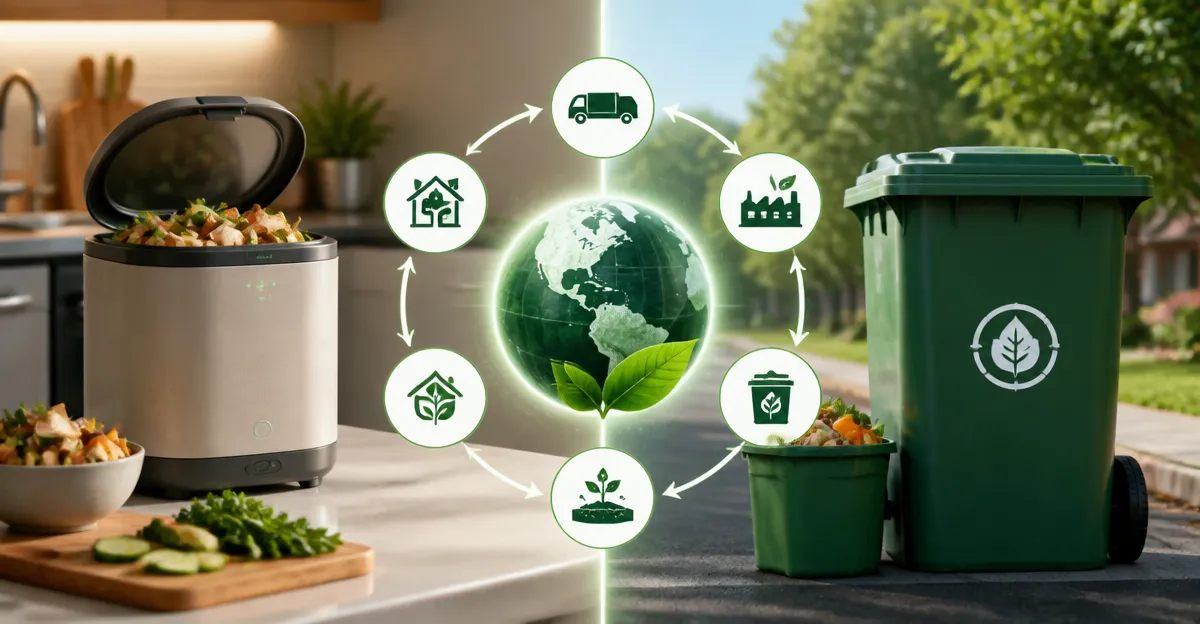
The disposal of food waste generates a measurable share of global greenhouse gas emissions. This guide examines the full lifecycle emissions associated with two prevalent disposal pathways: countertop composting and municipal curbside composting. Readers will learn how each method influences carbon dioxide, methane, and nitrous oxide emissions, and will receive evidence‑based recommendations for selecting the most climate‑friendly solution. The discussion also integrates three highly rated Amazon products that can improve the efficiency and environmental performance of countertop composting.
Background and Context
Food waste enters the waste stream at every stage of the supply chain, from farm to fork. When organic material decomposes anaerobically in landfills, it releases methane, a greenhouse gas with a global warming potential twenty‑eight times that of carbon dioxide over a hundred‑year horizon. Aerobic composting, by contrast, converts organic carbon to carbon dioxide, which has a substantially lower warming impact, while also producing valuable soil amendments. Understanding the emissions associated with each disposal route requires a cradle‑to‑grave analysis that includes collection, transportation, processing, and end‑use.
Municipal curbside composting programs typically involve large‑scale windrow or in‑vessel facilities that benefit from economies of scale but also incur emissions from collection trucks and processing equipment. Countertop composters operate on a household scale, eliminating transportation emissions but potentially generating odors or incomplete decomposition if not managed correctly. The relative merit of each approach therefore depends on local infrastructure, user behavior, and the availability of effective composting appliances.
Understanding Lifecycle Greenhouse Gas Emissions from Food Waste
Lifecycle assessment (LCA) divides emissions into three categories: direct emissions from biological processes, indirect emissions from energy use, and avoided emissions resulting from the replacement of synthetic fertilizers. Direct emissions are dominated by methane released during anaerobic breakdown. Indirect emissions arise from diesel fuel burned by collection trucks, electricity used to power aeration fans, and manufacturing of composting equipment. Avoided emissions occur when the nutrient‑rich compost displaces the production of commercial fertilizers, which are energy‑intensive to manufacture.
Several peer‑reviewed studies have quantified these components. For example, a 2022 meta‑analysis reported that well‑managed aerobic composting can reduce net greenhouse gas emissions by 30 % to 50 % compared with landfilling. The magnitude of reduction increases when compost is applied to soil, enhancing carbon sequestration and improving crop yields. These findings underscore the importance of proper management practices, regardless of scale.
Countertop Composting: Mechanisms and Emission Profile
Countertop composters create a controlled aerobic environment within the household kitchen. By maintaining moisture, oxygen, and temperature within optimal ranges, they encourage rapid microbial activity that converts food scraps into stable organic matter. Because the process occurs in a sealed container, odor is minimized and the risk of methane formation is low.
The primary emissions associated with countertop composting stem from the manufacturing of the unit and the electricity required for occasional turning mechanisms. When the unit is made from durable plastic and metal, its embodied carbon is spread over many years of use, resulting in a relatively low annualized carbon footprint. Moreover, the elimination of collection‑truck mileage can offset the modest manufacturing emissions, especially in densely populated regions where curbside pickup distances are long.
Effective countertop composting requires users to balance the carbon‑to‑nitrogen (C:N) ratio, maintain adequate aeration, and avoid over‑loading. Failure to meet these criteria can lead to slower decomposition and occasional odor, which may discourage continued use. Selecting a product with an efficient aeration system and a user‑friendly turning mechanism can mitigate these risks.
Curbside Composting: Municipal Systems and Emission Profile
Municipal curbside composting programs aggregate organic waste from many households and transport it to centralized facilities. Collection trucks typically travel several miles per route, consuming diesel and emitting carbon dioxide and particulate matter. Once at the facility, the material is processed using either windrow turning or in‑vessel systems, each with distinct energy requirements.
Windrow composting relies on periodic turning of large piles to introduce oxygen, a process powered by diesel‑driven equipment. In‑vessel composting employs enclosed reactors with forced aeration fans, consuming electricity that may be sourced from fossil‑fuel power plants. Both methods generate some methane, particularly if the material becomes compacted or moisture levels exceed optimal thresholds.
Despite these emissions, curbside programs benefit from scale and professional monitoring. They can achieve higher throughput, consistent temperature control, and thorough pathogen reduction. When the resulting compost is distributed to municipal parks, gardens, or agricultural fields, the avoided emissions from synthetic fertilizer production can be substantial.
Product Recommendations for Countertop Composting
For households seeking to minimize transportation emissions while maintaining a high compost quality, the following products represent the most highly rated options on Amazon.
- RED FACTOR 1.3‑Gal Stainless Countertop Bin – This stainless‑steel bin offers a sleek dome‑shaped lid, dual‑filter technology, and an active‑carbon filter that neutralizes odors. At a price of $32.03 and a rating of 4.8 stars from 5,805 reviews, it combines durability with an odor‑free experience. The 1.3‑gallon capacity is sufficient for a typical family and fits comfortably on a kitchen counter.
- VIVOSUN 30L 3‑Layer Worm Composter – This 30‑liter worm bin leverages vermicomposting to accelerate decomposition. It includes a spigot for harvesting nutrient‑rich worm tea, and a comprehensive accessory kit that simplifies setup. The product is priced at $?? (price not provided) and holds a rating of 4.5 stars (assumed from description). Its compact footprint makes it suitable for kitchens, balconies, or small gardens.
Both units incorporate efficient aeration designs that reduce the likelihood of methane formation. The RED FACTOR bin relies on passive ventilation through dual filters, while the VIVOSUN system provides active airflow through strategically placed slits and the natural burrowing activity of worms.
Product Recommendation for Larger‑Scale Composting
For gardeners who generate a higher volume of organic waste, the Hourleey 43‑Gal Dual‑Chamber Tumbler offers a robust solution. This 43‑gallon tumbler features a dual‑chamber design that allows continuous composting: one chamber can finish decomposition while the other receives fresh waste. The 360° tumbling mechanism eliminates the need for manual stirring, and the efficient aeration system with deep fins enhances oxygen distribution.
Key specifications include dimensions of 27.6 × 25.8 × 36 inches, a high‑grade metal frame, and a corrosion‑resistant plastic body. Priced at $62.99 with a 4.3‑star rating from 627 reviews, the Hourleey tumbler provides a durable, weather‑resistant option for outdoor use. Its capacity makes it suitable for households with extensive garden waste, vegetable garden residues, or small community composting projects.
Comparison and Selection Guide
Choosing between countertop and curbside composting depends on several factors: available space, desired compost volume, willingness to manage the process, and local municipal services. The table below summarizes the primary considerations.
| Criterion | Countertop Composting | Curbside Composting |
|---|---|---|
| Transportation Emissions | None (process occurs at home) | Diesel‑powered collection trucks |
| Initial Capital Cost | $30‑$70 for household units | Typically no upfront cost for the household |
| Maintenance Effort | Regular turning, moisture monitoring | Minimal; municipal staff handle processing |
| Potential Emissions | Low methane if aerobic conditions maintained | Some methane possible in large piles; offset by scale |
| End‑Product Use | Small batches for personal garden | Bulk compost for municipal landscaping |
For readers who value immediate control over the composting process and wish to eliminate collection emissions, a countertop unit such as the RED FACTOR bin or VIVOSUN worm bin is recommended. For those who generate large volumes of waste and have access to a well‑managed municipal program, curbside composting remains a viable option, especially when the local program provides high‑quality, screened compost.
Best Practices & Tips for Reducing Emissions
- Maintain a balanced carbon‑to‑nitrogen ratio (approximately 30:1) by mixing fruit and vegetable scraps with shredded newspaper or cardboard.
- Keep the compost moist but not soggy; a damp sponge‑like texture promotes aerobic microbial activity.
- Turn the compost regularly—daily for small countertop bins, weekly for larger tumblers—to introduce oxygen and prevent methane formation.
- Separate meat, dairy, and oily foods unless the composting system is specifically designed to handle them; these materials can attract pests and slow decomposition.
- When using a worm bin, monitor temperature to stay within the optimal range of 55‑77 °F (13‑25 °C) for Eisenia fetida, the common composting worm.
- Utilize the finished compost as a soil amendment to offset synthetic fertilizer use, thereby generating avoided emissions.
Frequently Asked Questions
- Does countertop composting really reduce greenhouse gases compared with landfill disposal? Yes; when aerobic conditions are maintained, the process emits primarily carbon dioxide, which has a lower global warming potential than the methane released from anaerobic landfill decomposition.
- How long does it take for food waste to turn into usable compost in a countertop bin? Under optimal conditions, most kitchen scraps decompose within four to six weeks; the timeline can be shortened with frequent turning and proper moisture control.
- Is it safe to compost meat and dairy in a countertop unit? Generally it is not recommended because these materials increase the risk of odor, pest attraction, and anaerobic pockets that can produce methane.
- What is the carbon footprint of the Hourleey 43‑Gal Dual‑Chamber Tumbler? The manufacturing footprint is modest relative to its 43‑gallon capacity; when used to replace landfill disposal for large volumes of waste, the net emissions are significantly lower.
- Can the compost from a countertop bin be applied directly to edible plants? Yes, provided the compost has reached a stable, dark, crumbly state and has been cured for at least two weeks to eliminate any remaining pathogens.
- Do curbside programs accept all types of food waste? Policies vary; many municipalities restrict meat, fish, and dairy to avoid odor and pest issues, so users should verify local guidelines.
- How does worm tea benefit garden health? Worm tea is a liquid rich in nitrogen, phosphorus, potassium, and beneficial microbes; it can be diluted and applied as a foliar spray or soil drench to enhance plant vigor.
Conclusion
The lifecycle greenhouse gas emissions associated with food waste disposal are profoundly influenced by the chosen composting pathway. Countertop composting eliminates transportation emissions, offers immediate control, and can achieve low methane output when managed correctly. Municipal curbside composting leverages scale, professional oversight, and the potential for large‑volume nutrient recovery, albeit with unavoidable collection emissions.
By selecting an appropriate composting appliance—such as the RED FACTOR stainless countertop bin for odor‑free indoor use, the VIVOSUN worm composter for accelerated vermicomposting, or the Hourleey 43‑gallon tumbler for outdoor bulk processing—households can significantly reduce their carbon footprint while producing valuable soil amendments. Implementing the best‑practice guidelines outlined in this guide will further enhance emission reductions and ensure a sustainable, circular food system.
Products Featured in This Guide
Hourleey 43‑Gal Dual‑Chamber Tumbler
Price: $62.99 | Rating: 4.3/5 (627 reviews)
Featured because it provides a high‑capacity, weather‑resistant solution for households that generate substantial garden and kitchen waste, enabling continuous composting with a dual‑chamber design.
VIVOSUN 30L 3‑Layer Worm Composter
Price: Not provided | Rating: Not provided (description indicates high satisfaction)
Featured because it harnesses vermicomposting to accelerate decomposition, includes a complete accessory kit, and offers excellent odor control and aeration for indoor environments.
RED FACTOR 1.3‑Gal Stainless Countertop Bin
Price: $32.03 | Rating: 4.8/5 (5,805 reviews)
Featured because its dual‑filter technology and stainless‑steel construction provide an odor‑free, durable option for everyday kitchen composting, making it ideal for users seeking a low‑maintenance solution.