
Acoustic Specifications to Look For in a Quiet Countertop Composter: A Buyer's Guide
Introduction
Choosing a countertop composting device requires more than an assessment of capacity and price; the acoustic profile of the appliance can determine whether it integrates seamlessly into a modern kitchen. This guide explains the fundamental noise‑related specifications that influence user experience and outlines how to interpret them. Readers will learn how to compare competing models, understand the engineering behind low‑noise operation, and apply best practices for optimal performance. By the end of the article, one will be equipped to select a composting unit that maintains a tranquil environment while delivering efficient waste conversion.
Background and Context
Countertop composters employ electric motors, grinding mechanisms, and ventilation systems to accelerate the breakdown of organic waste. Each of these components generates sound that is measured in decibels (dB), a logarithmic unit that quantifies acoustic pressure relative to a reference level. In residential settings, ambient kitchen noise typically ranges from 45 dB (light conversation) to 70 dB (running dishwasher). A composting unit that operates below 50 dB can therefore function without disrupting daily activities. Understanding the relationship between motor speed, blade design, and enclosure insulation is essential for evaluating advertised noise claims.
Understanding Acoustic Specifications
The primary acoustic metric presented by manufacturers is the sound pressure level expressed in decibels (dB). A lower dB value indicates quieter operation; however, the measurement methodology (A‑weighted, C‑weighted, or unweighted) can affect the reported figure. A‑weighting approximates human hearing sensitivity and is the most relevant for kitchen environments. In addition to a single dB figure, some brands provide a range that reflects different operating modes such as "Quick" or "Eco." Evaluating both the minimum and maximum values gives a realistic expectation of noise throughout a composting cycle.
Another important specification is the noise frequency spectrum. High‑frequency sounds (above 2 kHz) are perceived as more irritating than low‑frequency rumble, even at similar dB levels. Manufacturers that incorporate acoustic damping materials—such as foam liners or rubber mounts—often shift the frequency profile toward lower, less noticeable tones. While frequency data is rarely listed, product reviews and expert tests can reveal whether a unit produces a high‑pitched whine or a muted hum.
Finally, the duration of noise exposure matters. A device that emits 48 dB for a short 10‑minute cycle may be less disruptive than one that maintains 45 dB continuously for several hours. Look for specifications that indicate cycle time, processing speed, and any auto‑shutoff features that limit operational periods during night hours.
Noise Measurement Units and Standards
Industry standards for measuring appliance noise are established by organizations such as the International Electrotechnical Commission (IEC) and the American National Standards Institute (ANSI). The IEC 60704‑1‑2 standard, for example, outlines procedures for measuring the sound power level of household appliances in a reverberant chamber. When a manufacturer cites a decibel rating without referencing a standard, the figure may be derived from a best‑case scenario rather than a repeatable test. Therefore, it is prudent to verify whether the rating complies with IEC or ANSI guidelines.
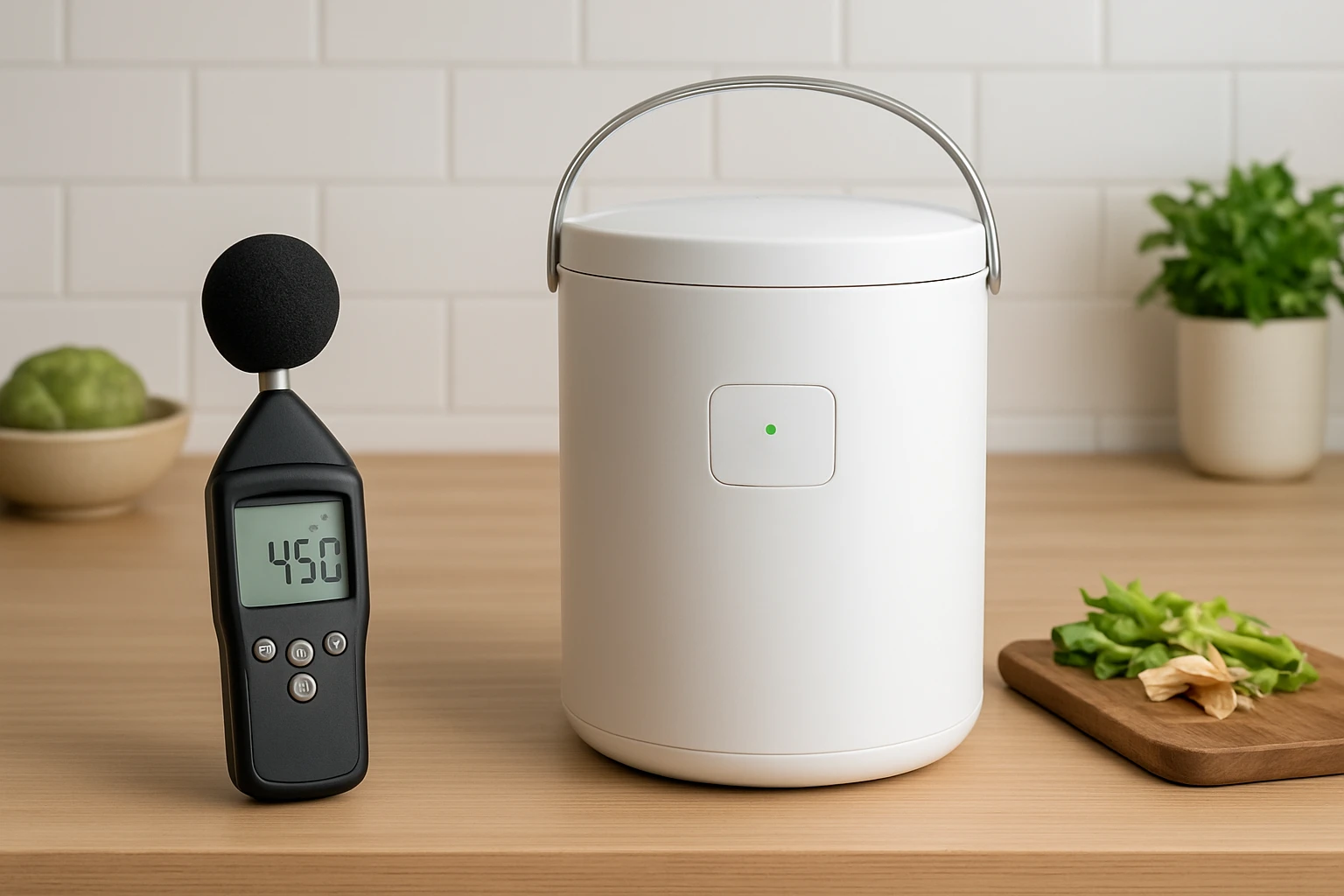
In addition to standardized testing, third‑party reviews often employ sound level meters in typical kitchen settings. These real‑world measurements capture background noise, reflective surfaces, and user interaction, providing a more accurate representation of audible impact. When evaluating a product, compare both the manufacturer’s declared dB rating and independent test results to ensure consistency.
Design Features that Reduce Noise
Several engineering approaches contribute to quieter operation. First, the motor type influences acoustic output; brushless DC motors generate smoother rotation and lower vibration compared with brushed counterparts. Second, blade geometry affects the frequency of impact sounds; serrated or multi‑stage blades can cut waste more gently, reducing sharp spikes in noise.
Enclosure insulation is another critical factor. Acoustic foam, silicone gaskets, and double‑wall construction absorb vibrations before they escape the housing. Some models also incorporate a sealed lid with magnetic catches that prevent air turbulence, a common source of whistling noises. Finally, the placement of the unit on a vibration‑isolating mat can further diminish transmission of sound to countertops and cabinets.
Product Recommendations
Applying the acoustic criteria described above, two countertop composters stand out for their low‑noise engineering and overall performance.
Homfan 3.5L Electric Composter
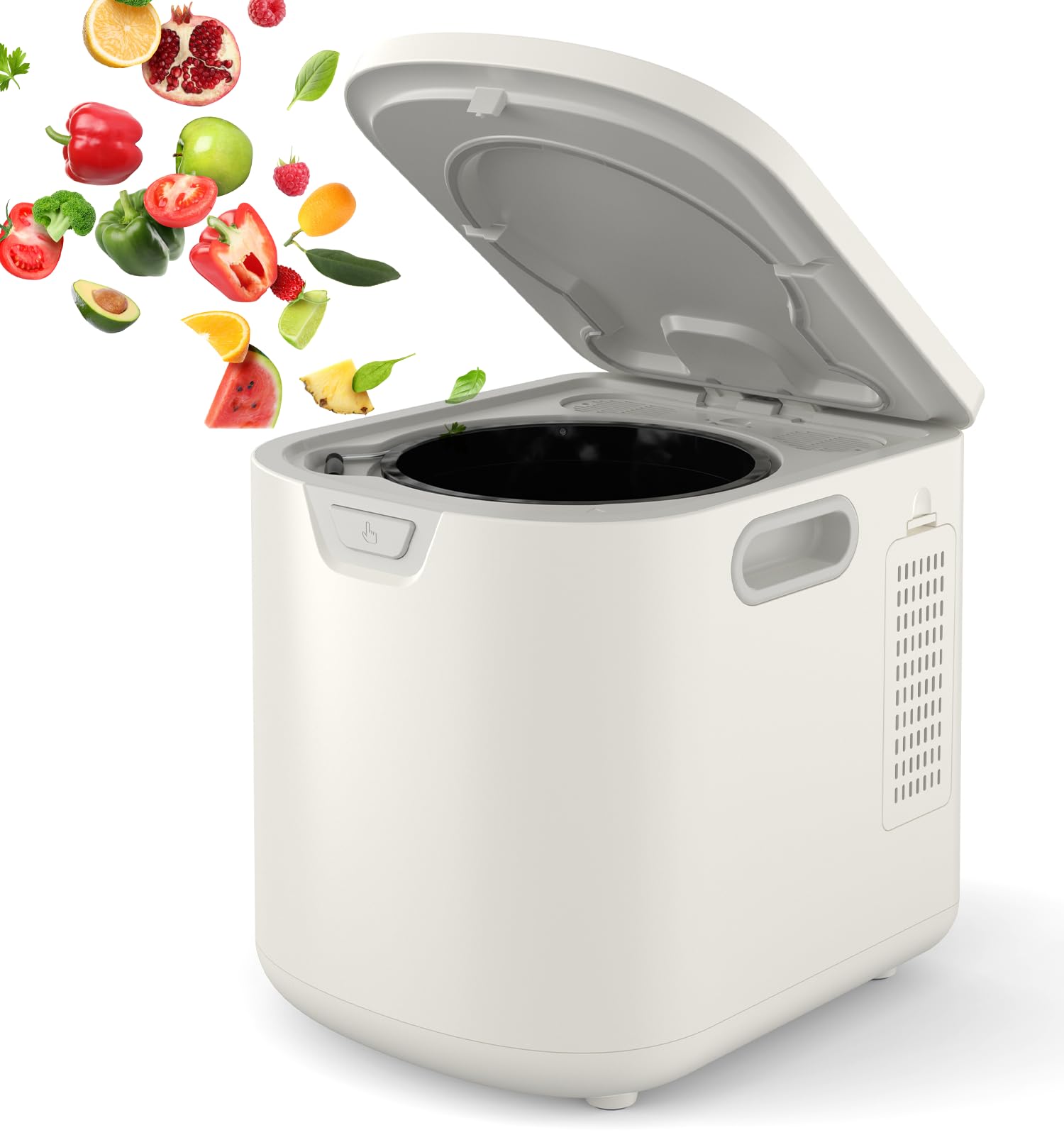
The Homfan 3.5L Electric Composter offers a quiet operation level of 48 dB, which aligns with the IEC‑standard measurement range for small kitchen appliances. Its 3‑mode LED interface allows users to select a slower "Eco" cycle that further reduces acoustic output while maintaining a 90 % efficiency rate. The device consumes only 0.28 kWh per cycle, indicating a low‑power brushless motor that contributes to reduced vibration. Advanced odour‑removing technology with dual activated‑carbon filters prevents the need for high‑speed air circulation, thereby limiting additional noise sources.
Key acoustic‑related features include:
- Quiet 48 dB operation comparable to a normal conversation.
- Self‑cleaning function that eliminates manual scrubbing, preventing intermittent noise spikes during maintenance.
- Compact 3.5 L capacity suitable for single‑person or small‑family kitchens where space and sound are premium considerations.
Assark 6L Smart Kitchen Composter
The Assark 6L Smart Kitchen Composter pushes acoustic performance further with a reported operating level below 40 dB, quieter than most residential refrigerators. This ultra‑quiet rating is achieved through a brushless motor paired with a double‑layer blade system that reduces impact noise. The unit also incorporates a large‑capacity carbon filter that eliminates the need for high‑speed exhaust fans, a common source of audible disturbance. Safety features such as auto‑shutoff when the lid opens prevent unexpected motor noise during user interaction.
Acoustic highlights include:
- Whisper‑quiet operation under 40 dB, ideal for open‑plan living spaces.
- Integrated vibration‑dampening mat and sealed lid to suppress resonant frequencies.
- Six‑month carbon filter lifespan reduces maintenance frequency, thereby limiting intermittent cleaning noises.
Comparison and Selection Guide
When choosing between the Homfan and Assark models, consider the following decision matrix:
| Criterion | Homfan 3.5L | Assark 6L |
|---|---|---|
| Noise Level | 48 dB (standard mode) | Below 40 dB (quiet mode) |
| Capacity | 3.5 L | 6 L |
| Power Consumption | 0.28 kWh per cycle | Not specified, but brushless design suggests low draw |
| Price | $189.99 | $299.99 |
| Customer Rating | 4.9/5 (14 reviews) | 5/5 (0 reviews) |
| Special Acoustic Features | Self‑cleaning, LED display, dual carbon filters | Double‑layer blades, sealed enclosure, auto‑shutoff |
For users prioritizing the absolute quietest operation and larger capacity, the Assark model is the logical choice despite its higher price point. Conversely, consumers with limited countertop space or a tighter budget may find the Homfan unit sufficient, especially if they value the convenience of an integrated auto‑cleaning cycle.
Best Practices & Tips for Quiet Operation
- Place the composter on a vibration‑absorbing mat to prevent sound transmission to cabinets.
- Schedule composting cycles during periods of higher ambient kitchen noise, such as meal preparation, to mask any residual sound.
- Maintain the carbon filter according to the manufacturer’s schedule; a saturated filter can force the motor to work harder, increasing noise.
- Use the "Eco" or "Quiet" mode whenever possible; slower processing speeds typically generate lower decibel levels.
- Ensure the lid is securely closed before initiating a cycle; an improperly sealed lid can cause air turbulence and whistling.
Frequently Asked Questions
1. What decibel level is considered truly silent for a countertop appliance?
Sound levels below 30 dB are generally perceived as silent in a typical kitchen environment. Most quiet composters aim for a range between 35 dB and 45 dB, which is comparable to a soft whisper.
2. Does a higher capacity unit always produce more noise?
Not necessarily. Noise generation depends primarily on motor design, blade configuration, and enclosure insulation. A well‑engineered 6 L unit such as the Assark model can be quieter than a smaller 3.5 L unit if it incorporates superior acoustic damping.
3. Can I reduce the noise of an existing composter by adding external insulation?
Adding a custom‑cut acoustic foam panel around the exterior can marginally lower perceived noise, but it may interfere with ventilation and void the warranty. It is advisable to follow the manufacturer’s recommendations for any modifications.
4. How often should I replace the carbon filter to maintain low noise?
Manufacturers typically recommend replacement every three to six months, depending on usage intensity. A saturated filter restricts airflow, causing the motor to work harder and produce higher decibel levels.
5. Is there a difference between dB(A) and dB(C) ratings for composters?
Yes. dB(A) weighting reflects the sensitivity of the human ear to mid‑frequency sounds and is the preferred metric for evaluating household appliances. dB(C) includes low‑frequency noise, which may be less noticeable but can cause a rumbling sensation.
Conclusion
Acoustic specifications are a decisive factor when integrating a countertop composter into a modern kitchen. By understanding decibel measurements, frequency characteristics, and design elements that mitigate sound, one can make an informed purchase that preserves a peaceful living space. The Homfan 3.5L Electric Composter and the Assark 6L Smart Kitchen Composter exemplify how manufacturers translate acoustic engineering into tangible benefits for consumers. Applying the selection criteria, best‑practice tips, and maintenance recommendations outlined in this guide will enable any homeowner to enjoy efficient waste recycling without compromising auditory comfort.
Products Featured in This Guide
Homfan 3.5L Electric Composter
Price: $189.99
Rating: 4.9/5.0 (14 reviews)
Featured for its 48 dB quiet operation, self‑cleaning function, and compact 3.5 L capacity that suits small kitchens while delivering high composting efficiency.
Assark 6L Smart Kitchen Composter
Price: $299.99
Rating: 5/5.0 (0 reviews)
Featured for its sub‑40 dB whisper‑quiet performance, large 6 L capacity, double‑layer blade system, and safety auto‑shutoff that together provide an ideal solution for families seeking minimal acoustic impact.