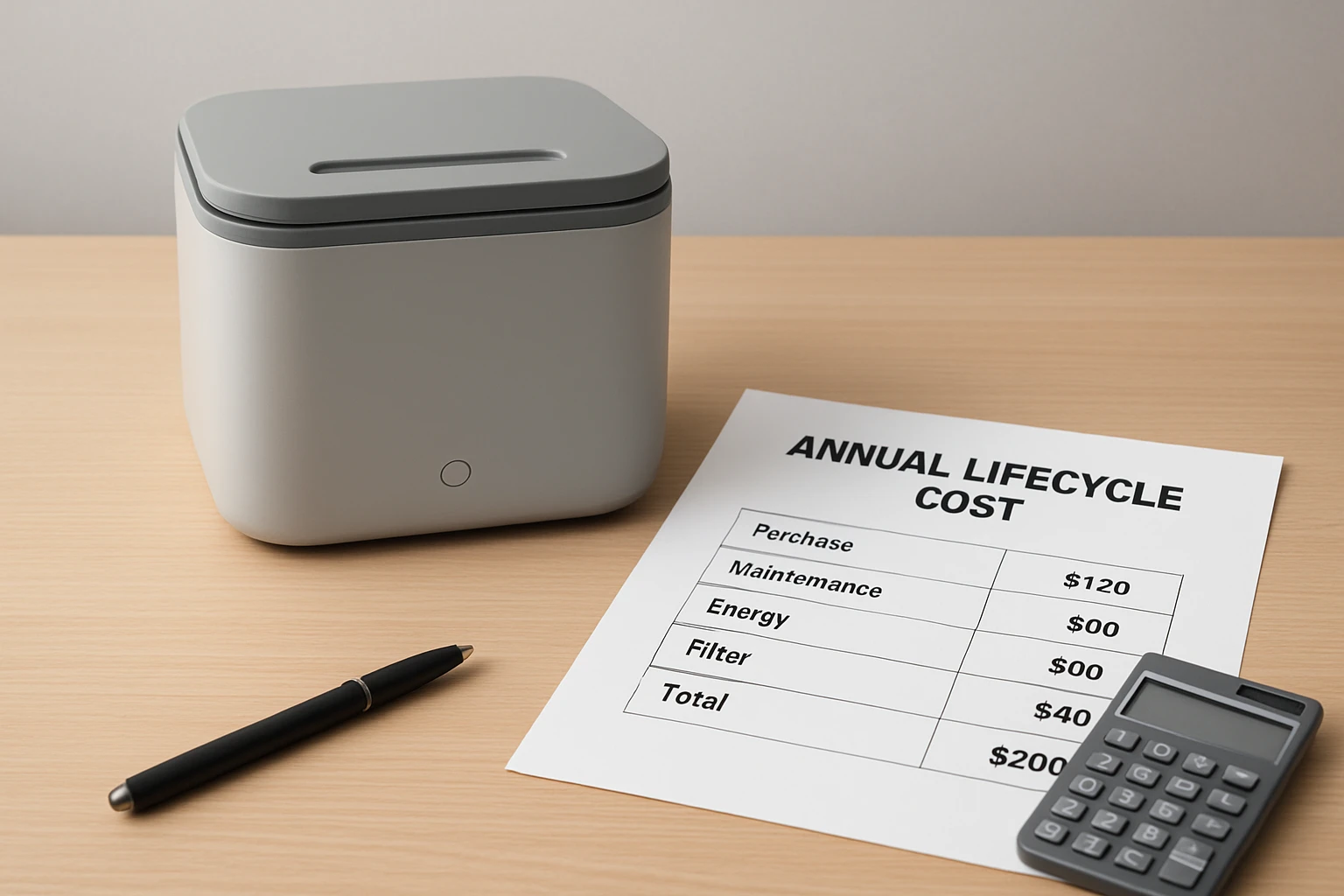
Annual Lifecycle Cost of a Countertop Composter: The Complete Guide
Introduction
Understanding the financial commitment of a countertop composter requires more than a simple purchase price. This guide explains the full spectrum of yearly expenses, from initial acquisition to ongoing maintenance, energy consumption, and replacement parts. Readers will learn how to calculate true annual costs, compare manual and electric models, and apply best‑practice strategies to minimise waste while maximising value. The guide also highlights three carefully selected products that illustrate different price points and feature sets.
Background and Context
Composting on a kitchen countertop has become a mainstream method for reducing household food waste. By diverting organic scraps from landfills, families can lower their carbon footprint and create nutrient‑rich material for gardens. However, the economics of this practice vary widely based on the type of composter, frequency of use, and local disposal fees. Manual bins rely on passive odor control, whereas electric units use heat, grinding, and filtration, each incurring distinct cost categories.
Key concepts that underpin cost analysis include depreciation, energy usage measured in kilowatt‑hours, filter lifespan, and the price of ancillary supplies such as compostable liners. Understanding these variables enables homeowners to forecast expenses with confidence and avoid unexpected overruns.
Understanding Countertop Composting Costs
The total annual cost can be broken into four primary components: initial capital expense, energy consumption, consumable replacements, and incidental maintenance. Capital expense is amortised over the expected useful life of the device, typically three to five years for stainless‑steel manual bins and up to seven years for electric models with robust motors.
Energy consumption is relevant only for electric composters. These units operate at low wattage, but continuous daily cycles can accumulate measurable electricity usage. Calculating kilowatt‑hour cost involves multiplying the device’s power rating by the average run time per day and the local electricity rate.
Consumable replacements primarily consist of carbon filters or charcoal inserts that neutralise odours. Filter lifespan is expressed in months of use; for example, the Ouaken 4L Electric Kitchen Composter includes a carbon filter rated for up to five months, while the BeiLan Vitamix FoodCycler Filters are expected to last approximately three months per set of four.
Incidental maintenance covers cleaning supplies, occasional replacement of lids or handles, and the cost of compostable liners if the user prefers a sealed system. These expenses are modest but should be factored into the annual budget.
Product Recommendations Within the Cost Framework
For households seeking a low‑cost, low‑maintenance solution, the RED FACTOR Kitchen Compost Bin offers a stainless‑steel construction, dual‑filter technology, and a price of $34.99. Its 1.3‑gallon capacity suits small families, and the included spare filters reduce the need for immediate replacements. With a 4.8‑star rating from 5,723 reviews, the bin demonstrates strong consumer satisfaction regarding odor control and durability.
For users who desire rapid waste reduction and are comfortable with an electrical device, the Ouaken 4L Electric Kitchen Composter provides a 4‑liter capacity, low‑noise operation below 40 dBA, and three programmable modes. Priced at $229.98 and rated 4.2 stars from 756 reviews, it represents a mid‑range investment with ongoing filter costs.
Owners of a Vitamix FoodCycler who need to replace worn filters can consider the BeiLan Vitamix FoodCycler Filters. The four‑pack set costs $29.99 and carries a 4.6‑star rating from 21 reviews. These filters extend the life of the FoodCycler by eliminating odours, and their three‑month lifespan aligns with typical household usage patterns.
Comparison and Selection Guide
Choosing the right countertop composter depends on budget, desired throughput, and tolerance for maintenance. The table below summarises the three featured products across key criteria.
| Feature | RED FACTOR Kitchen Compost Bin | Ouaken 4L Electric Kitchen Composter | BeiLan Vitamix FoodCycler Filters |
|---|---|---|---|
| Type | Manual, dual‑filter | Electric, high‑temperature drying | Replacement filter (accessory) |
| Capacity | 1.3 gal (10.8×8.7×7.3 in) | 4 L (approximately 1 gal) | Matches Vitamix FC‑50/FC‑30 models |
| Initial Price | $34.99 | $229.98 | $29.99 (4‑pack) |
| Annual Energy Cost | None (manual) | ~$6–$10 (based on 0.5 kWh/day, $0.12/kWh) | None |
| Filter Replacement Frequency | Spare filters included; replace as needed | Carbon filter up to 5 months | Every 3 months (per 4‑pack) |
| Average Rating | 4.8/5 (5,723 reviews) | 4.2/5 (756 reviews) | 4.6/5 (21 reviews) |
Consumers with limited countertop space and a desire for zero electricity usage should prioritise the RED FACTOR bin. Those who generate larger volumes of waste or wish to accelerate composting will find the Ouaken electric model advantageous, provided they budget for filter replacements. The BeiLan filters are relevant only to owners of a Vitamix FoodCycler, extending the life of that system without adding a new primary device.
Best Practices & Tips
- Separate high‑moisture items such as fruit peels from dry materials like coffee grounds to optimise odor control and reduce filter load.
- Empty the compost container at least once a week to prevent compaction and maintain aerobic conditions.
- For electric units, run the device during off‑peak electricity hours when rates are lower, if the local utility offers time‑of‑use pricing.
- Replace carbon filters promptly when odour control diminishes; a simple visual inspection of the filter surface can indicate saturation.
- Consider using biodegradable liners only when necessary; they add minimal cost and simplify cleaning of the inner bin.
Applying these practices can lower the effective annual cost by extending the service life of consumables and reducing energy waste. Additionally, regular maintenance aligns with the manufacturer’s warranty terms, preserving the initial investment.
Frequently Asked Questions
- How do I calculate the depreciation of a countertop composter? Divide the purchase price by the expected useful life in years. For example, a $229.98 electric unit amortised over five years contributes $45.996 per year to the total cost.
- Is the electricity usage of an electric composter significant? Typical models consume 0.5 kWh per cycle. At $0.12 per kWh, daily operation costs roughly $0.06, resulting in an annual expense of $22 if run every day. Most users operate the unit only a few times per week, lowering the cost further.
- How often should I replace the carbon filter in the Ouaken composter? The manufacturer rates the filter for up to five months of continuous use. Users with heavier waste streams may need to replace it every three months to maintain optimal odour control.
- Can I use the RED FACTOR bin without the spare filters? Yes, the bin functions with its dual‑filter system, but the spare filters included in the package allow for quick replacement when the active carbon becomes saturated.
- Do the BeiLan filters fit other composters? They are specifically designed for Vitamix FoodCycler FC‑50 and FC‑30 models. Compatibility with other brands is not guaranteed.
- What is the environmental impact of using a countertop composter? By diverting food waste from landfills, a household can reduce methane emissions by up to 30 % and generate compost that improves soil health, thereby offsetting the carbon cost of manufacturing the device.
Conclusion
The annual lifecycle cost of a countertop composter extends beyond the sticker price and includes energy, filter replacement, and routine maintenance. By analysing each expense category, homeowners can select a system that aligns with their budget and sustainability goals. Manual options such as the RED FACTOR Kitchen Compost Bin provide low‑cost entry with minimal ongoing fees, while electric models like the Ouaken 4L Electric Kitchen Composter deliver rapid waste processing at a higher but manageable yearly cost. Proper upkeep and strategic usage further optimise financial and environmental outcomes.
Products Featured in This Guide
RED FACTOR Kitchen Compost Bin
Price: $34.99
Rating: 4.8/5 (5,723 reviews)
Featured because it offers an affordable, stainless‑steel manual composting solution with dual‑filter technology, making it ideal for budget‑conscious households seeking low‑maintenance operation.
Ouaken 4L Electric Kitchen Composter
Price: $229.98
Rating: 4.2/5 (756 reviews)
Featured because it demonstrates the electric category, providing rapid waste reduction, odor‑free operation, and programmable modes that illustrate energy‑related cost considerations.
BeiLan Vitamix FoodCycler Filters
Price: $29.99 (4‑pack)
Rating: 4.6/5 (21 reviews)
Featured because it represents consumable accessories that influence recurring costs, highlighting the importance of filter lifespan in the total annual expense calculation.