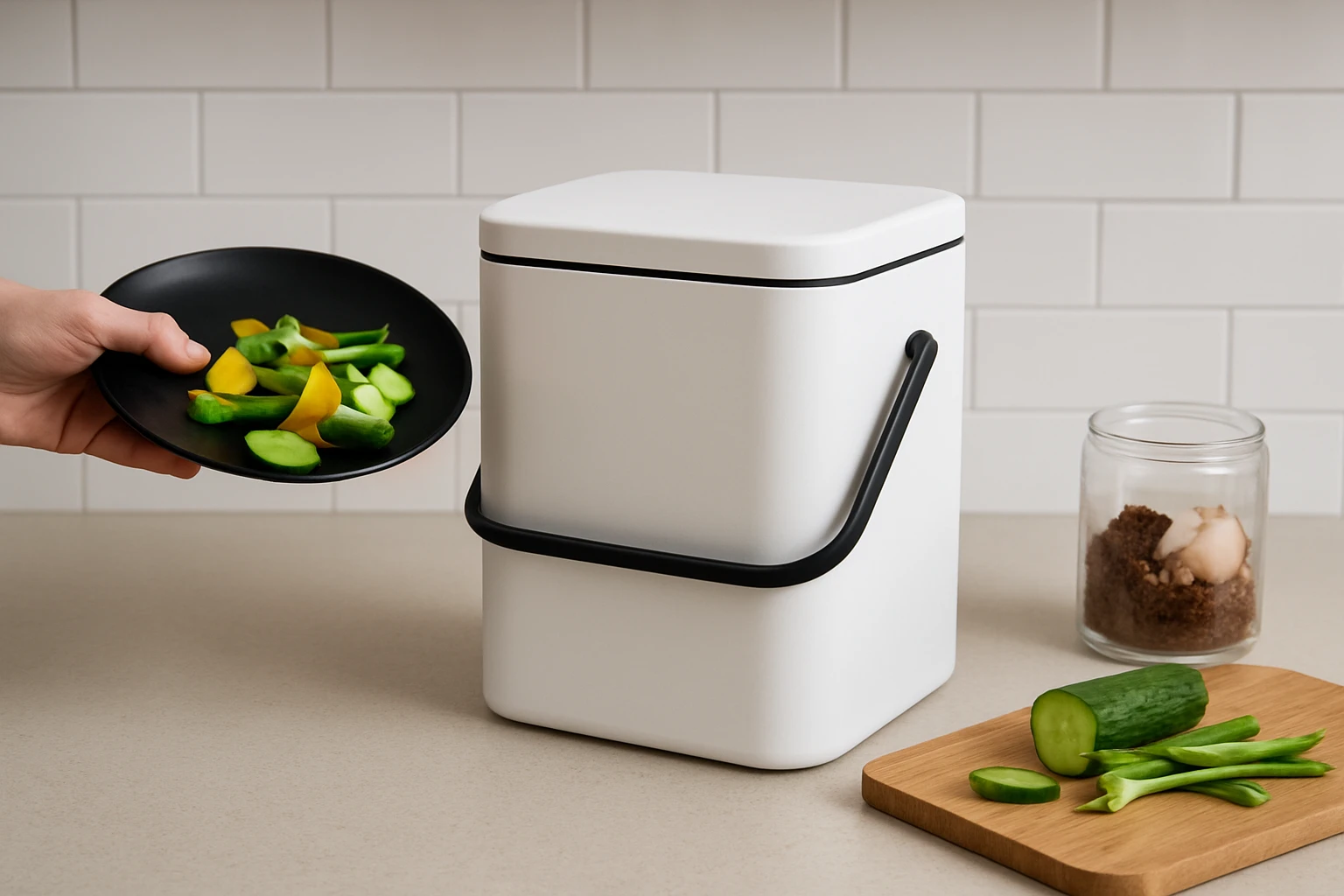
Countertop Composter ROI for Renters: Savings & Break‑Even
Renters often seek sustainable solutions that do not require permanent installation or extensive modification of their living space. One such solution is a countertop composter, which transforms kitchen waste into useful material while reducing garbage fees. This guide explains the financial implications, environmental benefits, and practical considerations for renters who contemplate adding a composter to their kitchen. By the end of this article, one will be able to calculate return on investment (ROI), estimate monthly savings, and determine the break‑even point for two popular countertop composters.
Background and Context
Composting is the biological process by which organic matter decomposes into nutrient‑rich humus. Traditional backyard composting requires space, time, and seasonal conditions that many apartment dwellers lack. Countertop composters, also known as indoor food waste recyclers, accelerate this process through heat, agitation, and controlled airflow. They produce a dry, soil‑like amendment that can be used for houseplants, community gardens, or disposed of with reduced volume. Understanding the mechanics of these devices is essential before evaluating their economic impact.
The primary cost drivers for a countertop composter are the purchase price, electricity consumption, and any consumable accessories such as carbon filters. Savings arise from reduced municipal waste fees, lower garbage bag purchases, and the avoided cost of purchasing commercial soil amendments. Renters must also consider the non‑financial advantages, including odor control, quiet operation, and the positive perception of sustainable living.
Key Concepts for ROI Calculation
To calculate ROI, one must first identify the total upfront investment and then quantify recurring savings over a defined period. The formula for ROI is:
ROI = (Total Savings – Initial Investment) / Initial Investment × 100%
In this context, total savings include monthly reductions in trash fees and the monetary value of the compost produced. Break‑even time is reached when cumulative savings equal the initial purchase price. The following sections illustrate how to apply these calculations to two specific products.
Product Recommendations
The first product examined is the Vitamix FoodCycler FC-50, a 2.5‑liter electric waste disposer that converts food scraps into nutrient‑rich soil amendment within hours. It carries a price of $399.99 and a rating of 4.4 out of 5 stars based on 2,644 reviews. Key features include advanced odor control via a carbon filter, whisper‑quiet operation, and a user‑friendly one‑touch interface. The device is currently unavailable, which may affect immediate acquisition but illustrates the high‑end segment of the market.
The second product is the Granrosi Countertop Compost Bin, a 1.3‑gallon stainless‑steel bucket equipped with three charcoal filters for odor mitigation. It is priced at $28.99 and holds a rating of 4.7 out of 5 stars from 5,996 reviews. This model emphasizes simplicity, durability, and low upfront cost, making it attractive for renters on a budget. Its design allows placement on any kitchen counter without the need for electricity.
Cost Breakdown for Each Device
Table 1 presents a side‑by‑side comparison of the two composters, focusing on purchase price, capacity, electricity usage, filter replacement cost, and estimated monthly savings.
| Feature | Vitamix FoodCycler FC-50 | Granrosi Countertop Compost Bin |
|---|---|---|
| Purchase Price | $399.99 | $28.99 |
| Capacity | 2.5 L (approximately 5 lb of waste per cycle) | 1.3 gal (≈5 lb of waste total storage) |
| Electricity Consumption | 0.6 kWh per cycle (average 2 cycles per week) | None (manual) |
| Filter Replacement Cost | $15 per carbon filter (recommended every 6 months) | Included 3 charcoal filters; replacement $8 each, lasts 3‑4 months |
| Estimated Monthly Savings | $10‑$12 (reduced trash fees and bag purchases) | $5‑$7 (reduced trash fees and bag purchases) |
These figures are based on average municipal waste fees of $0.30 per bag and a typical household generating 30 lb of food waste per month. The electricity cost assumes a rate of $0.13 per kWh.
Break‑Even Analysis
For the Vitamix FoodCycler FC-50, the initial investment of $399.99 is offset by monthly savings of approximately $11. Assuming filter replacement costs of $30 per year, the net monthly saving becomes $8. Over a 12‑month period, cumulative net savings equal $96, resulting in a break‑even time of roughly 4.2 years. Renters who anticipate a lease longer than this period may find the device financially justifiable, especially when factoring in the environmental value.
For the Granrosi Countertop Compost Bin, the upfront cost of $28.99 is recouped quickly. With monthly savings of $6 and negligible ongoing costs, the break‑even point occurs after approximately five months. This rapid return makes the Granrosi model particularly suitable for short‑term rentals or individuals who wish to test the concept before committing to a larger investment.
Comparison and Selection Guide
When selecting a countertop composter, renters should evaluate the following criteria:
- Space Availability: Measure the countertop area to ensure the device fits without obstructing appliances.
- Noise Sensitivity: Choose a model with quiet operation if the living environment demands low sound levels.
- Power Access: Verify that an electrical outlet is conveniently located for electric models.
- Budget Constraints: Determine the maximum amount one is willing to invest upfront.
- Maintenance Commitment: Consider the frequency of filter changes and cleaning requirements.
Based on these factors, the Vitamix FoodCycler FC-50 excels in odor control, speed of conversion, and automated operation, making it ideal for renters with ample countertop space and a willingness to invest. The Granrosi Countertop Compost Bin offers simplicity, low cost, and no electricity requirement, making it the optimal choice for renters with limited budgets or shared living arrangements where noise and power usage are concerns.
Best Practices & Tips for Renters
To maximize the benefits of a countertop composter, renters should adhere to the following best practices:
- Separate Eligible Waste: Only place fruit peels, vegetable scraps, coffee grounds, and eggshells in the composter; avoid dairy, meat, and oily foods that can cause odor or clog filters.
- Maintain Moisture Balance: Add a small amount of dry material such as shredded newspaper or cardboard to absorb excess moisture and improve aeration.
- Follow Manufacturer Cleaning Schedule: Clean the interior chamber and replace carbon filters according to the recommended intervals to preserve odor‑free operation.
- Track Savings: Keep a simple spreadsheet documenting monthly trash fees and bag purchases to visualize financial gains over time.
- Communicate with Landlord: Inform the property manager about the device and assure that it will not cause damage to plumbing or electrical systems.
Implementing these practices not only extends the lifespan of the composter but also reinforces the renter’s commitment to sustainable living.
Frequently Asked Questions
- 1. Can a countertop composter be used in a dormitory or shared apartment?
- Yes, both the Vitamix FoodCycler FC-50 and the Granrosi Countertop Compost Bin are compact enough for dormitory counters, provided that the user follows the noise and odor guidelines outlined in the manufacturer’s instructions.
- 2. How often do carbon filters need replacement?
- The Vitamix FoodCycler FC-50 recommends replacing its carbon filter every six months, while the Granrosi model includes three filters that last three to four months each.
- 3. Is the compost produced safe for indoor plants?
- The dry, soil‑like amendment generated by both devices is safe for indoor houseplants, provided that it is mixed with regular potting soil at a ratio of approximately 1 part compost to 4 parts soil.
- 4. What is the typical noise level of an electric countertop composter?
- The Vitamix FoodCycler FC-50 operates at a whisper‑quiet level, generally below 50 decibels, which is comparable to a quiet conversation.
- 5. Will using a composter increase my electricity bill significantly?
- Electric models consume modest amounts of power; the Vitamix FoodCycler FC-50 uses about 0.6 kWh per cycle, resulting in an additional cost of less than $1 per month under typical rates.
- 6. Can the compost be disposed of in regular trash if I run out of space?
- Yes, the dried compost can be placed in a regular trash bag; however, it is advisable to use the material as a soil amendment whenever possible to maximize environmental benefits.
- 7. Do landlords consider countertop composters a modification to the rental unit?
- Because these devices are portable and do not require permanent installation, most landlords view them as personal appliances rather than structural modifications.
Conclusion
Renters who adopt countertop composters can achieve measurable financial savings, reduce waste volume, and contribute to a circular economy. By applying the ROI formula, tracking monthly savings, and selecting a device that aligns with space, budget, and lifestyle constraints, one can determine the optimal break‑even horizon. The Vitamix FoodCycler FC-50 offers a high‑tech, rapid solution for those willing to invest, while the Granrosi Countertop Compost Bin provides an affordable, low‑maintenance entry point. Implementing the best‑practice recommendations ensures long‑term success and enhances the overall sustainability of the rental household.
Products Featured in This Guide
Vitamix FoodCycler FC-50
Price: $399.99
Rating: 4.4 out of 5 (2,644 reviews)
Featured because it demonstrates the capabilities of an electric, high‑capacity composting system with advanced odor control and quiet operation, which is relevant for renters seeking a premium solution.
Granrosi Countertop Compost Bin
Price: $28.99
Rating: 4.7 out of 5 (5,996 reviews)
Featured because it provides an affordable, non‑electric option that fits easily on any kitchen counter, making it ideal for budget‑conscious renters and short‑term leases.