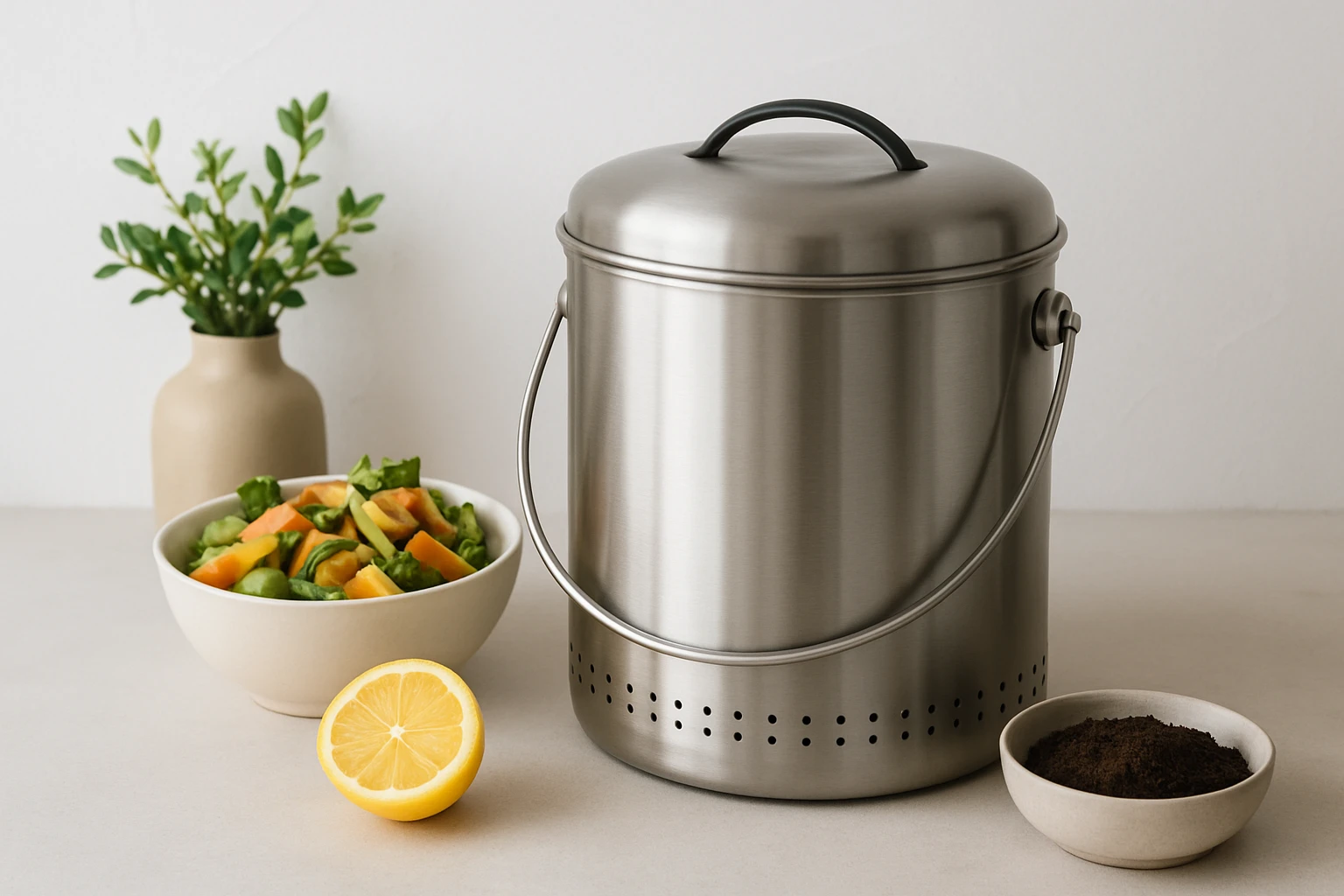
How to Care for Your Indoor Countertop Composter Year‑Round: Seasonal Tips to Prevent Odors, Speed Breakdown & Keep It Fresh
One will learn how to maintain an indoor countertop composter throughout the four seasons, ensuring that odor remains minimal, breakdown speed stays optimal, and the unit remains a reliable tool for sustainable living. The guide combines practical procedures with carefully selected product recommendations that enhance performance while remaining optional for the diligent user. By following the steps, one can transform kitchen waste into valuable fertilizer without compromising the comfort of the home environment. The seasonal perspective acknowledges that temperature, humidity, and waste composition vary throughout the year, requiring nuanced adjustments.
What You Will Need
- A smart electric composter such as the GoveeLife Smart Electric Composter or the Vanerepok 4.5L Electric Composter.
- Replacement carbon filter compatible with your unit, for example the Ouaken Carbon Filter or the Simply Carbon Compost Filters.
- Moisture‑absorbing kitchen towels, a small kitchen scale, and a set of airtight containers for pre‑sorting waste.
- Cleaning supplies: soft brush, mild detergent, and paper towels.
Step 1: Initial Setup and Placement
One should locate the composter on a stable countertop away from direct sunlight and drafts; this placement stabilises internal temperature and reduces energy consumption. The GoveeLife Smart Electric Composter offers voice and app control, a quiet 40 dB operation, and a 3 L capacity that fits most kitchen islands, making it an excellent starter unit. Priced at $199.99 with a 4.1‑star rating, it provides three smart modes—composting, storage, and cleaning—that simplify the onboarding process.
For larger households, the Vanerepok 4.5L Electric Composter delivers a 50 % larger bucket for $189.99 and a 4.3‑star rating, allowing up to 4.5 L of waste before emptying. Its four smart modes, including a quick 3‑hour cycle, accommodate varying waste volumes and time constraints. After unpacking, one should connect the unit to a Wi‑Fi network, follow the manufacturer’s app wizard, and calibrate the internal carbon filters according to the initial usage instructions.
Step 2: Preparing Food Waste for Efficient Breakdown
One must trim excess moisture from high‑water content items such as cucumbers, tomatoes, and citrus peels before loading; excess moisture prolongs drying time and can generate unwanted odors. A practical method involves patting the waste with a clean kitchen towel or spinning it in a salad spinner for 30 seconds. When possible, chop larger pieces into 2‑3 cm fragments; this increases surface area and accelerates the grinding process inside the composter.
During winter months, the ambient temperature drops, which can slow microbial activity. To counteract this, one can add a small amount of shredded newspaper or cardboard—materials high in carbon—to balance the nitrogen‑rich kitchen scraps. The carbon source also aids in odor absorption, complementing the built‑in carbon filters of both the GoveeLife and Vanerepok models.
Step 3: Managing Odor Control Throughout the Year
Both recommended composters incorporate dual carbon filters designed to trap volatile compounds. Over time, these filters become saturated and lose effectiveness. For the GoveeLife unit, the app sends a replacement reminder after approximately 2,160 hours of odor‑free operation. At that point, the user should consider installing a fresh filter such as the Ouaken Carbon Filter, which costs $39.99 and carries a 4.2‑star rating. This filter is engineered with high‑iodine activated carbon, delivering long‑lasting odor control for up to five months under typical usage.
Homeowners seeking a more economical solution may opt for the Simply Carbon Compost Filters. Priced at $21.95 for a six‑pack, these extra‑thick filters provide up to two years of odor protection when replaced every four months, according to the manufacturer. Their universal size fits most countertop bins, including both GoveeLife and Vanerepok models, and the biodegradable packaging aligns with sustainable practices.
Step 4: Seasonal Adjustments for Optimal Performance
In spring, the increase in fresh produce results in higher volumes of acidic fruit waste. One should balance this by adding more carbon‑rich materials, such as dried leaves or shredded paper, to maintain a neutral pH inside the chamber. The Vanerepok’s Ferment Mode is particularly effective during this season, producing a nutrient‑dense bio‑fertilizer suitable for garden beds.
Summer brings higher ambient humidity, which can cause the compost to retain moisture longer. Engaging the Quick Mode on the Vanerepok unit or the Auto‑Clean cycle on the GoveeLife model helps dry the material rapidly, preventing mold formation. Additionally, placing a small dehumidifier near the composter can further stabilise internal moisture levels.
Autumn introduces a surge of vegetable peelings and pumpkin remnants. These high‑fiber items benefit from the standard daily cycle, allowing the grinder to break down cellulose efficiently. One should avoid overloading the unit with dense fibers like parsley stems, as noted in the Vanerepok user guidelines, to prevent motor strain.
Winter’s lower temperatures can reduce microbial activity to the point where the composting cycle stalls. To maintain heat, one may select the GoveeLife’s storage mode, which keeps the chamber insulated while the unit continues low‑level heating. If the unit’s internal temperature falls below 30 °C, extending the cycle duration by 20 % ensures complete breakdown.
Step 5: Routine Maintenance and Cleaning
One should perform a self‑cleaning cycle at least once a month, regardless of season. The GoveeLife model offers an automated cleaning mode that sprays a fine mist of water and activates the grinder to dislodge residue. After the cycle completes, the user must wipe the interior with a damp cloth and dry it thoroughly to prevent rust.
For the Vanerepok unit, the Self‑Clean Mode functions similarly, but manual brushing of the grinding chamber is recommended after three cleaning cycles. Use a soft brush and a mild detergent solution; avoid abrasive pads that could damage the ceramic grinding plate.
Filter replacement follows a predictable schedule: the Ouaken filter after five months of continuous use, or the Simply Carbon filters every four months. When replacing, remove the old cartridge, inspect the housing for moisture buildup, and insert the new filter until it clicks securely. The product description advises checking for water accumulation at the bottom of the compartment and drying it with paper towels before reinstalling.
Tips & Pro Tips
- Pre‑sort waste into categories (high‑nitrogen, high‑carbon, and high‑moisture) to optimise the composting cycle and reduce odor.
- Run the composter overnight during hot months; the low‑noise operation (40 dB for GoveeLife, 42 dB for Vanerepok) ensures it does not disturb sleep.
- Use the companion mobile app to monitor processing history, track eco‑impact, and receive filter‑replacement alerts.
- Store a spare carbon filter in a cool, dry place; this prevents emergency purchases and ensures continuous odor control.
- If the compost appears excessively wet, add a handful of shredded newspaper and restart the cycle.
Troubleshooting
| Problem | Possible Cause | Solution |
|---|---|---|
| Strong odor during cycle | Filter saturated or waste too moist | Replace carbon filter (Ouaken or Simply Carbon) and dry excess moisture before loading. |
| Cycle takes longer than expected | Low ambient temperature or overloaded bin | Reduce load size, engage Quick Mode, or increase ambient temperature with a small space heater. |
| Grinding noise louder than usual | Hard objects (bones, metal) entered the chamber | Power off unit, remove offending items, and run a cleaning cycle. |
| App fails to connect | Wi‑Fi signal weak or router settings block communication | Move unit closer to router, ensure 2.4 GHz band is enabled, and restart the app. |
Conclusion
One now possesses a comprehensive, seasonally aware plan for caring for an indoor countertop composter, ensuring minimal odor, accelerated breakdown, and long‑term freshness. By selecting the appropriate smart composter, maintaining carbon filtration, adjusting waste preparation, and following routine cleaning, the user can transform daily kitchen scraps into valuable fertilizer year‑round. The guide emphasizes that the recommended products enhance efficiency but are not mandatory; disciplined practices alone can achieve satisfactory results. Continued attention to seasonal nuances will keep the composting system operating at peak performance, contributing to a greener household.
Products Mentioned in This Guide
Frequently Asked Questions
How does temperature affect the breakdown speed in a countertop composter?
Warmer temperatures (20‑30°C) accelerate microbial activity, while colder months slow it down, so you may need to add more carbon or use the smart composter’s heating mode in winter.
What seasonal adjustments can prevent odors in winter?
Increase ventilation, replace the carbon filter more often, and add dry materials like shredded paper to absorb excess moisture.
Should I change the compost feed composition in summer?
Yes, include more high‑nitrogen scraps (fruit, veg) and ensure the lid stays closed to retain humidity, which speeds decomposition in hot weather.
How often should I replace the carbon filter for year‑round use?
Replace it every 4‑6 weeks in summer and every 2‑3 weeks in winter, or when you notice a decline in odor control.
Can the GoveeLife Smart Electric Composter adapt to seasonal changes automatically?
Its app lets you set temperature and aeration presets, so you can schedule higher heat in winter and lower in summer for optimal performance.