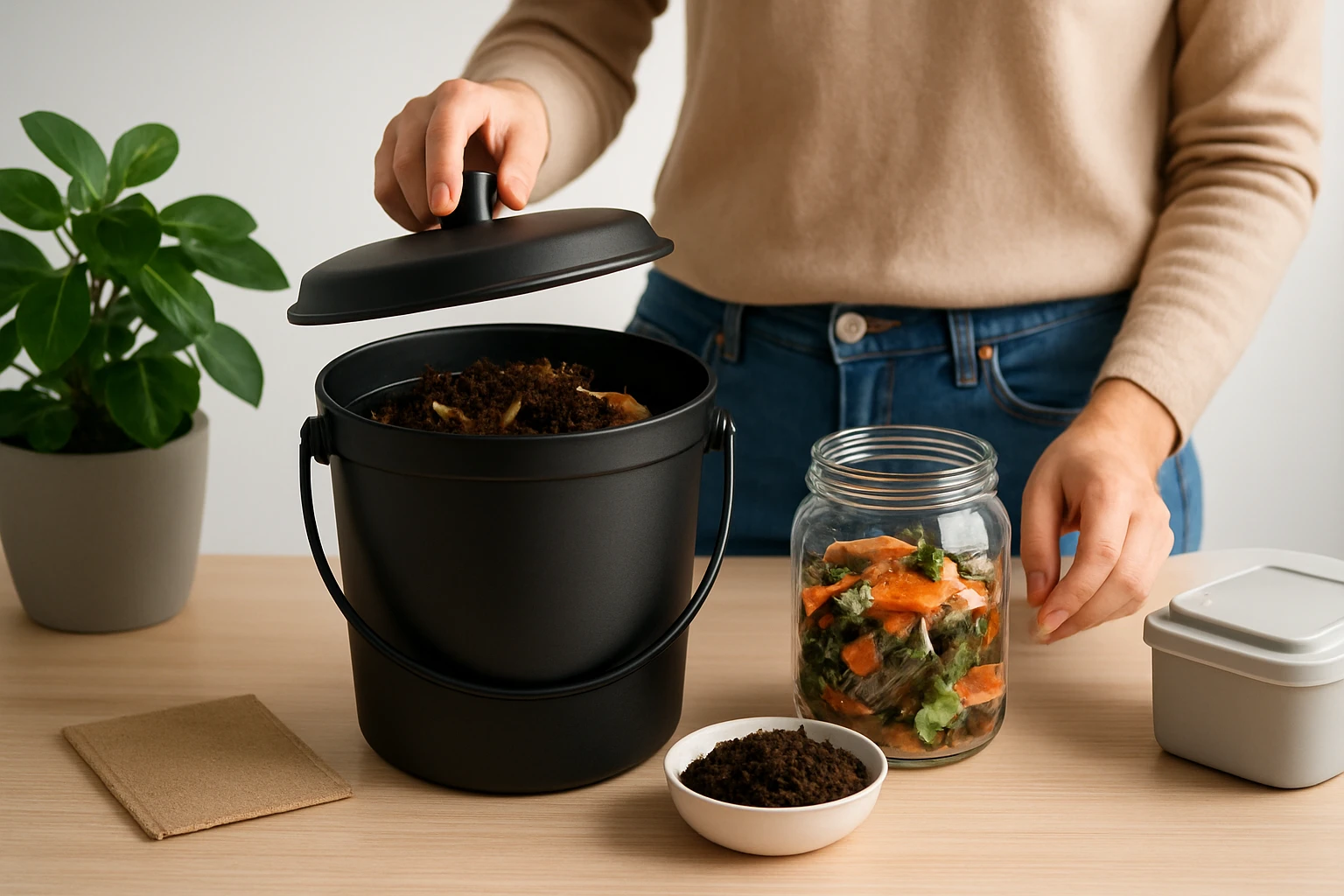
How to Compost in an Apartment Without Smell or Pests: Step‑by‑Step Odor‑Free Indoor Composting
Introduction
One will learn how to transform kitchen food waste into valuable compost while living in a compact apartment. This guide explains the essential principles of odor control, pest prevention, and efficient waste handling. It also demonstrates how to select tools that simplify each stage of the process. By following the steps, one can reduce household waste, lower carbon footprint, and create nutrient‑rich material for indoor plants or a community garden.
What You’ll Need
The following items constitute a practical toolkit for indoor composting. Each product is linked to its Amazon page for convenient purchase, but the guide remains useful without them.
- AOSION Countertop Compost Bin – sturdy metal exterior, 1 gal capacity, activated‑carbon filter.
- Cooler Kitchen Indoor Compost Bin – compact steel body, removable liner, one‑hand lid.
- ANECO Home Compostable Trash Bags – 1.6 gal biodegradable bags, certified compostable.
- Sunwood Life Bokashi Composter Kit – 5‑gal bucket, bokashi bran, spigot, and accessories.
Step 1: Choose an Appropriate Compost Bin
Selecting a bin that seals tightly and contains an odor‑absorbing filter is the foundation of a pest‑free system. The AOSION Countertop Compost Bin offers a rust‑proof metal shell, a food‑grade plastic inner bucket, and a 10 mm activated carbon filter that locks in odors. It is priced at $25.26 and holds a 4.4‑star rating from 133 reviews, indicating reliable performance for a week’s worth of scraps. An alternative is the Cooler Kitchen Indoor Compost Bin, which weighs less, includes a removable liner for mess‑free emptying, and costs $12.49 with a 4.3‑star rating from 1,220 reviews. Both models feature one‑hand lids that allow quick access while cooking, reducing the temptation to leave waste exposed.
When comparing the two, the AOSION model provides a larger capacity (1 gal) and a more decorative embossed finish, making it suitable for larger households or those who prefer a kitchen accent piece. The Cooler Kitchen model excels in portability and ease of cleaning, which is advantageous for renters who may need to move the bin frequently. Choose the bin that aligns with one’s kitchen layout, waste volume, and aesthetic preferences.
Step 2: Prepare the Bin with a Compostable Liner
Using a liner prevents food residue from contacting the bin’s interior, simplifying cleanup and reducing odor migration. The ANECO Home Compostable Trash Bags are engineered from corn‑starch polymers, decompose fully in home composting systems, and meet BPI, TUV Austria, and EN 13432 certifications. Each pack contains 50 bags sized to fit 1.6‑gallon containers, matching the dimensions of both recommended bins. Priced at $11.99 with a 4.5‑star rating from 1,370 reviews, these bags combine strength with eco‑friendliness, preventing tears even when handling wet or sharp scraps.
To install, one simply places a bag inside the inner bucket, ensuring the bag’s opening rests over the rim. The bag’s drawstring can be secured after each emptying, and the bag can be transferred directly to an outdoor compost pile or a bokashi bucket. Because the bags are home‑compostable, they do not contribute additional plastic waste, aligning with the overall sustainability goal.
Step 3: Collect and Sort Kitchen Scraps
One should collect fruit peels, vegetable trimmings, coffee grounds, eggshells, and tea bags in the bin while avoiding meat, dairy, and oily foods that generate stronger odors. If meat or fish waste is unavoidable, the bokashi method (see Step 5) can process those items safely. It is advisable to rinse particularly wet scraps briefly to remove excess liquid, which can accelerate anaerobic decay and cause odor. Place the rinsed items into the bin, pressing them gently to maximize space usage.
Maintaining a routine—adding scraps after each meal—prevents the accumulation of large volumes that could overwhelm the filter. The carbon filter in the AOSION bin and the sealed lid of the Cooler Kitchen bin work together to trap volatile compounds, ensuring the kitchen air remains fresh.
Step 4: Manage Moisture and Odor
Moisture balance is critical; an overly wet environment promotes anaerobic bacteria that emit foul smells. One can add a thin layer of shredded newspaper, dry leaves, or a handful of garden soil after each addition of wet scraps. This layer absorbs excess liquid and supplies carbon to the composting process. The activated carbon filter in the AOSION bin and the airtight lid of the Cooler Kitchen bin already provide a barrier to odor, but the additional carbon source enhances the effect.
Periodically, one should check the filter cartridges. The AOSION bin includes three replaceable charcoal filters; they should be swapped out when the odor control diminishes, typically after a month of heavy use. The Cooler Kitchen bin ships with two filters, which can be rotated to extend their lifespan.
Step 5: Transfer to a Secondary Compost System (Optional)
For households that generate larger quantities of waste or wish to compost meat and dairy, the Sunwood Life Bokashi Composter Kit offers a closed‑system fermentation method. The kit includes a 5‑gallon bucket with a spigot, bokashi bran inoculated with effective microorganisms, and a small kitchen pail for daily collection. Priced at $59.00 with a 4.4‑star rating from 201 reviews, it enables rapid fermentation within two weeks, producing a nutrient‑rich liquid (bokashi juice) that can be diluted as fertilizer.
To use, one transfers the filled liner from the countertop bin into the bokashi bucket, adds a tablespoon of bokashi bran, and presses the waste down with the provided compactor. The sealed lid prevents insects and odors, while the bran suppresses foul smells. After the fermentation cycle, the contents can be buried in garden soil or added to a worm bin. The bokashi juice collected through the spigot serves as a powerful plant tonic, completing the waste‑to‑resource loop.
Tips & Pro Tips
- Place the bin in a cool, well‑ventilated area of the kitchen to slow microbial activity and reduce odor.
- Rotate the carbon filter every four weeks to maintain optimal odor absorption.
- Use a small kitchen scoop to add scraps without touching the bin’s interior, preserving hygiene.
- If the bin begins to emit a faint smell, increase the dry carbon layer and verify that the lid seals completely.
- For apartment buildings with strict waste policies, keep the bin’s exterior clean and store the liner bags in a sealed cupboard when not in use.
Troubleshooting
Problem: Persistent odor despite filter replacement.
Solution: Ensure that the inner bucket is not overfilled; excess volume can compress the filter and allow gases to escape. Empty the bin more frequently and add additional dry carbon material.
Problem: Fruit flies appear around the bin.
Solution: Verify that the lid closes tightly and that the inner bucket is free of standing liquid. Fruit flies are attracted to moist surfaces; wiping the rim and using a fresh liner each week eliminates breeding grounds.
Problem: Liner tears during removal.
Solution: The ANECO bags are designed to be extra‑strong, but excessive sharp objects can puncture them. Cut large bone fragments into smaller pieces before placing them in the bin, or use the metal bin’s inner bucket without a bag for short‑term storage.
Conclusion
One now possesses a clear, actionable plan for odor‑free indoor composting within an apartment setting. By selecting a sealed bin, employing a biodegradable liner, managing moisture, and optionally integrating a bokashi system, one can divert kitchen waste from landfills, create valuable fertilizer, and maintain a pleasant living environment. Implement the steps consistently, and the composting habit will become a seamless part of daily routine.
Products Mentioned in This Guide
Frequently Asked Questions
How can I prevent odors when composting food scraps in a small apartment?
Use a bin with an activated‑carbon filter, add a layer of dry material like shredded newspaper, and keep the compost moist but not wet.
What steps stop pests such as flies or rodents from getting into my indoor compost?
Seal the lid tightly, store the bin on a countertop away from food, and empty the collection bag regularly.
Do I need a special compost bin, or can I use any container?
A bin with a breathable filter and a removable liner works best, but any airtight container with a vent can be adapted for indoor use.
How often should I stir or turn my apartment compost to keep it odor‑free?
Stir the contents once every 2–3 days with a small utensil to aerate and speed up decomposition.
Can I compost meat, dairy, or oily foods indoors without creating smells?
It's best to avoid meat, dairy, and oils in indoor bins, as they decompose slower and are more likely to cause odors and attract pests.