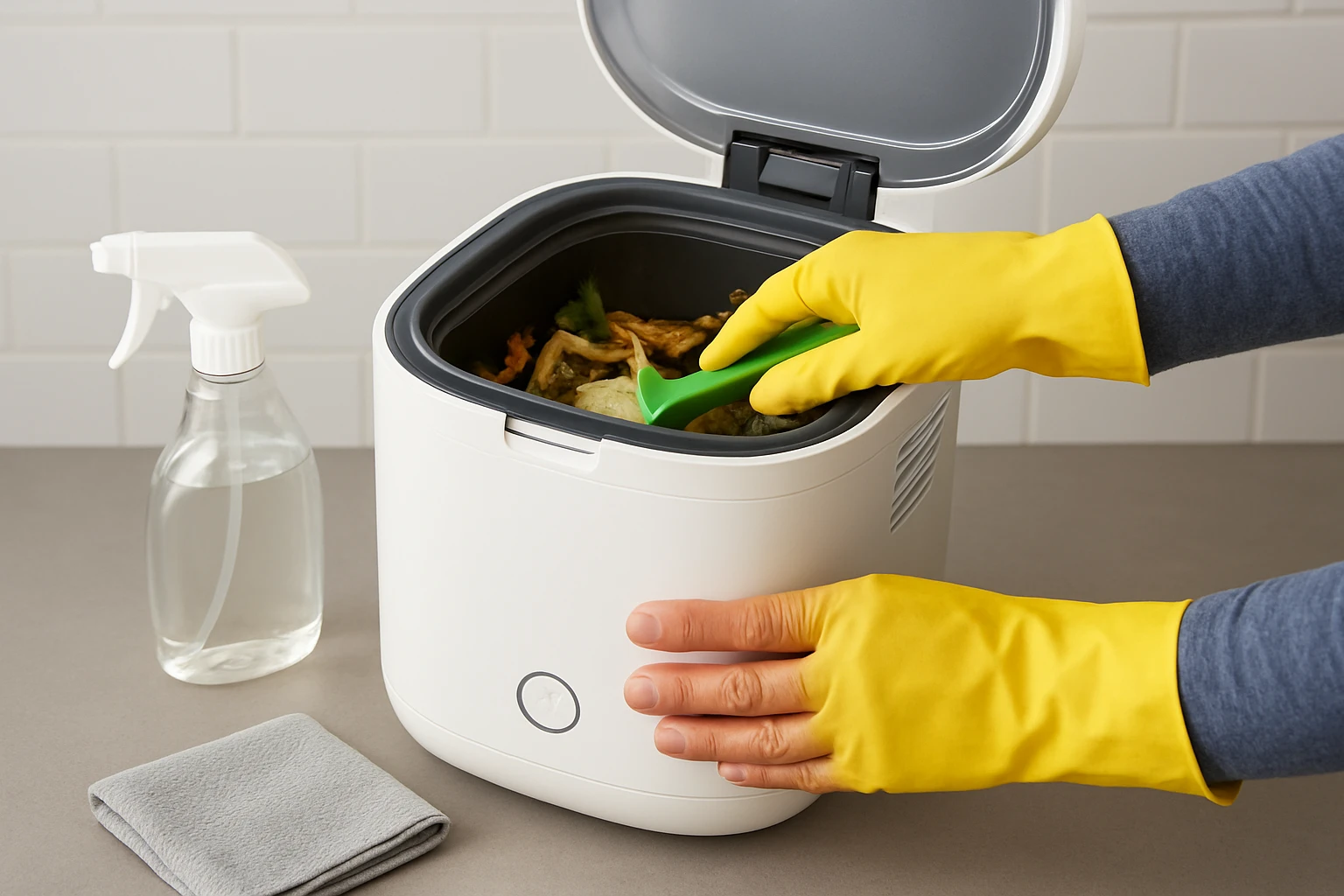
How to Deep Clean an Electric Countertop Composter: Step-by-Step Guide to Sanitize, Remove Odors, and Extend Lifespan
Maintaining an electric countertop composter ensures that it continues to transform kitchen waste into valuable soil amendment without generating unpleasant odors or mechanical failures. This guide will teach the reader how to perform a thorough deep‑clean, why each action matters, and which tools can simplify the process. By following the steps, one can extend the lifespan of the appliance, preserve its performance, and keep the kitchen environment pleasant.
What You Will Need
- Soft‑bristle brush
- Microfiber cleaning cloths
- Food‑grade white vinegar
- Mild dish‑soap
- Isopropyl alcohol (70% or higher)
- Rubber gloves
- Temporary waste container such as the Joseph Joseph Compo 1‑Gallon Bin
Step 1: Unplug and Disassemble
The first safety measure is to disconnect the unit from the power outlet. Once unplugged, remove the collection bag, filter boxes, and any removable trays. This disassembly exposes all surfaces that will be cleaned and prevents accidental activation of the motor. For devices like the Airthereal Revive Kitchen Composter, the filter boxes are designed to be easily detached, allowing quick access to the internal chamber.
Why this step matters: electrical components can be damaged by moisture, and removing parts reduces the risk of water seeping into the motor. Additionally, separating components enables a more thorough cleaning of each piece.
Step 2: Soak Removable Parts
Place the filter boxes, collection bag, and any removable trays into a basin filled with warm water, a few drops of mild dish‑soap, and a cup of white vinegar. Allow them to soak for 10‑15 minutes. The acidity of vinegar neutralizes alkaline residues, while the soap lifts grease and food particles.
For the Airthereal Revive Kitchen Composter, the included filter boxes are compatible with this cleaning method; the product’s ETL and FCC certifications assure that the materials can withstand mild acidic solutions without degradation.
After soaking, use a soft‑bristle brush to scrub each component, paying special attention to mesh areas where debris can accumulate.
Step 3: Clean the Internal Chamber
Prepare a cleaning solution of one part white vinegar to three parts water. Dampen a microfiber cloth with the solution and wipe the interior walls of the composting chamber. Avoid excessive liquid; the cloth should be moist, not dripping.
If stubborn residue remains, apply a small amount of isopropyl alcohol to a clean cloth and gently rub the affected area. Alcohol evaporates quickly, leaving no moisture that could affect the motor.
Why use vinegar and alcohol: vinegar breaks down mineral buildup and neutralizes odor‑causing bacteria, while alcohol disinfects without leaving a residue. Both are food‑grade safe and cost‑effective compared with commercial cleaners.
Step 4: Clean the Exterior and Controls
Wipe the outer casing, control panel, and the one‑click smart button with a cloth dampened in a mild soap solution. For the Airthereal Revive Kitchen Composter, the stainless‑steel finish tolerates gentle cleaning, preserving its sleek appearance.
Dry all surfaces with a dry microfiber towel to prevent water spots. Ensure that the control button is completely dry before reassembly, as moisture can cause short‑circuiting.
Step 5: Reassemble and Run a Test Cycle
After all components are dry, reattach the filter boxes, collection bag, and trays. Place the unit back on a stable countertop and plug it in. Load a small amount of kitchen waste—such as fruit peels—and start a short test cycle using the “Express” or “Vego Mode” if cleaning a Vego 4L Smart Compost Bin. Monitoring the cycle confirms that the motor runs smoothly and that no cleaning residue remains.
Observe the unit for any unusual noises or odors. A clean system should operate quietly and emit no foul smells, indicating that the deep‑clean was successful.
Step 6: Maintain a Routine Cleaning Schedule
To avoid the need for frequent deep‑cleaning, perform a light wipe‑down after every use. Empty the collection bag, rinse the filter boxes, and spray a light vinegar mist inside the chamber weekly.
Using a temporary waste holder like the Joseph Joseph Compo 1‑Gallon Bin can keep food scraps separate while the composter dries between cycles, reducing moisture buildup that leads to odor.
Regular maintenance not only preserves the appliance’s performance but also extends its useful life, providing years of sustainable waste reduction.
Tips & Pro Tips
- Always wear rubber gloves to protect skin from acidic solutions.
- Do not use abrasive pads; they can scratch the interior coating and harbor bacteria.
- For persistent odors, place a small bowl of baking soda inside the empty chamber for 24 hours.
- Schedule a deep‑clean every 3‑4 months, or sooner if you notice a decline in processing speed.
- When using the Vego 4L Smart Compost Bin, enable the app’s notification feature to remind you of cleaning intervals.
Troubleshooting
| Problem | Possible Cause | Solution |
|---|---|---|
| Unusual grinding noise | Food particles stuck in blade area | Disassemble, clean blade with brush, reassemble. |
| Persistent foul odor | Residue buildup in filter | Remove filter boxes, soak in vinegar solution, replace. |
| Device fails to start | Moisture in electrical contacts | Dry contacts with a lint‑free cloth, ensure power cord is dry. |
Conclusion
By following this step‑by‑step guide, one can deep clean an electric countertop composter, eliminate odors, and significantly extend the appliance’s lifespan. Regular maintenance, combined with the right tools, ensures that the composter remains efficient and hygienic, turning kitchen waste into valuable soil amendment for many seasons to come.
Products Mentioned in This Guide
Frequently Asked Questions
How often should I deep clean my electric countertop composter?
Deep clean it every 3–4 months or whenever you notice odor buildup or reduced performance.
Can I use regular bleach to sanitize the composter?
No; use food‑grade white vinegar or 70%+ isopropyl alcohol to avoid damaging internal components.
What is the first safety step before cleaning?
Always unplug the unit and remove all removable parts, such as the collection bag, filter boxes, and trays.
Which tools help remove stubborn residue?
A soft‑bristle brush and microfiber cloths are ideal for scrubbing without scratching surfaces.
Will deep cleaning extend the lifespan of my composter?
Yes, regular deep cleaning prevents odor, clogs, and mechanical wear, keeping the appliance running longer.