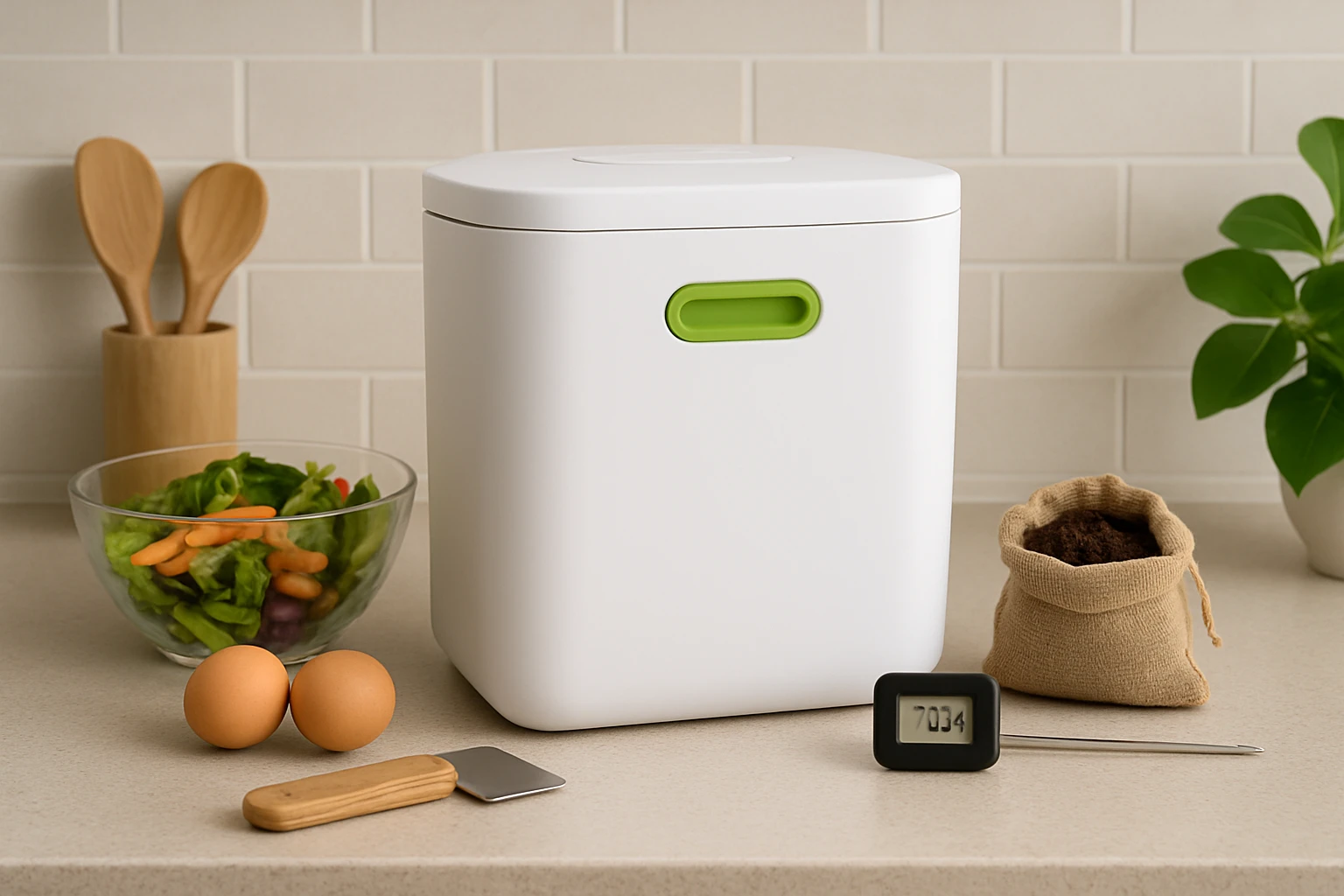
How to Optimize Countertop Composter Settings by Season: A Year‑Round Guide to Faster, Odor‑Free Composting
Introduction
The modern homeowner increasingly seeks sustainable ways to manage kitchen waste. This guide explains how to modify composter settings according to seasonal temperature fluctuations, moisture levels, and feedstock variations. By following the outlined steps, one can achieve faster decomposition while preventing unpleasant odours. The information is valuable for anyone who owns a countertop composter, whether the device is electric or a traditional tumbling bin.
What You Will Need
- Electric countertop composter (e.g., RoneKIT Smart Electric Kitchen Composter or Magnavox Chef Series Electric Composter)
- Outdoor tumbling bin for larger batches (e.g., VIVOSUN Dual Rotating Compost Bin)
- Carbon filter replacement cartridges (if required by the electric model)
- Moisture measuring tool such as a small kitchen scale or moisture meter
- Protective gloves
Step 1: Assess Seasonal Temperature and Choose the Appropriate Mode
Temperature is the primary driver of microbial activity in compost. During warm months, microbes multiply rapidly, allowing shorter cycles; in winter, the same microbes operate more slowly, requiring extended processing times. Most electric composters provide selectable modes such as Auto, Manual, and Fast‑Mode (FMT). For summer, select the Fast‑Mode to capitalize on high ambient heat, while in winter choose Auto or Manual with a longer duration.
The RoneKIT Smart Electric Kitchen Composter offers three distinct modes, each with a clear LED display. Its Auto mode adjusts processing time based on load weight, making it ideal for fluctuating winter temperatures. Price: $145.99; Rating: 3.4/5 from 47 reviews.
For users who prefer a larger capacity and outdoor placement, the VIVOSUN Dual Rotating Compost Bin operates independently of indoor temperature because the tumbling action encourages aeration regardless of climate. Price: $75.99; Rating: 4.3/5 from 9,746 reviews.
When selecting a mode, record the ambient temperature and note the resulting cycle time. This data will help refine settings for future batches.
Step 2: Adjust Moisture Content According to Season
Microbial efficiency requires a moisture level comparable to a damp sponge. In summer, food waste may dry quickly, leading to slower breakdown; in winter, excess moisture can cause clumping and odour. Aim for a moisture content of 50‑60 percent by adding a small amount of water to dry materials or a handful of dry leaves to overly wet loads.
The Magnavox Chef Series Electric Composter includes an auto‑weighing function that adjusts cycle length based on the weight of the load, indirectly accounting for moisture. Its dual carbon filters further neutralise any residual odour. Price: $199.00; Rating: 4.3/5 (no reviews yet).
Practical tip: use a kitchen scale to measure waste before loading. A typical household generates 200‑300 grams of waste per day; adjusting this amount to the recommended range for each season improves consistency.
For outdoor bins, sprinkle dry garden leaves or shredded newspaper onto the tumbling chamber after each rotation. This practice balances moisture and adds carbon, which is especially useful during rainy periods.
Step 3: Optimize Feedstock Composition
Balanced compost requires a ratio of roughly 30 % nitrogen‑rich (green) material to 70 % carbon‑rich (brown) material. In spring, abundant fresh produce provides ample greens; in autumn, fallen leaves supply abundant browns. Adjust the feedstock weekly to maintain this ratio.
Both the RoneKIT Smart Electric Kitchen Composter and the Magnavox Chef Series Electric Composter feature a viewing window that allows users to monitor the colour and texture of the material. This visual cue assists in determining whether additional browns or greens are needed.
When using the VIVOSUN Dual Rotating Compost Bin, take advantage of the twin‑chamber design: load one chamber with fresh greens while the other completes a mature batch. This continuous flow reduces the need for frequent emptying and maintains steady microbial activity.
Avoid adding large bone fragments, excessive dairy, or oily foods to any countertop unit, as these can slow the process and generate odour. Reserve such items for a traditional outdoor compost heap.
Step 4: Maintain Airflow and Filtration
Oxygen is essential for aerobic microbes that produce heat and break down waste without emitting foul smells. Electric composters incorporate built‑in fans and filters; however, regular maintenance of these components ensures optimal performance.
The RoneKIT Smart Electric Kitchen Composter employs dual air filtration that removes odours up to 50 % more efficiently than standard filters. Replace the carbon cartridges every three months, as recommended by users, to preserve filtration capacity.
The Magnavox Chef Series Electric Composter also uses dual activated carbon filters. Its detachable blades simplify cleaning, allowing users to rinse the interior without disassembly.
For the tumbling bin, open the ventilation slots after each rotation to release excess heat and moisture. The deep fins on the eight panels aid in breaking clumps, which improves aeration naturally.
Tips & Pro Tips
- Schedule a weekly 10‑minute rotation for the VIVOSUN Dual Rotating Compost Bin to keep the interior aerated.
- During hot summer days, place the electric composter near a window with indirect sunlight; the extra warmth shortens cycle time without overheating the motor.
- In winter, keep the unit on a countertop away from drafts and consider a small insulated mat underneath to maintain a stable temperature.
- Use the included garden gloves (provided with the VIVOSUN bin) when handling sharp or gritty material to protect the hands.
- Periodically scrape the bottom of the electric composter’s bucket to remove any residual debris that may impede the rotating blade.
Troubleshooting
| Problem | Possible Cause | Solution |
|---|---|---|
| Strong odour after a cycle | Filter saturated or waste too wet | Replace carbon filter; add dry browns to absorb moisture. |
| Compost remains clumpy | Insufficient aeration or large bone fragments | Rotate the tumbling bin more frequently; cut large pieces into smaller bits before loading. |
| Motor makes louder noise than usual | Blade obstruction or worn bearing | Turn off device, remove bucket, and clean any stuck material. If noise persists, contact manufacturer. |
| Cycle does not finish | Overloaded beyond capacity | Reduce load size to recommended maximum (approximately 2‑3 kg for electric units). |
Conclusion
By assessing ambient temperature, adjusting moisture, balancing feedstock, and maintaining proper airflow, one can optimise any countertop composter for every season. The recommended tools—such as the RoneKIT Smart Electric Kitchen Composter, the Magnavox Chef Series Electric Composter, and the VIVOSUN Dual Rotating Compost Bin—provide reliable performance and ease of use. Implementing the seasonal adjustments described in this guide will result in faster decomposition, minimal odour, and a steady supply of nutrient‑rich fertilizer for the garden.
Products Mentioned in This Guide
Frequently Asked Questions
How should I adjust the temperature settings on an electric countertop composter during winter?
Set the composter to its lowest heat setting or use the “cold‑season” mode to maintain a steady 50‑55°F, which speeds decomposition without overheating.
What moisture level is ideal for summer composting in a countertop unit?
Aim for a damp‑sponge feel (about 55‑60% moisture) and increase venting or add dry browns to counteract the higher ambient humidity.
Which kitchen waste types work best in each season?
In winter, prioritize high‑nitrogen scraps like fruit peels and coffee grounds; in summer, add more carbon-rich material such as shredded newspaper to balance excess moisture.
How often should I replace the carbon filter to keep odors under control year‑round?
Replace the filter every 4‑6 weeks, or sooner if you notice a decline in odor absorption during heavy use periods.
Can I use an outdoor tumbling bin to supplement my countertop composter during peak seasons?
Yes, transfer larger batches to a tumbling bin in spring or fall to handle higher volumes while keeping the countertop unit running efficiently.