Introduction
This guide explains how to integrate an indoor compost bin with bokashi fermentation or a worm bin to achieve rapid, odor‑free food‑scrap recycling. Readers will learn the scientific basis of each method, the advantages of pairing techniques, and practical steps for successful implementation. The article also recommends four Amazon products that complement each stage of the process. By following the recommendations, one can reduce household waste, improve soil health, and lower environmental impact.
Background and Context
Composting is the biological decomposition of organic matter into a nutrient‑rich humus that can be used as a soil amendment. Traditional outdoor composting relies on aerobic microbes, requires space, and may generate odors if not managed correctly. Bokashi fermentation uses anaerobic microbes to pre‑treat food scraps, producing a liquid called bokashi tea and a fermented solid that can later be buried in soil. Worm bins, also known as vermicomposting systems, employ earthworms to accelerate the breakdown of organic material, yielding castings that are highly valued by gardeners.
When an indoor compost bin is paired with either a bokashi kit or a worm bin, the strengths of each method compensate for the weaknesses of the other. For example, a simple countertop bin can collect scraps while the bokashi system prevents odors, and the worm bin can finish the process by converting fermented material into high‑quality castings. Understanding the microbial processes, moisture requirements, and temperature ranges is essential for achieving optimal results.
Choosing the Right Indoor Compost Bin
The first step is to select an indoor compost bin that fits the available kitchen space and provides easy access for daily loading. The Tiyafuro Kitchen Compost Bin offers a 2.4‑gallon capacity, a sealed lid to prevent odor, and a wall‑mount design that saves countertop space. It is constructed from durable ABS plastic, measures 10.2 × 6.3 × 11.6 inches, and includes mounting hardware and reusable trash bags. With a rating of 4.5 out of 5 stars from over 10,600 reviews, it demonstrates strong customer satisfaction and reliability.
This bin is ideal for households that generate moderate amounts of waste and prefer a discreet, hanging solution. Its lid mechanism allows quick opening and closing, reducing the risk of spills. Because the bin does not rely on charcoal filters, the ongoing cost remains low, making it a budget‑friendly entry point for indoor composting.
Integrating Bokashi Fermentation
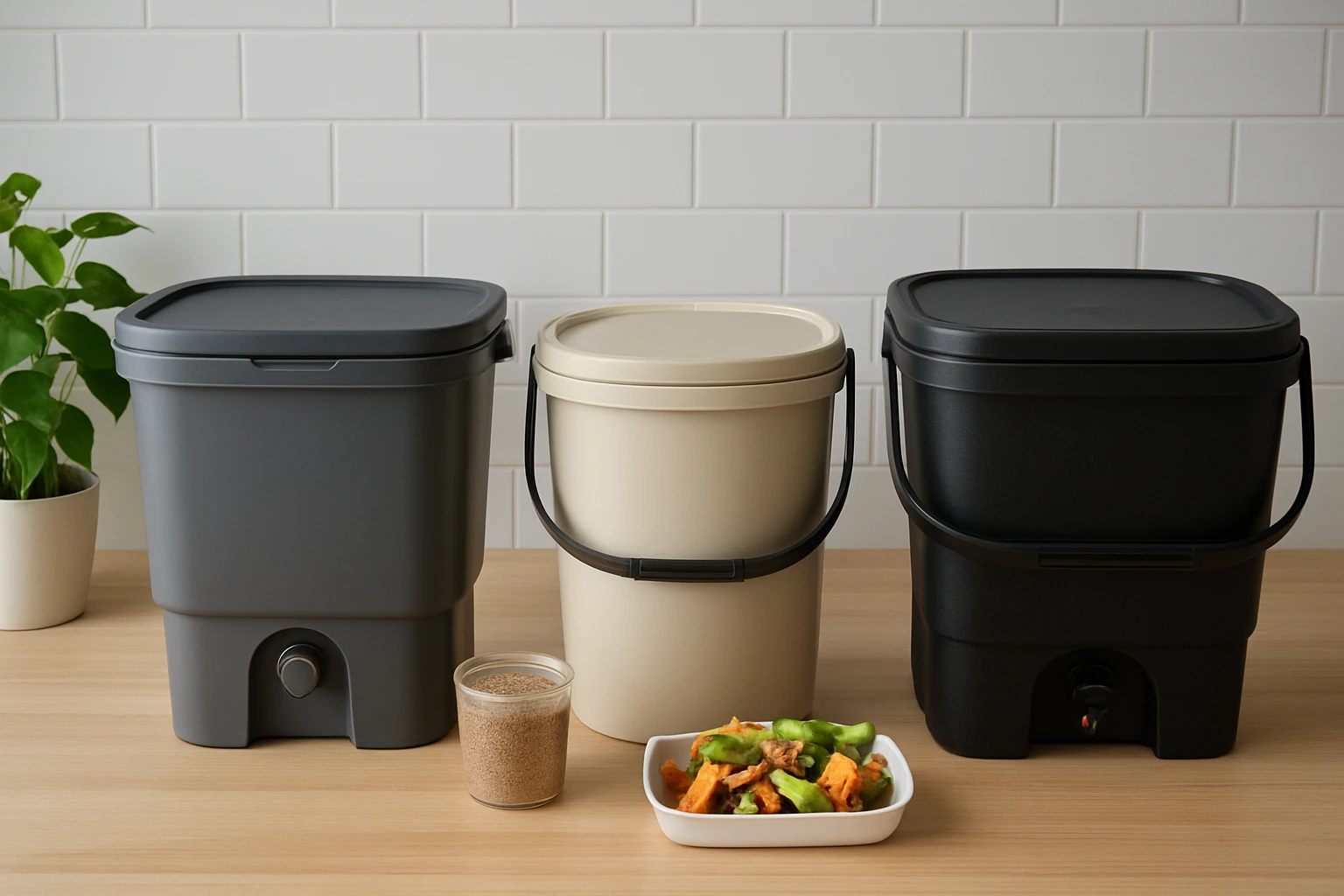
Bokashi fermentation can be added to the workflow by placing a bokashi bucket beneath the kitchen compost bin or by using a separate container for pre‑treatment. The Ecocultivatify Bokashi Compost Bin provides an 18.8‑liter (5‑gallon) capacity, a built‑in tap for extracting bokashi tea, and a rubber seal that prevents odors. It includes 500 g of bokashi bran, a presser, a shovel, and a measuring cup, enabling a complete starter kit. The product holds a rating of 3.9 out of 5 stars from 17 reviews and is priced at $65.99.
The bokashi process requires adding a thin layer of bran after each load of food scraps, then sealing the lid tightly. The anaerobic environment ferments the material within 1‑2 months, producing a sweet, vinegar‑like liquid that can be diluted for plant nutrition. Because the bokashi bin is odor‑tight, it can be stored under a countertop or in a pantry without causing unpleasant smells.
For users who desire a more automated solution, the Reencle Electric Compost Bin offers a 22‑liter capacity, electric agitation, and a three‑layer filtration system that eliminates odor. It processes up to 3.3 lb of waste per day, completes decomposition in 2‑24 hours, and operates at a whisper‑quiet 24 dB. The unit includes carbon filters, a starter pack, and two shovels, and it carries a rating of 4.4 out of 5 stars from 55 reviews. Priced at $579.00, it represents a premium option for households that value speed and hands‑free operation.
Adding a Worm Bin for Final Conversion
After bokashi fermentation, the softened material can be transferred to a worm bin to produce nutrient‑dense castings. While the guide does not reference a specific worm bin product, the principles remain the same: choose a bin with a breathable lid, a tray for drainage, and a sufficient depth for the worms to move. Red wiggler worms (Eisenia fetida) are the preferred species for indoor environments because they thrive at temperatures between 55 °F and 77 °F and can consume up to half their weight in food each day.
To integrate the worm bin with the previously mentioned indoor compost bin, one can place the worm bin directly beneath the Tiyafuro Kitchen Compost Bin or beside it on a kitchen counter. The bokashi‑fermented material is added to the worm bin in small batches, and the worms finish the breakdown within a few weeks, producing dark, crumbly castings that are ready for garden use.
Comparison and Selection Guide
| Feature | Tiyafuro Kitchen Compost Bin | Ecocultivatify Bokashi Compost Bin | Reencle Electric Compost Bin |
|---|---|---|---|
| Capacity | 2.4 gallons (9 L) | 5 gallons (18.8 L) | 22 L (≈5.8 gallons) |
| Power Requirement | None (manual) | None (manual) | Electric (plug‑in) |
| Odor Control | Sealed lid, no filter | Rubber seal, built‑in tap | Three‑layer filter system |
| Price (USD) | $18.88 | $65.99 | $579.00 |
| Average Rating | 4.5/5 (10,632 reviews) | 3.9/5 (17 reviews) | 4.4/5 (55 reviews) |
| Best For | Basic waste collection, space‑saving | Fermentation starter, odor‑tight | Rapid, hands‑free decomposition |
Users who prioritize low cost and simplicity should begin with the Tiyafuro bin and add the Ecocultivatify bokashi bucket for pre‑treatment. Those who need fast turnover and have a larger budget may opt for the Reencle electric unit, which eliminates the need for manual handling after loading. The choice depends on kitchen space, waste volume, and willingness to invest in automation.
Best Practices and Tips
- Keep the indoor compost bin in a cool, dry location to prevent excess moisture, which can cause mold.
- When using bokashi, add a thin layer of bran after each load and press the waste down with the included presser to improve contact with microbes.
- Drain bokashi tea regularly using the built‑in tap; dilute one part tea to three parts water before applying to plants.
- Maintain worm bin bedding with shredded newspaper or coconut coir to balance carbon and nitrogen ratios.
- Monitor the weight of the Reencle electric bin; overload can reduce efficiency and increase noise.
- Rotate bins: while one bokashi bucket ferments, the other can collect fresh scraps, ensuring a continuous workflow.
- Clean all containers with mild soap and water after each cycle to avoid buildup of residue that could attract pests.
Frequently Asked Questions
- Can I use a regular kitchen trash bag inside the Tiyafuro bin? Yes, the bin includes reusable trash bags, but any standard biodegradable bag can be placed inside for easy removal.
- How long does bokashi fermentation take before the material is ready for a worm bin? Typically 1‑2 months, depending on temperature and the amount of bokashi bran used.
- Is the Reencle electric composter noisy? The unit operates at approximately 24 dB, which is comparable to a whisper and generally not disruptive in a household setting.
- Do I need to add water to the worm bin? Worms require a moist environment; mist the bedding lightly each week to maintain humidity without creating standing water.
- Can I compost meat and dairy in the indoor bin? Directly in the Tiyafuro bin, meat and dairy are not recommended due to odor risk. However, after bokashi fermentation, these items can be safely transferred to a worm bin.
- What should I do if the Reencle unit loses power during a cycle? The unit includes a standby mode; after power is restored, simply press the start button to resume operation.
- How often should I empty the Tiyafuro bin? Empty the bin when the bag is full or when the lid becomes difficult to close, typically every 3‑5 days for a typical family.
Conclusion
Pairing an indoor compost bin with bokashi fermentation and a worm bin creates a seamless, odor‑free system for turning kitchen waste into valuable soil amendments. By selecting the appropriate tools—such as the affordable Tiyafuro Kitchen Compost Bin, the efficient Ecocultivatify Bokashi Compost Bin, or the high‑speed Reencle Electric Compost Bin, households can dramatically reduce waste, improve garden health, and contribute to a circular economy.
Products Featured in This Guide
Tiyafuro Kitchen Compost Bin
Price: $18.88 | Rating: 4.5/5 (10,632 reviews)
Featured for its compact, wall‑mount design, sealed lid, and high customer satisfaction, making it an ideal entry‑level indoor compost collector.
Reencle Electric Compost Bin
Price: $579.00 | Rating: 4.4/5 (55 reviews)
Featured for its rapid, electric decomposition, odor‑free three‑layer filter, and whisper‑quiet operation, suitable for high‑volume kitchens.
Ecocultivatify Bokashi Compost Bin
Price: $65.99 | Rating: 3.9/5 (17 reviews)
Featured for its built‑in tap, airtight seal, and complete starter kit, enabling effective bokashi fermentation for indoor use.
SCD Probiotics Organko Compost Kit
Price: $65.65 | Rating: 4.3/5 (1,472 reviews)
Featured for its 4.4‑gallon recycled‑plastic bin, comprehensive accessories, and minimal odor design, suitable for both bokashi and worm‑bin workflows.