How to Prepare Food Scraps for an Electric Composter: Step‑by‑Step, Odor‑Free Tips
Introduction
The modern kitchen increasingly embraces sustainable waste management, and an electric composter can transform everyday food scraps into valuable soil amendment. This guide explains precisely how to ready food waste for optimal processing, how to avoid unpleasant odors, and which tools can simplify each stage. Readers will learn to sort, store, and treat scraps so that the composter operates efficiently and quietly. By following these instructions, one can reduce landfill contributions while enriching garden beds.
What You Will Need
- A countertop collection bin such as the Airnex Collapsible Countertop Bin for gathering scraps.
- An electric composter, for example the Homfan 3.5L Electric Composter, to process the waste.
- Optional secondary grinder like the Airthereal Revive Kitchen Composter for finer drying before final composting.
- Two activated carbon filters (included with most electric models) to control odor.
- Reusable compost bags or a small kitchen trash bag for transferring material.
- A kitchen scale or measuring cup for balancing wet and dry ingredients.
Step 1: Gather Scraps in a Dedicated Bin
The first step is to capture food waste at the point of generation. Place the Airnex Collapsible Countertop Bin on the countertop near the sink. Its 1‑gallon capacity is sufficient for a family of four, and the tight‑seal lid combined with dual carbon filters traps odors, preventing the kitchen from smelling like a landfill. The wheat‑straw construction is durable, stain‑resistant, and does not rust, making it ideal for daily handling.
Collect peels, coffee grounds, and leftover vegetables in the bin throughout the day. The bin includes 20 compost bags, allowing one to transfer waste to the electric composter without spilling. By keeping the bin within arm’s reach, one reduces the temptation to discard scraps in the trash.
When the bin reaches about three‑quarters full, it is time to move the material to the electric composter. This prevents over‑filling, which could lead to moisture buildup and odor formation.
Why this bin is useful: it separates food waste from regular trash, offers odor control, and its collapsible design saves storage space when not in use.
Step 2: Sort and Balance Wet‑to‑Dry Ratio
Electric composters operate most efficiently when the input material contains a balanced mix of wet (green) and dry (brown) components. Wet items include fruit peels, vegetable trimmings, and coffee grounds. Dry items include shredded newspaper, paper towels, or small amounts of dry leaves.
For each cup of wet waste, add approximately one‑quarter cup of dry material. This ratio mirrors natural composting processes, where carbon‑rich brown matter absorbs excess moisture and provides structure for aeration. Overly wet loads can produce unpleasant smells and slow the drying cycle.
If one lacks dry material, the Homfan 3.5L Electric Composter includes two activated carbon boxes that further neutralize odor, but a proper carbon source remains essential for long‑term success.
Practical tip: keep a small stack of shredded newspaper in a drawer; tear off pieces as needed to maintain the correct balance.
Step 3: Prepare Scraps for Loading
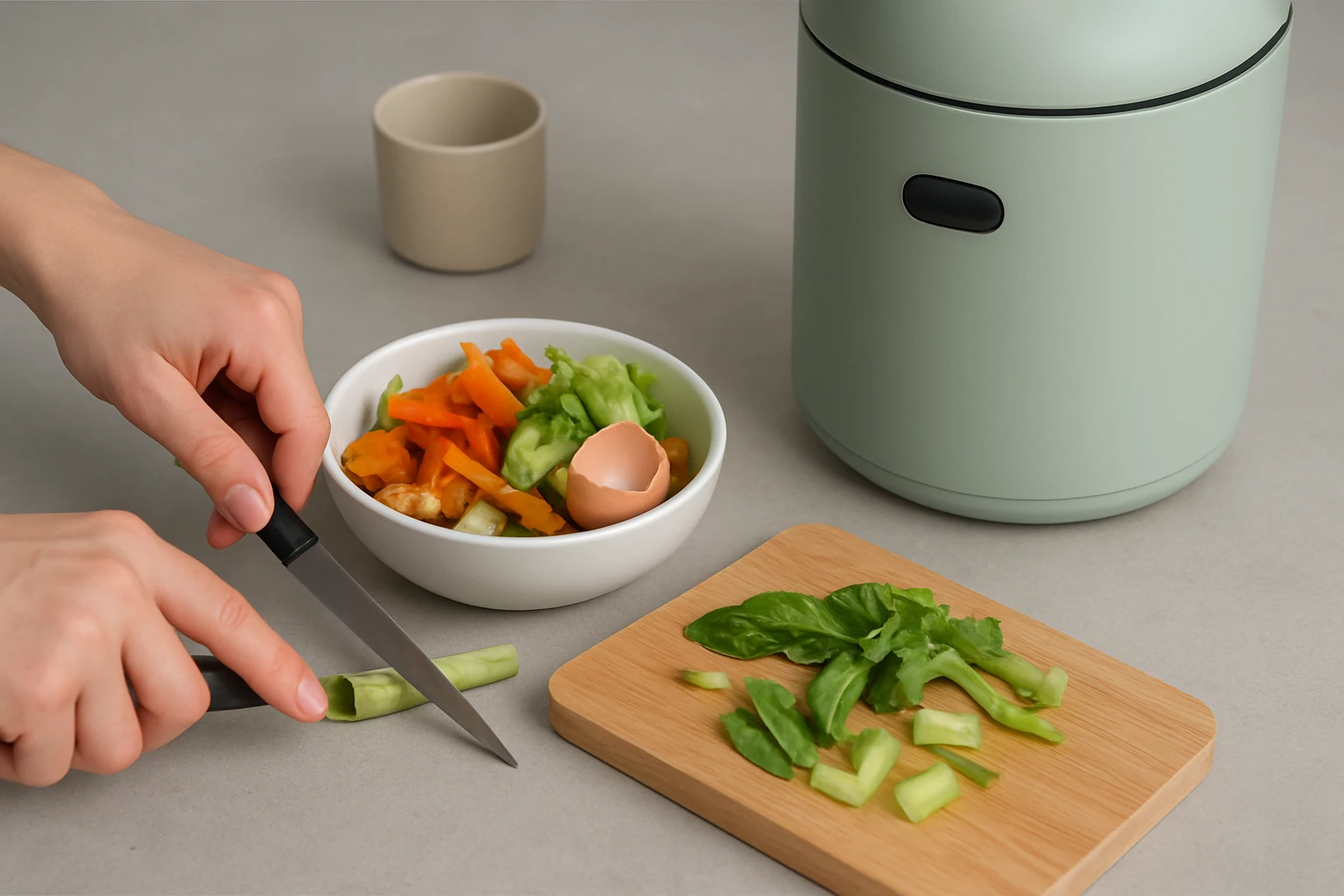
Before loading, cut large pieces of fruit or vegetable into smaller chunks no larger than two inches. This reduces the workload on the composter’s internal blades and shortens processing time from 20 hours to as little as 2.5 hours for suitable loads.
If the waste includes citrus peels, consider adding a few drops of lemon essential oil to the carbon filter chamber; the Homfan model allows the addition of lemon or spices to enhance aroma, as described in its product details.
Remove any non‑compostable items such as meat bones, dairy, or oily foods. While the Homfan’s self‑cleaning function can handle minor residues, bones and fats can clog the grinding mechanism and generate foul odors.
Place the prepared scraps into the removable canister of the electric composter. The canister holds up to 3.5 L, which is ample for a typical family’s daily waste.
Step 4: Select the Appropriate Composting Mode
The Homfan 3.5L Electric Composter features a smart LED display with three distinct modes: Quick, Standard, and Eco. Quick mode processes waste in 2.5 to 5 hours, suitable for small, mostly dry loads. Standard mode runs for 8 to 12 hours, ideal for balanced wet‑dry mixes. Eco mode extends to 20 hours, maximizing energy efficiency for larger, wetter batches.
Select the mode that matches the composition of your load. The LED display also shows remaining time, allowing one to plan the composter’s operation around daily routines.
Once the mode is selected, press the single‑button start. The machine begins grinding, drying, and rotating the material automatically. The internal temperature rises enough to kill most pathogens, producing a dry, crumbly product ready for garden use.
Why the mode selection matters: it prevents over‑drying, conserves electricity (the unit consumes only 0.28 kWh per cycle), and reduces noise—rated at a quiet 48 dB, comparable to a library environment.
Step 5: Utilize the Hands‑Free Self‑Cleaning Function
After each cycle, activate the self‑cleaning function with one click on the LED panel. The Homfan’s built‑in cleaning cycle flushes residual debris from the grinding chamber, eliminating the need for manual scrubbing.
If one prefers a manual approach, the removable canister can be rinsed under running water. The stainless‑steel interior resists corrosion, and the compact design fits easily into a dishwasher.
Regular cleaning maintains the unit’s quiet operation and prevents odor buildup. The carbon filters should be replaced every three months for optimal performance.
For users who desire an even finer product, the Airthereal Revive Kitchen Composter offers a tri‑blade system that creates powder‑like compost in approximately four hours. This secondary grinder can be employed after the primary electric composter if the gardener requires ultra‑fine material for seedling mixes.
Tips & Pro Tips
- Maintain a consistent feeding schedule. Running the composter nightly ensures that waste does not sit long enough to ferment and produce odor.
- Use the carbon filters wisely. Replace the activated carbon boxes when the indicator light on the Homfan turns amber; fresh carbon absorbs odors more effectively.
- Balance moisture. If the output feels damp, add extra dry material and run another short cycle.
- Store the finished compost properly. Transfer the dry product to a sealed container or directly spread it onto garden beds within 24 hours to preserve nutrient content.
- Avoid high‑fat foods. Oils can coat the blades and reduce grinding efficiency.
- Leverage the LED timer. Set the timer to finish just before you wake up; the quiet operation will not disturb sleep.
Troubleshooting
| Problem | Possible Cause | Solution |
|---|---|---|
| Unpleasant odor during cycle | Excessive wet material or missing carbon filter | Reduce wet input, add more brown material, replace carbon filters. |
| Machine stops before cycle ends | Overload or blockage | Remove excess waste, clean grinding chamber using self‑clean function. |
| Noise higher than expected | Improper placement on uneven surface | Place unit on a stable, level countertop; use a silicone mat. |
| Output remains too moist | Insufficient dry material | Increase brown ratio, run an additional Eco mode cycle. |
Conclusion
Preparing food scraps for an electric composter involves systematic collection, careful sorting, and mindful loading. By following the steps outlined above, one can achieve odor‑free operation, maximize energy efficiency, and produce high‑quality compost for garden use. The recommended tools—the Airnex Collapsible Bin, Homfan 3.5L Electric Composter, and Airthereal Revive Kitchen Composter—each address specific challenges in the workflow, from collection to fine grinding. Implementing these practices will not only reduce household waste but also contribute to a healthier environment.
Products Mentioned in This Guide
Frequently Asked Questions
What types of food scraps can I safely put in an electric composter?
Most fruit, vegetable peels, coffee grounds, and small amounts of cooked grains are fine; avoid meat, dairy, oily foods, and large bones.
How should I store food scraps before adding them to the composter to prevent odors?
Keep scraps in a sealed countertop bin or a small airtight container and add a sprinkle of dry carbon material like shredded paper or sawdust.
Do I need to pre‑grind or chop food scraps before loading them into the electric composter?
Chopping or using a secondary grinder into bite‑size pieces speeds up breakdown and reduces strain on the machine.
How often should I empty the collection bin and start a new compost cycle?
Empty the bin whenever it’s about half full to keep the feed rate steady and prevent anaerobic smells.
What routine maintenance keeps an electric composter odor‑free?
Wipe the interior with a damp cloth after each cycle, clean the filter monthly, and ensure proper ventilation.