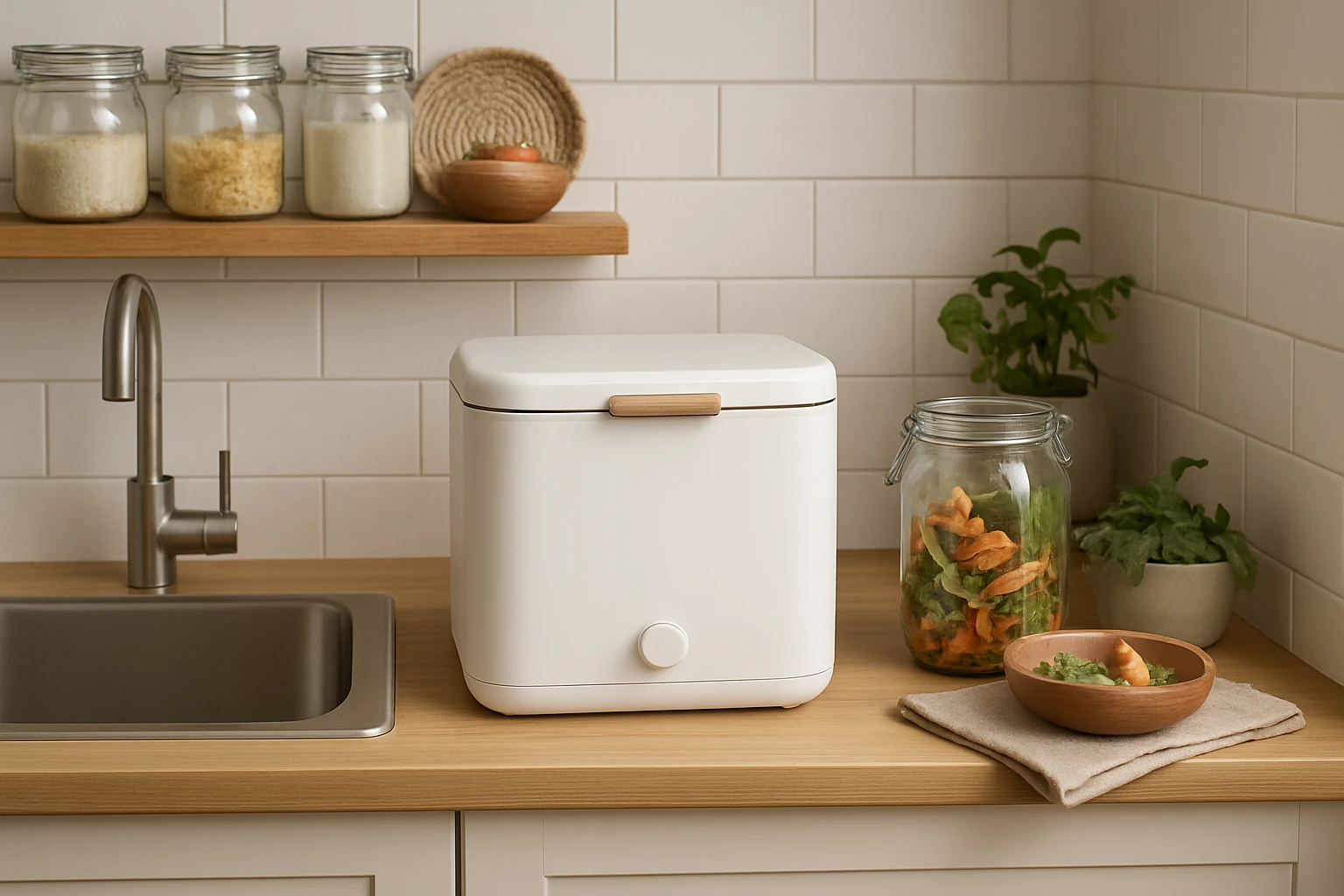
Small‑Space Zero‑Waste Kitchen: Complete Guide to Choosing, Using & Maintaining a Countertop Composter
Introduction
One often discovers that a kitchen with limited square footage can still achieve a high level of sustainability. This guide explains the essential concepts of countertop composting, outlines how to select the most appropriate device, and provides detailed maintenance procedures. Readers will learn how to reduce household waste, improve soil health, and preserve indoor air quality without sacrificing valuable counter space. By the end of the article, one will possess the confidence to integrate a compact composting system into daily routines.
Background and Context
Traditional outdoor composting requires a sizable bin, regular turning, and protection from pests. In urban apartments, these requirements are rarely feasible, leading many households to discard food scraps in the trash. Modern electric countertop composters address these challenges by offering sealed, odor‑controlled, and energy‑efficient processing within a few hours. Understanding the underlying technology, such as high‑temperature drying and grinding, is crucial for selecting a reliable unit.
Understanding Countertop Composting
Countertop composters employ a combination of grinding, heating, and drying to transform organic waste into a soil‑enhancing powder. The process typically reduces waste volume by up to ninety percent, which translates into fewer trips to the landfill. A carbon filter or sealed lid prevents odorous compounds from escaping, making the device suitable for open‑plan living spaces. Users should be aware of the types of waste that can be processed, including fruit peels, vegetable trimmings, and even soft bones, while avoiding large meat bones or excessive liquids.
Choosing the Right Countertop Composter
When evaluating devices, one should consider capacity, noise level, power consumption, and ease of cleaning. Capacity determines how many meals can be processed before the collection bucket requires emptying; a larger bucket suits families, whereas a smaller unit fits single‑person households. Noise level is measured in decibels; a value below forty decibels ensures that the machine does not disturb conversation or sleep. Energy efficiency is important for both cost savings and environmental impact, as some units consume less power than a typical clothes dryer.
Two products exemplify the range of features available in the market:
- Food Cycler Eco 5 – a five‑liter unit with a patented Vortech grinding system, carbon filter, and a sleek grey finish.
- Growell 4L Electric Composter – a four‑liter model featuring auto, manual, and clean modes, a transparent viewing window, and a whisper‑quiet motor.
The following table compares the most relevant specifications:
| Feature | Food Cycler Eco 5 | Growell 4L Electric Composter |
|---|---|---|
| Capacity | 5 L | 4 L |
| Noise Level | Quiet (exact dB not disclosed) | <40 dB |
| Power Consumption | Lower than average clothes dryer | Brushless motor, energy‑efficient |
| Odor Control | Refillable carbon filter | Large‑capacity carbon filter (up to 5 months) |
| Control Interface | One‑touch button | Touch panel with auto/manual/clean modes |
| Price | $499.99 | $259.99 |
| Rating | 4.5/5 (312 reviews) | 5/5 (4 reviews) |
For households that generate a high volume of waste, the larger 5 L bucket of the Food Cycler Eco 5 may reduce the frequency of emptying. Conversely, users who prioritize ultra‑quiet operation and visual monitoring may prefer the Growell 4L model.
Using Your Countertop Composter Effectively
Effective operation begins with proper preparation of waste. One should remove excess liquids, cut large items into manageable pieces, and avoid adding dairy or oily foods that can hinder the drying stage. After loading the bucket, the user simply presses the single button on the Food Cycler Eco 5 or selects the desired mode on the Growell unit. The device then initiates grinding, heating, and cooling cycles, typically completing the transformation within two to three hours.
Once the cycle finishes, the resulting powder can be mixed with garden soil, added to potting mixes, or brewed into nutrient‑rich "compost tea" for indoor plants. The powder’s low moisture content ensures that it does not attract pests, a common concern in apartments. Regularly emptying the collection bucket prevents overflow and maintains optimal performance.
Maintaining Your Countertop Composter
Maintenance tasks are minimal but essential for longevity. The carbon filter in both devices should be inspected monthly and replaced according to manufacturer recommendations; the Growell filter lasts up to five months, while the Food Cycler filter is refillable. The inner bucket of the Food Cycler Eco 5 and the detachable inner container of the Growell unit are both dishwasher‑safe, simplifying cleaning after each use.
Periodic inspection of the grinding mechanism is advisable. If grinding becomes less efficient, one can consult the user manual for blade cleaning instructions or contact customer support. Keeping the exterior free of food splatters with a damp cloth preserves the sleek appearance of the devices.
Comparison and Selection Guide
To assist readers in making an informed decision, the following checklist outlines key considerations:
- Determine weekly waste volume – larger capacity reduces emptying frequency.
- Assess noise tolerance – choose a unit with a documented decibel rating below forty if quietness is paramount.
- Evaluate countertop space – measure the available area and compare device dimensions.
- Prioritize odor control – ensure the unit includes a carbon filter or sealed lid.
- Consider budget – balance initial cost against long‑term savings from reduced trash fees.
Applying this checklist, a family of four with moderate waste generation might select the Food Cycler Eco 5 for its larger capacity, while a single professional living in a studio apartment may find the Growell 4L Electric Composter more appropriate due to its compact footprint and visual window.
Best Practices & Tips
- Pre‑dry very wet waste by spreading it on a tray for a few minutes before loading.
- Rotate the bucket halfway through the cycle if the device permits, to ensure even drying.
- Combine the finished compost with a small amount of water to create a nutrient solution for houseplants.
- Store the carbon filter in a sealed container when not in use to prolong its effectiveness.
- Schedule a monthly deep‑cleaning session to remove any residual debris from the grinding chamber.
Frequently Asked Questions
Can I compost meat and dairy products?
Both devices are designed primarily for plant‑based waste. Meat and dairy can create strong odors and may not dry properly, so it is recommended to avoid them.
How long does a typical composting cycle take?
Most cycles complete within two to three hours, depending on the quantity and moisture content of the waste.
Is the compost safe for edible plants?
Yes, the powder produced is sterile because the high‑temperature drying kills pathogens, making it suitable for vegetables and herbs.
What is the power consumption compared to a regular dryer?
The Food Cycler Eco 5 consumes less power than an average clothes dryer, while the Growell unit uses a brushless motor that is similarly energy‑efficient.
Do I need to replace any parts regularly?
The carbon filter should be replaced or refilled according to the manufacturer’s schedule; other components are designed for long‑term use.
Can I use the compost for indoor plants?
Absolutely; mixing the powder with potting soil or diluting it with water creates a nutrient‑rich amendment for indoor gardening.
Conclusion
One can achieve a zero‑waste kitchen even in the smallest apartments by selecting a suitable countertop composter, following best‑practice loading techniques, and performing regular maintenance. Both the Food Cycler Eco 5 and the Growell 4L Electric Composter provide reliable, odor‑free solutions that align with sustainable living goals. By integrating these tools, households reduce landfill contributions, improve garden health, and enjoy the convenience of an indoor composting system.
Products Featured in This Guide
Food Cycler Eco 5
Price: $499.99 – Rating: 4.5/5 (312 reviews)
Featured because it offers the largest 5 L capacity, a patented Vortech grinding system, and a sleek design that complements modern kitchens.
Growell 4L Electric Composter
Price: $259.99 – Rating: 5/5 (4 reviews)
Featured because it combines ultra‑quiet operation, a transparent viewing window, and multiple processing modes that suit a variety of user preferences.