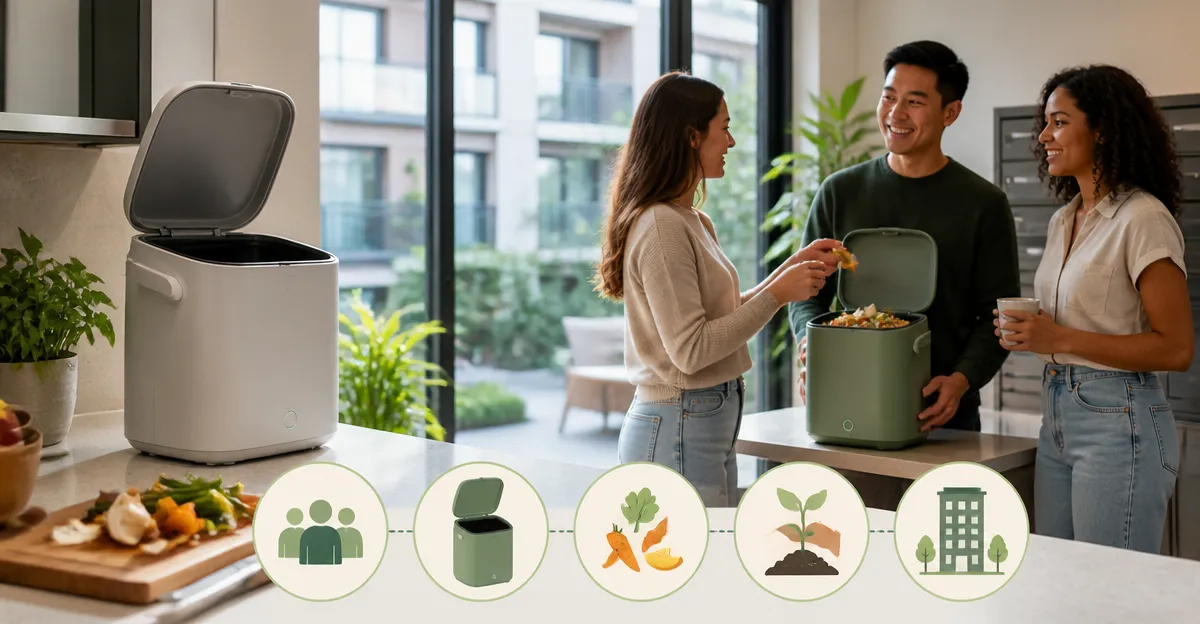
How to Run a Countertop Composter Pilot Program in an Apartment Complex: Step-by-Step Guide to Launch, Engage Residents, and Reduce Food Waste
Introduction
Running a pilot program for countertop composting can transform waste management in multi‑unit housing. This guide explains how property managers, sustainability coordinators, and resident leaders can plan, implement, and evaluate a small‑scale composting system. Readers will learn how to assess interest, secure approvals, select appropriate bins, and create lasting resident engagement. The result is a measurable reduction in food waste and an enhanced sense of community responsibility.
What You'll Need
The following items are recommended to ensure smooth operation of the pilot. Most of these tools are available from reputable online retailers and can be purchased in bulk for cost efficiency.
- Two countertop compost bins (one premium model and one budget‑friendly model) – see product recommendations below.
- Clear signage for collection points, including QR codes linking to instructional videos.
- Reusable liners or compostable bags compatible with the chosen bins.
- Basic cleaning supplies such as a small brush and mild detergent.
- Data‑tracking spreadsheet or simple mobile app to log weight of waste collected.
Step 1: Assess Resident Interest and Baseline Waste
The first actionable step is to gauge resident enthusiasm and establish a baseline for food waste. Distribute an online survey that asks about current waste habits, willingness to separate scraps, and preferred communication channels. Compile responses and calculate an estimated volume of organic waste that could be diverted. This data will support a compelling proposal to building ownership.
Step 2: Secure Management Approval and Funding
Present the survey findings to the property management team along with a cost‑benefit analysis. Highlight potential savings from reduced landfill fees and the positive marketing angle of a green building initiative. Request a modest budget for pilot equipment, signage, and educational materials. Once approved, draft a timeline that outlines procurement, installation, and resident outreach milestones.
Step 3: Choose the Right Countertop Compost Bins
Selecting a bin that balances capacity, odor control, and ease of cleaning is critical for resident adoption. For a premium option, consider the Arkalis Countertop Compost Bin. This 1.3‑gallon unit features an odor‑reducing lid that requires no charcoal filters, a removable inner basket for quick rinsing, and a dishwasher‑safe construction. Priced at $207.56, it offers durability for high‑traffic areas and eliminates the need for frequent filter replacement.
For budget‑conscious buildings, the Kazai Elin Compost Bin provides comparable functionality at $37.95. It includes an activated charcoal filter, a silicone‑sealed lid, and a dishwasher‑safe inner bucket that fits standard 2.6‑gal and 3‑gal liners. With a 4.6‑star rating from 438 reviews, residents have praised its compact footprint and reliable odor control.
Both models are lightweight, sturdy, and designed for indoor use, making them suitable for apartment countertops. The Arkalis bin excels in high‑volume scenarios where filter maintenance would be burdensome, while the Kazai bin offers an economical entry point for smaller pilot groups.
Step 4: Install Collection Stations and Signage
Place one bin on the ground floor lobby and another on a designated floor with the highest resident density. Ensure each station is positioned near a sink to facilitate quick rinsing of food residues. Attach clear signage that illustrates what can be composted, how to use the liner, and the importance of sealing the lid after each use. QR codes on the signs should link to a short instructional video that demonstrates proper loading techniques.
Step 5: Conduct Resident Education and Launch Event
Host a kickoff meeting that combines a brief presentation with a live demonstration of both compost bins. Explain the environmental impact of diverting food scraps and walk participants through the step‑by‑step loading process. Distribute printed handouts that summarize key points, include the bin specifications, and list contact information for program coordinators. Encourage residents to sign up for weekly reminder emails that reinforce best practices.
Step 6: Monitor Usage and Provide Ongoing Support
Assign a sustainability champion to record the weight of waste collected from each bin on a weekly basis. Use the data to calculate diversion rates and share progress updates with residents via newsletters or a digital dashboard. Address common questions promptly, such as how to handle meat scraps or how often to replace liners. Regularly clean the bins according to the manufacturer's guidelines to maintain odor control and hygiene.
Step 7: Evaluate Results and Plan Expansion
After a predetermined pilot period—typically eight to twelve weeks—review the collected data against the baseline established in Step 1. Assess resident satisfaction through a follow‑up survey and identify any operational challenges. If the pilot demonstrates a significant reduction in food waste and strong resident engagement, prepare a proposal for scaling the program to additional floors or the entire complex. Include recommendations for the optimal mix of premium and budget bins based on usage patterns.
Tips & Pro Tips
- Place a small compostable bag inside the bin to simplify liner changes and reduce spillage.
- Schedule a monthly “Compost Clean‑Day” where volunteers gather to empty and rinse the bins together.
- Incorporate a reward system, such as a monthly raffle for participants who consistently follow guidelines.
- Partner with a local community garden to donate the finished compost, creating a tangible closed‑loop narrative.
Troubleshooting
- Odor persists despite sealed lids: Verify that the lid is fully closed and that the charcoal filter (Kazai model) is not saturated. Replace the filter if necessary.
- Liquids leaking from the bin: Ensure the removable inner basket is seated correctly and that any excess moisture is drained before sealing.
- Resident confusion about what is compostable: Reinforce guidelines through weekly reminder emails and update signage with visual icons.
Conclusion
Implementing a countertop composting pilot in an apartment complex requires careful planning, appropriate tools, and consistent resident engagement. By following the steps outlined above, property managers can achieve measurable waste diversion, foster a culture of sustainability, and potentially expand the program building‑wide. The recommended bins—both the Arkalis Countertop Compost Bin and the Kazai Elin Compost Bin—provide reliable solutions that accommodate different budgetary constraints while maintaining odor control and ease of cleaning.
One should view the pilot as a learning opportunity that can be refined over time. Continued data collection, resident feedback, and partnership with local compost processors will ensure the initiative remains effective and scalable.
Products Mentioned in This Guide
Arkalis Countertop Compost Bin
Price: $207.56
Key Features:
- Odor‑reducing lid without charcoal filters
- Removable inner basket for easy cleaning
- Compact 1.3‑gallon capacity suitable for countertop use
- Dishwasher‑safe construction
Kazai Elin Compost Bin
Price: $37.95
Rating: 4.6/5.0 (438 reviews)
Key Features:
- Activated charcoal filter and silicone‑sealed lid for odor control
- Dishwasher‑safe inner bucket compatible with 2.6‑gal and 3‑gal liners
- Compact footprint ideal for small kitchens and apartments
- Anti‑slip base and sturdy handle for easy transport
Frequently Asked Questions
What steps should a property manager take to launch a countertop composting pilot in an apartment complex?
Start by gauging resident interest, secure building approvals, choose suitable bins, set up collection points, and create a clear communication plan.
How many countertop compost bins are recommended for a pilot program?
Two bins—one premium model for demonstration and one budget-friendly model for everyday use—provide a balanced test of performance and cost.
What signage is essential for resident participation?
Use clear, eye‑catching signs with QR codes that link to short instructional videos and guidelines for proper composting.
How can the pilot program measure its success?
Track the weight of food waste diverted, resident engagement metrics, and feedback surveys to assess reduction goals and satisfaction.
What are the best practices for maintaining the compost bins during the pilot?
Provide reusable liners or compostable bags, schedule regular emptying, and educate residents on what can and cannot be composted.